Is fly-to-let the new buy-to-let?

In his last Budget, Chancellor of the Exchequer, George Osborne, announced tax changes that will affect many of those who invest in buy-to-let property in the UK – meaning a loss in higher rate tax relief for many of them, which could have the potential to wipe out their profits entirely.

From 2017, investors who pay 40 percent (or more) tax will no longer receive a reduction for finance interest at 40-45 percent. Instead, by 2021, these tax payers will only be able to claim 20 percent; this means the average 45 percent rate tax payer who pays £12,000 interest on a buy-to-let property will lose over £3,500 each year – around 30 percent. Depending on circumstances, this could actually lose the taxpayer money – especially if interest rates are hiked up before Christmas, as expected.

Many of these investors are now looking overseas for a return on their money, known as ‘fly-to-let’ – considering the current strength of sterling and the relatively stable recovery of the property markets in many parts of Europe.

Elaine Ferguson, Head of the Resource Centre at OverseasGuidesCompany.com, explains why:

“Many investors are waking up to the loss of their higher rate tax relief on buy-to-let investments in the UK, looking further afield for profit – an overseas market that has been a bit quiet in recent times.

“We see three key reasons why overseas property could be the answer for UK investors:

Better rental returns
Even before the effects of these tax changes come into play, recent reports have already suggested that the UK should be put near the bottom of the global league table for rental returns.

Better capital gains
The economies of many popular overseas destinations have been slower to recover than the UK, so are behind in both the business cycle and property price rises. In Spain, for example, property prices have only just started rising. In France, they seem to be finally approaching the lowest they have been in many years – meaning that bargains can still be had for would-be investors, especially when you consider how strong sterling has been throughout 2015 so far.

A sunnier investment
A fly-to-let investment also provides the considerable bonus of you and your family being able to use the property for your holidays.”

Virgin to the rescue: Richard Branson fights to save battered cruise industry

It is estimated that more than 23 million people will set sail aboard a cruise ship in 2015. Organisers are attempting to attract holidaymakers by adding thousands of port calls in “new, exotic locations, especially in the fast-growing Asian market”, according to the Cruise Lines International Association (CLIA) annual report.

Adam M Goldstein, CLIA Chairman and President/COO of Royal Caribbean Cruises, added: “From new ports around the globe to the investment by CLIA’s member cruise lines in new, innovative ships, it’s an exciting time for the cruise industry and cruise passengers. This year will prove to be another step forward for the entire industry as our members continue to strive to make cruising the best overall vacation experience.”

But not everyone seems to share Goldstein’s positive outlook. 61 percent of cruisers hail from the US, with the next biggest market behind that being the UK and Ireland, making up just eight percent. In simple terms, what this means is that there are a whole host of people from around the world that have never been, nor have ever shown any interest in being, a passenger on a cruise ship. And in a market that is struggling to attract a new generation of traveller, as well as having to contend with the fact that many of its loyal customers are ageing fast, it’s becoming clear that cruise industry has some fairly choppy waters ahead of it.

The speciality cruise market, which Branson’s vessels will join, is one of the few industry segments that has seen positive growth in recent years

Image crisis
Part of the problem, according to Arnold Donald, CEO of cruise company Carnival, is that those who opt out of jumping aboard a cruise ship do so based on “negative, preconceived notions of what cruising is”. A big obstacle that the industry is currently trying to overcome, therefore, is how to convince people to try something that they already believe they won’t like.

“It’s clear to me that as an industry we have not done a good enough job effectively communicating to the public… To those who don’t know what cruising is”, he told reporters in a conference call last year. “It’s not just 3,000 people at a buffet line and super crowding.”

It is also clear that the industry is going through a bit of an identity crisis – a fact made all the more obvious when Donald himself is unable to offer a definition to the contrary during the interview. “We just haven’t effectively conveyed [what the experience is]”, he continued. “And also we haven’t effectively conveyed the value of what cruising is compared to land vacations. Getting a neighbour or a relative saying, ‘Look, it’s not what you think it is—and you’re coming with us the next time’… There’s nothing more powerful than that.”

Put simply, if the CEO of a cruise company is struggling to tell people why they should spend their holiday aboard one of his ships – especially with so many other destinations and options out there for holidaymakers to choose from – then it is no wonder that the industry has found itself in such a difficult situation. But it is one that it must attempt to rectify, especially if it wishes to make ground in China’s burgeoning market, where few travellers have any idea what a cruise actually entails, or indeed what they should expect from one.

About-turn
But all is not lost, and if there is one man who can breathe some much-needed life into this image-conscious industry, it is Sir Richard Branson. The founder of the Virgin Group recently announced his plan to shake up the market, with his first ship scheduled to set sail from PortMiami in 2020 under the Virgin Cruises banner. To further emphasise his commitment to this new venture, he has already entered into a binding agreement with the Italian shipbuilding company Fincantieri and commissioned the construction of three new mid-sized ships.

“This is a very exciting day for Virgin and travellers around the globe”, Branson said in a statement on the venture. “We now have the right partners in place to build a world-class cruise line that will redefine the cruising experience for good. The Virgin Cruises approach will appeal to cruisers and non-cruisers alike, and we look forward to being in Miami and delivering an experience for people who want a new way to cruise.”

Five years ago, Royal Caribbean built the world’s largest cruise liner, known as the Oasis of the Seas, which weighs approximately 225,000 tonnes has the capacity to accommodate 6,300 passengers. Branson’s decision to build three smaller vessels rather than entering into the market with a super-sized cruiser of his own is an early sign that he has done his homework, as according to the CLIA, there is a growing trend towards ships that offer unique designs, amenities and experiences. In fact, the speciality cruise market, which Branson’s vessels will join, is one of the few industry segments that has seen positive growth in recent years, growing as much as 21 percent annually between 2009 and 2014.

The Oasis of the Seas, the world's largest cruise liner
The Oasis of the Seas, the world’s largest cruise liner

Making waves
Rather than attempting, and then failing, to convey what Virgin Cruises is all about – like so many of its competitors are currently struggling to do – Branson and his team want customers to tell them what they want out of a holiday on the high seas, not the other way round. “We are committed to making waves in the cruise industry”, said Tom McAlpin, President and Chief Executive of Virgin Cruises, in an interview with Travel Weekly. “We’ve gone out to our customers to ask them what they want to see from our ships.

We’ve designed the shell and the skeleton of our ships and we have plans for what might feature on each deck, but we’re really keen to get feedback to see what people want us to create.”

Customers will have more than enough time to give their feedback, as the three mid-sized ships, which weigh roughly 110,000 tonnes each, are not going to be ready until 2020, 2021 and 2022 respectively. Virgin Cruises management might be waiting for the customer input in order to tailor the experience accordingly, but one thing that they are absolutely sure of is the market that they want to target.

“Virgin Cruises will be for the young at heart and we will be very focused on the customers we want to attract”, added McAlpin. “Too many of cruising’s larger brands try to be something to everyone and end up not standing out and diluting their message… We’re going against the grain because we’ve decided not to build larger ships – instead, we will have mid-sized ships that will be very intimate.”

The venture is still in the early stages and it will take some time before travellers will get a clear picture of what Branson and his team have in store. However, if there ever was a businessman and a brand capable of making waves in a market burdened by such a massive identity crisis, then Branson and his team will surely be the ones to achieve it.

The El Dorado International Airport gets a makeover

Over the last eight years, an enormous amount of resources – including more than $1.2bn in financial investment – has been devoted to a mammoth project that will see the complete rebuild of the El Dorado International Airport in Colombia. The old terminal building, which was originally constructed 56 years ago, has been fully renewed and replaced with what is now considered to be one of the most modern and functional airports in Latin America.

The process of building the new El Dorado International Airport has been both a challenge of immense proportions and an incredible experience for the country, city, passengers and infrastructure developers alike. The overwhelming success of the new terminal building – as well as the remodelling of the airport’s cargo terminal, which mobilised over 600,000 tons of products in 2014 alone – has seen the airport being voted Best Airport, South America in the 2015 Business Destinations Travel Awards.

The ultimate aim of the airport is to have the capacity to serve more than 40 million passengers a year by 2020

A bolder experience
In 2014, over 27 million passengers were transported through the airport, seeing a 13.5 percent average growth on the year previous, placing El Dorado as the third busiest airport in terms of passenger movement in the region. The ambitious expansion project is still currently underway, having already overcome a series of challenges that were faced during the opening and commissioning of both of the new terminals. The ultimate aim of the airport is to have the capacity to serve more than 40 million passengers a year by 2020.

This year, El Dorado was awarded a four-star score by Skytrax, making it one of only 23 airports in the world to be recognised at such an elite level. Based on the recognition from this high profile international organisation, the airport has found new motivation to further improve the service experienced by passengers. This has seen ambitious new initiatives being implemented across the airport, with cultural agendas in particular taking centre stage: in partnership with the Bogotá Philharmonic Orchestra, El Dorado International Airport has launched the Music for Travelling programme, which sees chamber music groups and symphonic orchestras performing a wide repertoire of Colombian and international music in the terminal building. This programme has five seasons, each three days long, over the course of the year.

The airport has also responded to suggestions that it could display more information about its country and natural heritage. By entering into a partnership with the National Natural Parks of Colombia, travellers have the opportunity to get to know more about the flora, fauna and local communities within the country’s National Natural Parks system through a series of photographic exhibitions and information points. These natural areas are recognised for holding over 10 percent of the world’s biodiversity, and are therefore known as the home of much of Colombia’s biological and cultural wealth. The framework of this arrangement also includes the promotion of ecotourism and support of local artisan communities through the airport’s ‘park shops’.

From start to finish
However, the airport’s innovation doesn’t stop there. In September 2016, El Dorado will be the venue for Bogota International Fashion Week, an event that will place the city at the centre of the fashion industry, with dozens of renowned national designers displaying their garments, leather goods and costume jewellery. Additionally, technology has become a key part of innovation at El Dorado, with a constantly evolving website, interactive units placed throughout the terminal and a state-of-the-art mobile app all on-going projects that will give travellers access to a different, closer and more comprehensive experience at the terminal.

As part of its understanding that the airport experience is an essential part of travelling for all passengers – whether flying for business or leisure, domestically or internationally – El Dorado has pledged to provide all visitors with a convenient, functional, comfortable and pleasant location in which to start or end their travels. Executive lounges and children’s play areas are two additional projects currently in progress, demonstrating the lengths to which the airport is willing to go in order to satisfy each and every customer.

The real El Dorado
The name ‘El Dorado’ is based on a local legend, which tells the story of an ancient city of gold that was founded and then hidden by the indigenous communities that lived in the Colombian Andes mountains. This legend is allegedly the reason why European conquerors recurrently climbed the Andes mountains in the middle ages, leading to the eventual discovery of the location where Bogotá currently sits. While the legend remains just that, the treasures are undoubtedly real: there is an extraordinary gold museum in downtown Bogotá, only 20 minutes away from El Dorado International Airport, which promises to uncover some of the mysteries of the myth.

The airport is currently focused on showing its visitors the ‘true El Dorado’. Colombians pride themselves on their friendliness and capacity for offering tremendous service, which is a virtue that – for El Dorado International Airport in particular – acts as the country’s real treasure. The airport itself was founded on the attitude of the Colombian people – in particular, the more than 500 workers who helped to build the terminal. The international community already recognises this quality: in March this year, the airport staff was named the Best Airport Staff in South America at the Skytrax World Airport Awards, an assessment that was based on staff efficiency, courtesy, language proficiency, attitude and knowledge. Upon evaluation, the staff at El Dorado International Airport scored far higher than the international standard.

Based on the key asset that is human capital, El Dorado has included in its institutional goals the construction of a strong service culture that will perfectly complement the on-going infrastructural redevelopments and improvements in passenger experience. Comfort, technology and entertainment all come together with kindness and impeccable service as the airport continues to improve upon and promote these unique characteristics.

New challenges
The main challenge of this initiative is to unite all stakeholders who are in pursuit of the same objective: air and land crews, immigration and security officials, public transport operators, vendors and service personnel and, in general, all persons who somehow help to ease passengers through the terminal must all be aligned within the airport’s unique service culture. El Dorado is aware that, by setting itself a goal of having the best airport service in Latin America, offering a first-rate experience is by far the most important factor in continuing to innovate and grow.

At the same time, the airport knows that setting itself this goal is the only way to guarantee that its millions of visitors will continue to feel that the real treasure of El Dorado lies within this magnificent infrastructure – and especially in the safe hands of its friendly and efficient team.

European and US tour operators rush to meet Chinese travel demand

Thomas Cook is attempting to capitalise on the growing outbound travel market in China by participating in a joint venture with one of the country’s biggest and most established conglomerates, Fosun International. The UK firm’s eagerness to get involved in the Chinese travel market is understandable: 140 million Chinese travellers are expected to take a trip abroad in 2015, and they’re likely to spend more than $188bn between them, according to researchers at Attract China.

Frank Meysman, Chairman of Thomas Cook, has expressed his delight over the newfound partnership with the Chinese powerhouse. He said that the merger is “designed to bring significant benefits to Thomas Cook and its shareholders”, and “represents a major milestone” in the company’s 174-year history. But this deal would not even be possible just a few years ago: until very recently, non-Chinese companies were not allowed to start a tour operator for Chinese people travelling abroad. Professor Wolfgang Georg Arlt, Director of the China Outbound Tourism Research Institute (COTRI), told Business Destinations: “The Chinese wish to hold onto their monopoly over the market. There are some joint venture companies like TUI, who were given a license a few years ago to establish their brand, but because nobody had heard of the company in China, it became very expensive to do so. Thomas Cook has decided to do something big in the market and they might well be correct for doing so, because sooner or later this monopoly of Chinese companies in the tourism market will fall.”

Getting to know a market that didn’t exist until a few years ago makes it difficult to know where to start

As the barriers to entry loosen over time, those companies that get in on the ground floor stand to make a lot of money. But getting into the market early is only half the battle: for those non-domestic travel operators who get a foot in the door, the next step will be getting to grips with this new demographic and tailoring their offering to suit their specific tastes.

Big spenders
But getting to know a market that didn’t exist until a few years ago makes it difficult to know where to start. In fact, according to Arlt, while the concept of travel was always a crucial part of the education process in Imperial China, “outbound travel has no tradition” whatsoever. During the Ming Dynasty, one of China’s most famous travellers and geographers was a man called Xu Xiake. Over the course of 30 years he travelled extensively throughout China, documenting his journey in The Travel Diaries of Xu Xiake. But, as Arlt explained, he was no Marco Polo – the Chinese explorer never venturing beyond China’s borders.

The concept of international travel is relatively new to China. Outbound travel may have begun in the People’s Republic in the late 90s, but the market has only really exploded in the last three to four years, with the potential to expand even further. 140 million Chinese tourists may sound like a big number, especially as most countries’ total populations don’t even come close matching this figure – however, that number only represents a little over 10 percent of China’s total population.

This group of travellers is comprised of the country’s emerging middle-class and other affluent citizens, who, due to the prolonged period of positive economic growth that China has experienced in recent years, have grown confident enough and wealthy enough to spend more than $8,000 on a trip of a lifetime. The fact that only the top 10 percent of the population possesses the necessary income to travel abroad not only exemplifies how far the Chinese economy has come in such a short space of time, but also how much further it has to go, according to COTRI’s director.

“[The numbers show] that in the last few years, the Chinese economy has been growing very quickly, but also that the wealth distribution is very uneven”, said Arlt. “If you look at the average GDP per person for the whole of China you would wonder how they ever managed to spend all this money on travelling, reflecting the massive income inequality that exists there.”

Balancing act
This massive inequality that is present in China is one of the reasons why its citizens outspend other international tourists by 21 percent. However, there are many other factors that contribute to Chinese tourists’ extravagant spending habits: “[China] is the biggest market in the world right now, and it continues to grow even though the economy is slowing down, because Chinese travellers are not going abroad for a holiday – they are not ‘holidaymakers’ in the traditional sense”, Arlt explained.

For starters, while Chinese travellers may possess a lot of disposable income, they are short of time in which to spend it: unlike in Europe, the amount of statutory annual leave in China is extremely low, and is primarily based on cumulative working experience. An employee who has spent more than one year, but less than 10, at a company will, on average, be granted just five days of holiday. International travel has also become an important component in the general lifestyle and consumption pattern of this affluent class, as in China the concept of keeping up with the Joneses is as strong as anywhere else on the planet.

“In China, ‘face’ is a metaphor for a person’s social standing among their peers”, according to an Attract China report. “Western brands and, more importantly, where they are purchased can help raise a person’s standing within their social circle.”

Moving with the times
Like all travellers, the Chinese want to visit cities that embody the essence of the culture and country in which they are situated. The UK city of York and its surrounding area is a popular site for Chinese tourists, because for them it is ‘quintessentially English’. The city has since marketed itself as such to specifically attract affluent Chinese visitors.

Earlier this year, one of the most famous pop stars in China, Jay Chou, got married in Selby Abbey in Castle Howard; a satellite town of York. Coverage of the event was splashed all over Chinese social media, and over the weekend of the ceremony there were more than 550 million searches on the Chinese equivalent of Google, called Baidu, about the wedding. Ever since, thousands of Chinese tourists – mainly made up of young women – have visited the abbey in order to get a glimpse of where their idol tied the knot.

In spite of the economic slowdown that the country is experiencing, Chinese outbound travel is expected to grow. So far however, both European and US tour operators have struggled to capitalise on this burgeoning market – mainly because they appear to not fully understand the Chinese traveller. “Nobody is doubting that this market is important, but still most tour operators are looking at package tours, when the market has in fact moved on considerably since then”, according to Arlt. “The majority of the tourism industry in Europe has always been two or three years behind the development of the Chinese market. The danger of this is that, now that the Chinese can travel everywhere, there is no country where they have any barriers to entry anymore.”

Last year, the amount of tourists visiting Europe doubled. However, if the region wants to see that number continue to grow, then travel companies need to stop concentrating on the low-hanging fruit and instead tailor their services to suit the tastes of this new market. It will be interesting to see how Thomas Cook’s joint venture in China will fare, but one thing is certain: there is still a lot of work to do and much money to make from China’s tourism.

Americans flock to Europe to reap the rewards of rocky euro

For as long as there have been Americans, there has been American tourism in Europe. While people once flocked westward across the Atlantic in search of a better life in the New World, the ancestors of those making the trip had previously flowed in the opposite direction to observe a different life in the Old World. According to historian Christopher Endy, by 1885 over 100,000 people a year were already travelling from the US to Europe for the purpose of tourism.

The Hôtel George V in Paris became a popular destination for wealthy American tourists in the inter-war years and, before it became a popular destination for intra-European tourism (and while bitter feelings towards Franco’s regime still lingered in Europe), Americans were flocking to Spain in the years after the Second World War, recounts Endy in his book, Cold War Holidays. Lured by a perception of Europe as a historic place and a wish to visit the homeland of distant ancestors and relatives, Americans have continued to visit ever since. In 2013 alone, over 11 million US citizens travelled to Europe, more than any other region outside of North America, with the Caribbean coming in second with the significantly lower figure of around six million.

11m

US citizens travelled to Europe in 2013

170%

Increase in advance-purchased Eiffel Tower tickets bought by Americans in 2015

121.5m

US passports are now in circulation

The path to parity
Americans paying a visit to the Louvre or Checkpoint Charlie in the past year have seen the costs of their trips significantly reduced as a result of a rising dollar and weakening euro. Goldman Sachs has repeatedly published and revised predictions concerning the dollar and euro reaching parity by the end of 2016 and, likewise, other analysts have made similar predictions: Hamish Pepper, a foreign exchange strategist at Barclays, said in an interview with The Telegraph in March, “I think it’s only a matter of time before we reach parity, and we will do so by the end of this year.”

The reason for this convergence is the result of two separate economic trends on either side of the Atlantic. The dollar has seen its fastest price appreciation in 40 years, with last year’s fracking boom helping to push its value up. Likewise, the US economy – while still not quite pushing ahead at full capacity – has experienced relatively decent growth in a world of comparative stagnation. In contrast, the eurozone has been suffering from a crisis within its own borders, forcing it to keep its currency devalued. To achieve this, the European Central Bank (ECB) engaged in quantitative easing and held interest rates low, with no chance of a rise in sight.

The move towards parity between the euro and the dollar looks even more likely, as the US Federal Reserve now seems almost certain to begin raising interest rates by the end of the year. This in turn will attract more foreign capital, increasing the demand for the dollar and causing it to appreciate further against the euro. At the same time, as the difficulties in Greece continue to unfold, the euro only looks set to depreciate further. “The European Central Bank will push the euro lower… if it takes further action to keep peripheral eurozone countries safe from the spread of Greek-inspired financial risk”, said money analyst website Pound Sterling Live. “This is because the prime driver of the euro remains the European Central Bank’s policy on interest rates, and, importantly, quantitative easing.” According to one report, the euro could even fall below the value of the dollar by 2017. This change is dramatic when one considers that the euro was worth $1.60 at one point in 2008, and was worth roughly $1.30 for much of 2014.

Tempting tourists
Conventional economic wisdom would have it that the rising strength of the dollar versus the euro coincides with an increase in US citizens visiting Europe for a holiday. The actual link between exchange rates and tourism demands remains relatively under-studied and under-researched. As a 2014 article by Glauco De Vita in the journal Tourism Management notes, “the paucity of research on the role of exchange rate regimes on international tourism flows is conspicuous, especially when one considers the research attention that the wider literature has already devoted to exchange rate regimes, in terms of their effects on trade.”

Despite the small number of studies, among those that do exist it remains mostly beyond dispute that foreign exchange rates are an important determinant of tourism expenditure and demand. Exchange rate “inclusion in the tourism demand equation, therefore, has never been in dispute”, De Vita wrote. “A devaluation of a country’s currency makes inbound international tourism less expensive, and, consequently, increased tourist flows to that country should result. Conversely, an increase in the value of a country’s currency will make international tourism more expensive and cause a reduction in inbound tourist flows.”

When looked on as a general trend, the purchasing power of the dollar has a strong correlation with tourism spending. As The Financial Times reported – making use of statistics from the Bureau of Economic Analysis – the US “tourism trade surplus collapsed between 1997 and 2002, which happens to coincide with the last major bull run of the dollar. Similarly, the restoration of the surplus seems to have been anticipated by the dollar’s subsequent depreciation, while the downtick on the far right side of the chart seems to coincide with the dollar’s recent surge.”

Likewise, The Financial Times continued, “increases in the purchasing power of the dollar flow through almost immediately to changes in net tourism spending by reducing the tourist spending of foreign visitors to the US and by pushing Americans to spend more money travelling abroad, while declines in the value of the dollar have the opposite effect”.

Continental purchasing power
This hasn’t escaped the attention of the American press, which is urging its readers to make use of the exchange rate difference between the two currencies. In March 2015, The Washington Post proclaimed that it was “a great time for Americans to travel internationally”. It went on to say that “the economic slowdown in Europe has led to an overall decline in prices… While prices rose slightly in Germany and France – 0.1 percent – prices were down in Italy, Spain, the Netherlands and many other countries. So shoppers can find bargains in accommodations, food and local products. Meanwhile, the stronger dollar makes the differences even bigger. The dollar is worth 21 percent more than it was a year ago against the euro”. Kurt Crowl, Senior Vice President of Connoisseur Travel in Washington, commented that, partly as a result of these differences, “on the leisure side, Europe is really, really hot”.

Taking advantage
Likewise, The Wall Street Journal also noted in March 2015 that the “strength of the dollar against the euro has created the best buying opportunity of the decade for Americans going to Europe. Even famously expensive cities like Paris have seen prices plunge”. These economic trends have significantly cut the costs for some: The Wall Street Journal cites the case of two retirees from Seattle, who said that they had “been searching our life away for a trip to Italy”. They estimated that a month-long holiday in Europe would cost them around $10,000 each. But thanks to cut costs, they have been able to book a trip to Rome, followed by a weeklong stay at a villa in Tuscany and a series of shorter visits to other Italian cities, before heading to Paris and then London, all for a grand total of $4,400 each.

As Professor Adam Blake, President of the International Association for Tourism Economics, told Business Destinations, “The price of a trip is a key factor when people choose destinations for travel, and particularly for holidays – significant changes in exchange rates are often very visible ways in which we as consumers can see prices changing”.

The holidaying website Eurocheapo outlines just how much cheaper American tourists will now find Europe. In 2008, a dinner for two when converted to US dollars would have cost roughly $104, whereas in January 2015 it would cost, on average, $76.05. Likewise, hotel rooms per night have slid from $192 to $140. Obviously such prices fluctuate throughout Europe, but in general US tourists have a lot more purchasing power now than they have ever had in previous years.

The answer to Europe’s crisis
Many have already taken advantage of the exchange rate difference: the number of Americans flocking to European countries so far this year seems to confirm that a strong dollar and weak euro makes for an enticing incentive to visit the Old World. The total number of US passports issued in 2014 was 14.1 million – one of the highest rates recorded in recent years – which has led to the total number of US passports in circulation reaching 121.5 million. These number increases are also being felt in Europe’s key tourist sites, with over nine million people expected to visit the Louvre this year.

“Europe feels like it’s on sale this year for Americans”, said Barrie Seidenberg, CEO of Viator, a US-based vendor for tickets to European attractions, in an interview with The Guardian. He went on to point out that advance tickets purchased by US tourists to visit the Eiffel Tower had rocketed 170 percent this year, as well as there being an increase in ticket sales for Rome’s Sistine Chapel. This presents an opportunity for eurozone countries to “improve service quality, develop a diversity of tourism products, prolong tourists’ stays and promote their tourism destinations to Americans”, said Dr ShiNa Li of Leeds Beckett University’s International Centre for Research in Events, Tourism and Hospitality.

History shows us two things: that Europe has always been a popular destination for US tourists, and that American demand generally seems to be sensitive to exchange rate price changes. For instance, back in 2007, when the dollar was at a relatively weak level compared to the pound – two dollars for every pound sterling – the number of Americans visiting London took a dive. As The Guardian reported at the time, London dropped off the list of top 10 tourist destinations for US travellers: “London is a perennial favourite destination for US citizens, however the unfavourable exchange rate has made the UK an expensive choice as the current comparative rankings clearly show”, as Cheapflights’ Group Managing Director, Chris Cuddy, was quoted.

Now, the opposite is true: just as Americans are less likely to travel to destinations where they will suffer a poor exchange rate, they are far more likely to travel to places where they can enjoy a strong one – as they can, and (according to predictions) increasingly will, with a strong dollar and weak euro. This will see more and more Americans roaming the continent’s narrow city streets, much to the benefit of Europe’s somewhat troubled economy.

Alshamel Travel on the growth of corporate travel in the GCC

The Gulf Cooperation Council (GCC) has been home to an abundance of changes as of late. Nowhere else has the transformation been more apparent than in the corporate travel segment, where major names from across the globe have flocked to make good on a great and growing number of opportunities. However, while visitor numbers are skyrocketing and the infrastructure fast improving, the fact remains that this is still a relatively immature market, and the part played by corporate travel management companies is of inestimable importance.

Business Destinations spoke to Haytham Sadek, CEO of the region’s fastest growing travel management company, Alshamel Travel, about the ways in which the region’s tourism industry has evolved and what role firms like his have played in facilitating this influx of corporate travellers.

Can you tell us about the ways you’ve seen corporate travel grow in the GCC since your firm’s inauguration?
Since the establishment of Alshamel Travel in 1996, corporate travel in the GCC – as in other regions around the world – has changed and evolved with the dynamic advancements in IT and telecommunications. The economic prominence of the GCC and the establishment of world-class airlines have also contributed greatly to growth in corporate travel, as more multinational companies have found the GCC to be a convenient hub between east and west, while also providing access to the Middle East.

Over the past 20 years we have also seen a boom in hotel construction, with thousands of new hotel rooms added every year to accommodate for and take advantage of the constant growth in the marketplace. These elements combined have motivated many global companies to establish regional HQs in the GCC, creating working opportunities for professionals from every corner in the globe and simultaneously driving phenomenal growth in corporate travel. At Alshamel, we have enjoyed year-on-year growth averaging at 20 percent since the creation of the company.

Likewise, how has the business of travel management changed in that time?
Several technological innovations have changed the face of the travel industry. The emergence of the internet and the ability to communicate over secure email protocols has made it possible for travel companies to deliver travel services instantly and efficiently. E-ticketing, for example, has revolutionised the way that travel companies work and has enabled them to reach customers and markets they had never previously had access to.

What are the biggest opportunities and challenges for corporate travel in the region?
There are many untapped business opportunities in the GCC corporate travel landscape, and chief among them is the insistence of corporate buyers to book and pay for hotels directly. Non-air attachment rates and, in particular, hotel attachment rates remain very low. There is at least a 30 to 40 percent potential increase of existing contracts due to the underutilisation of travel management companies (TMCs) when it comes to hotel bookings.

As far as challenges go, we believe that the most dangerous comes from within the industry itself: transaction fees below three percent and a lack of transparency are distorting the business as more and more travel agencies undercut pricing in the hope of making money from kickbacks and mark-ups from the back end.

What do your corporate travel services include?
By virtue of being a regional travel management company, our services include an array of products and services that cater to our corporate customers. We divide our service offering into two sections: services for the corporate buyer or travel manager, and services for the corporate traveller.

For corporate buyers we provide travel policy management, intended to monitor compliance and full visibility of our clients’ travel expenditure though periodic management reporting. This in turn helps travel managers to identify business trends and saving opportunities. Using our leverage and good name to negotiate preferable airfares and hotel rates with suppliers, we also set up traveller tracking for safety and security via third party providers. Our services also extend to include an invoicing portal that provides instant access to invoicing and financial statements and a business continuity plan (BCP); all delivered though our network of offices. For regional companies, we offer a unique opportunity to streamline their travel procurement.

For the traveller, we arrange bookings for all types of services, from the traditional flight and hotel requests to arranging limo services and theatre tickets. We also deliver profile and travel preference management, destination information and 24-hour emergency travel support.

What differentiates you from rival travel management companies?
Perhaps the single most important differentiator is in our ability to manage businesses scientifically. We take great pride in the technology that we deploy to capture the accumulated travel expenditure of our clients, safeguard client data and reproduce it in a format that gives them full visibility of their expenditure, thereby allowing them to make informed decisions that should save them money.

Tell us about your military and government travel services. How has this segment grown recently?
Alshamel’s military and government travel services are second to none in the region. We have helped the military to develop its travel programmes in the area, and have been working with the Department of Defence (DOD) for well over a decade. Through our projects we have ticketed over one million military travellers, and we have developed a traveller tracking application specifically for the military. This is used to provide tracking of the extensive documentation that is required in order to move service members around the globe. The DOD used this ‘travel tracker’ software during Hurricane Katrina in order to successfully locate all service members travelling in the affected area.

Although military travel in the GCC has been on the decline in recent years, it is an ever-changing landscape of movement as the political environment continues to shift. We are able to immediately step in and assist the military with their requirements through our unique systems and knowledge of this segment.

What are your plans and ambitions for the future?
Alshamel Travel has always been an ambitious company, with the right personnel and financial capital to achieve its goals. Our aspirations for the future of our business are limitless: we seek to be the employer of choice in the industry and to be the best service provider through our network of offices across the region. All our resources are geared towards achieving the highest approval rating from our existing clients, and we aspire to convert this high approval rating into more opportunities. We believe our infrastructure in IT and telecommunication technologies, which we have built over the past three years, enables us to serve regional clients seamlessly across the GCC and bring tremendous service improvements to corporations with a regional scope.

Corporate art sponsorship is a complicated business

The British art institution Tate caused a stir earlier this year when it publicised information showing that oil conglomerate BP had contributed £3.8m in sponsorship money in the period from 1990 to 2006. At 0.5 percent of the institution’s overall budget, the amount, at least in terms of size, was small. However, the figure ignited a fierce debate – not just in the UK, but globally – about whether BP’s ethical standards conflicted at all with Tate’s.

The oil major, whose part in the Deepwater Horizon oil spill has handed its reputation a serious knock, “fits in” with Tate’s ethical policy – that’s according to the institution itself: “[BP’s] support has been instrumental in helping Tate develop access to the Tate collection and to present changing displays of work by a wide range of artists in the national collection of British art”, according to Tate’s statement. Even so, campaigners have been quick to label the pair a poor fit.

Reputational perks are by far the most talked about benefit tied to arts sponsorship

Continuing until this day, the 25-year relationship between the two companies is among the longest of any cultural sponsorship partnerships worldwide, yet opponents insist that the contract represents little more than a punt on BP’s part to restore its downtrodden image: Platform, Art Not Oil, Liberate Tate and Shell Out Sounds are each resolutely opposed to Big Oil’s involvement on ethical grounds. The former wrote that “the sponsorship programmes of BP and Shell are means by which attention is distracted from their impacts on human rights, the environment and the global climate.”

Far from an isolated case, the story feeds into a wider debate about the responsibility of cultural and art institutions to uphold ethical values when it comes to sponsorship, and whether certain corporate partners are at odds with these values. “The issue for arts organisations of whether to accept sponsorship can be complex”, Clare Titley, Director of Philanthropy for Arts Council England, told Business Destinations. She went on to stress that a decision is reached often on a case-by-case basis: “For many years, the arts and cultural organisations of this country have benefited considerably from corporate sponsorship. This has not only helped organisations to diversify their income, but also in some cases [has presented] work which otherwise would not have been possible.”

Consumer trust
Where sport, cinema and theatre has long been open to major corporate sponsorship opportunities, art sponsorship is a relatively recent phenomenon, and one that garners far less attention in terms of studies into its value. Regardless, Performance Research figures show that over one half of those with an interest in art ‘almost always’ or ‘frequently’ buy into a brand sponsoring an art or cultural event, whereas only 36 percent of NFL fans do the same. Add into the mix the fact that almost half of respondents would put a » ‘higher’ trust in art sponsors, compared to 16 percent for sponsors of the Olympic Games, and it soon becomes clear that the brand points associated with art sponsorship number in the many.

Respondents also added that certain associations were a no-go when it came to art sponsorship, and – in contrast to sports – affiliations with alcohol and tobacco companies were seen as inappropriate. Going back to the case in point, it appears that these standards must also apply to fossil fuels, which again underlines the interpretation that arts institutions share a certain responsibility to act responsibly by the consumer. When asked about whether art institutions should uphold certain ethical standards, William Chipps, Senior Editor of the IEG Sponsorship Report (IEGSR), told Business Destinations, “Always. Art institutions should develop sponsorship guidelines that outline the types of companies/categories they can and cannot associate with. That will eliminate any confusion with evaluating potential partners.”

Aside from the ethical considerations, the size of the market is also significant (albeit stagnant), and figures cited in the IEGSR show that the North American art sponsorship market last year was worth $923m; one percent greater than the year previous. Occupying a four percent share of the overall market, art sponsorship is projected to grow another 1.6 percent in the coming year, which – when compared to sports, at 4.4 percent – is perhaps not growing as much as it could. “Spending on the arts continues to grow, but not as fast as other property segments”, said Chipps. “This is due primarily to the fact that many arts organisations are reluctant to offer more marketing-driven benefits for fear of overt commercialisation.”

No go, no show
Back in the UK, however, arts funding is facing the chop, and institutions are looking to the US for inspiration on how best to keep on a level footing. In doing so, corporate sponsorship is fast becoming part and parcel of the industry’s development, though it will likely be in North America and not the UK where concerns with regards to commercialisation will play out.

“Arts and culture in [the UK] thrives on a mixed funding model of earned income, public investment and donations. All these elements need to be in place for arts and culture to succeed”, according to Titley. “As there is less public funding available, income such as commercial, sponsorship and philanthropy is becoming increasingly important for arts organisations.” With growth in the arts sponsorship market slowing, pressure from activists could restrict a vital source of funding and stifle the sector entirely should their demands be met. True, the role of BP is relatively minor in the instance of Tate, though there are a great many other examples of institutions whose funding depends on companies from much the same sector.

Oil and gas companies are by far the most contested of corporate sponsors, though financial services have fallen foul of similar criticisms, due mostly to their part in the economic crisis. However, opposition to these figures could inflict major pains on the market, in that banks – particularly retail banks – are by far the most active category. Looking at IEG’s figures for 2013, banking was the most active category in the North American market, accounting for 18.1 percent of the total, as opposed to 3.3 percent in the automotive category, which is the next biggest contributor outside of financial services.

A quick glance at the region’s top corporate sponsors is proof that banking accounts for a fair portion of the market: Bank of America contributed 21 percent during 2013, whereas JPMorgan Chase and Wells Fargo, in second and third place, contributed 11 and 10 percent respectively. In fact, of the 12 biggest contributors to arts funding in North America, seven are banks, and studies show that retail banks are almost 20 times more likely to sponsor the arts than any other category.

Improved image
With dozens of corporate sponsors facing criticism, it begs the question: why are so many big names clamouring to get in on the action? Primarily, apart from a frosty reception, art sponsorship brings much in the way of benefits for participating businesses. “For the companies who sponsor arts and cultural organisations, there are a variety of benefits, such as raising their brand profile, accessing certain target markets, helping to deliver corporate social responsibility agendas by showing their commitment to the communities in which they operate”, according to Titley. “It can also provide professional development opportunities for their staff and offer access to events and experiences. Increasingly we are seeing much more collaborative sponsorship partnerships, which provide business benefits to both business and organisation.”

Reputational perks are by far the most talked about benefit tied to arts sponsorship, and those involved more-often-than-not enjoy a pick-me-up on this front merely by association. A strong presence at any exhibition or event means that a sponsor might be seen as a better corporate citizen – though only if its values ultimately align with that of the event. It’s when there’s a disconnect between the institution and the sponsor, as in the case of Tate and BP, that involvement can be interpreted sometimes as a cynical attempt to curry favour among the masses. Generally speaking, the remit of any museum or gallery is to educate visitors, so any differences between the two are certain to jar with consumers.

Changing public opinion
What differentiates art sponsorship from that of sports, for example, is a greater appreciation for the sponsor, with people having been known to adjust their perceptions should the sponsor’s intentions appear true. Unfortunately, the benefits are still little understood, and potential suitors are quick to overlook the value of arts sponsorship as the proposition is seldom seen as consumer centric. “In addition to the ‘warm and fuzzy benefits’ (supporting a beloved community institution, demonstrating support of the arts, etc.), arts organisations can offer partners more marketing-driven assets such as tickets, hospitality, behind-the-scenes experiences (a presentation by a curator, for example) and other benefits”, Chipps explained.

Too often, the property is seen on the one side as an opportunity to secure additional funds, and on the other as a playground to impress potential clients, with each at a loss as to how the two can better form a formidable marketing partnership. Only now, as the banks return to good health and the global recovery takes hold, are companies latching onto the opportunity that is art sponsorship – though it remains to be seen whether campaign groups will tone down their attack on sectors deemed guilty of unethical behaviour.

The art sponsorship market at present is often characterised by hostility and misunderstanding. What’s needed for the future is a more levelheaded look at the industry, where companies on the one hand uphold certain ethical standards, and visitors on the other acknowledge the importance of corporate backing in keeping the industry afloat.

Only then will the two reap the rewards of what could prove to be an extremely a fruitful relationship.

Indonesia introduces visa-free travel

The concept of visas dates back to the 19th century, when they were first used as a means of tightening controls on inbound visitors by regulating the duration of their stay and preventing the potential influx of immigrants. Some would argue that the need for visas is now more essential than ever, given the ease with which people can move around the globe. That being said, there is no denying that the procedure hampers both international business and tourism: taxing applications and lengthy processing waiting periods can get in the way of a deal being made, a contract being signed or a pivotal meeting taking place. It can also inspire undecided holidaymakers to opt for cheaper options, where they are saved the worry of organising a visa.

According to the Office for National Statistics, business travel to the UK from China declined by 13 percent between 2013 and 2014, with burdensome visa paperwork given as the dominant factor. Germany has begun tackling the problem by streamlining applications at its Beijing embassy and bringing processing down to two days, while in May alone, six countries in central Africa abolished visa requirements among themselves entirely in an effort to boost inter-state trade.

One competitive advantage that Indonesia currently has on its side is its weak currency, which is likely to attract both tourists and foreign investors

In June, Indonesia revealed that it had scrapped visa requirements for 30 more countries, including China, the US, Mexico, Canada and several European and Middle Eastern states. The move brings the total to 45 nationalities that can travel to Indonesia without obtaining a visa as part of a strong bid by the government to bolster tourism. “[It is] not only costly, but obtaining the visa is a tricky business for foreign visitors”, according to Yulia Fransisca, Lead Analyst at Euromonitor International. “Although visa on arrival is available upon departure, more often than not, visitors still need to wait in a long queue before the immigration checkpoint. Eliminating the visa requirement would draw many more tourists to visit Indonesia and to include Indonesia in their itinerary to Asia.”

The somewhat unexpected decision, which was effective immediately, has eliminated the prior $35 fee, while permitting visitors to stay in Indonesia for 30 days without a visa. While extensions are not allowed, tourists are naturally more likely to extend their trips. Yuliana, Head of Hospitality and Tourism Management at Binus International University, said, “By attracting foreign tourists to stay longer in Indonesia, [this] will create more revenue for the country.”

Overcoming limitations
In 2014, the number of tourists that visited Indonesia – a nation that is made up of over 17,000 islands – was 9.4 million. Despite setting a new record for the country, the figure was still a fraction of that attracted by its neighbours: in the same period, Thailand lured 24.8 million travellers, while Malaysia reached 27.4 million. This large disparity in numbers comes down to the neglect of Indonesia’s tourism sector in past years – services infrastructure is still relatively poor and the absence of a focused advertising campaign has seen other countries in the region steam ahead in their respective tourism industries. Moreover, limited connectivity within the country has endured as a result of Indonesia’s disappointing economic performance.

Since coming to power in 2014, many of the economic policies implemented by President Joko ‘Jokowi’ Widodo have proven to be ineffective so far, while his restrictions on various sectors and businesses seem to be exacerbating Indonesia’s economic decline. And yet, the incumbent government has been making a concerted effort to develop the country’s tourism sector, starting with the separation of the Ministry of Tourism and Creative Economy last year, marking the first time that the tourism industry has been represented by a standalone government entity.

Widodo’s cabinet has also begun to tackle the transportation issue through a series of upcoming projects aimed at improving connectivity for tourists. “Some of the plans stated by the government in 2015 include the railway project connecting Soekarno-Hatta International airport in Jakarta to various main areas of the city”, Francisca added. In addition, a toll road and a new international airport are due to be constructed in Bali, both of which are expected to increase the number of visitors considerably.

Inland travel is not the only challenge for the tourism industry: the restricted capacity of Indonesia’s ports and harbours severely restricts the flow of visitors arriving by boats and yachts. This is particularly significant given that, being an archipelago, Indonesia has huge potential as a sailing destination. In a bid to tap into this prospective goldmine, the government has recently announced plans to expand the current capacity of its 38 harbours. Furthermore, various government initiatives aimed at improving the country’s services infrastructure have also been unveiled recently. Such schemes include promoting resort development to international investors and offering developers the opportunity to lease land, thereby removing the current challenges facing acquisition.

Major developments
While there are several pressing matters still pending, tourism to Indonesia has already indicated an upswing: according to Yuliana, the growth of Indonesia’s tourism industry in 2014 reached 9.39 percent higher than the previous year. Moreover, the country’s ranking in the World Economic Forum’s 2015 Travel and Tourism Competitiveness Index has also improved considerably, climbing from 74th place in 2012 to 50th this year. The report indicates that the growth of Indonesia’s tourism industry can be attributed to national prioritisation and increasing investment in infrastructure. Of the major developments recently achieved, enlarging the mobile network to cover the entire country and the expansion of transportation infrastructure have significantly improved the country’s competitiveness in global rankings.

These advancements have enhanced the country’s already solid lure as a travel destination, adding to qualities such as its price competitiveness (in which it is ranked third in the world), rich biodiversity and stock of heritage sites. In fact, Indonesia has a great deal to offer any type of tourist, largely as a result of the myriad of ethnicities that make up Indonesia’s population. For the recreational traveller, there are stunning beaches, an eclectic culture and a distinctive cuisine to revel in. There is Bali, which has a global reputation for luxury resorts and is hugely popular for honeymoons, while Lombak’s status as a surfing and backpacking destination is also growing. Then there is the capital, Jakarta; a dynamic and bustling metropolis that has absorbed influences from Europe and Asia alike, thereby providing a unique experience for even veteran city explorers.

For the business community, the country holds great promise as one of the fastest growing economies in the Asia Pacific region, with a flourishing manufacturing industry that has helped name Indonesia as one of the MINT ‘markets to look out for’. As such, international investors and business travellers alike are finding more reasons to visit the Southeast Asian archipelago: “The trend for meetings, conferences and exhibitions in Indonesia is increasing. The development of new conventions and conference centres in a number of locations indicates that Indonesia has already become a good destination for business travel”, Yuliana told Business Destinations.

Marketing push
In contrast to the minimal advertising efforts of the past, there is to be a strong shift in strategy by means of a recently announced $76.7m marketing budget. Due to a lack of resources, Indonesia’s Ministry of Tourism will focus primarily on areas that are currently the most popular destinations for travel – namely Bali, Jakarta and the islands of Bintan and Batam, which altogether pull in around 90 percent of the total revenue earned from the industry. The announcement of the visa extension also has a large role to play in the sector’s initial marketing efforts, especially as worldwide attention was received following the unexpected announcement. Digital advertising will form a large aspect of the government’s new campaign to promote travel to Indonesia, with TripAdvisor, Facebook and Google being among the internet platforms that the Indonesian tourism board will use to compete with neighbouring Thailand and Malaysia. Furthermore, as Fransisca explained, “Improved infrastructure and increased penetration in online booking for flight tickets and accommodation in the country, make it easier for general consumers to purchase travel and tourism products.”

There will be a particular focus towards marketing Indonesia to those coming in from the Middle East, not only as a result of rising numbers from the region, but also because these visitors spent the most on average in 2014. As Indonesia is home to the world’s largest Muslim population, there is considerable scope for the flow of tourists from the Middle East to increase following sufficient marketing efforts. Lombok in particular lies at the core of this arm in the strategy, as the island has a strong supply of Islamic heritage sites and places of worship. A large Islamic centre containing a mosque, study facilities and a hotel is planned for construction on the island, while tour guides are being trained to help Muslim tourists find the nearest mosque at prayer time. In order to assist the increasing number of holidaymakers and business travellers from the Middle East, the UAE, Qatar, Kuwait, Bahrain and Oman were among the countries granted visa-free entry in June. Encouraging foreign investment also has a Middle East focus, as indicated by recent visits by government representatives to exhibitions in the region, such as May’s Arabian Travel Market expo in Dubai.

Just the start
One competitive advantage that the country currently has on its side is its weak currency, which is likely to attract both tourists and foreign investors. While the potential of the country as a popular travel destination is unprecedented, “the strength of Indonesia’s tourism industry is [its] natural resources and the wealth of cultural diversity. As well as being relatively low cost, [there is] also the hospitality of the people”, according to Yuliana.

Abolishing the visa for 30 countries will go a long way in promoting travel to Indonesia, yet there is still a great deal that needs to be done. While there are numerous plans in place to overcome current hindrances, most are still at planning stage and so, until their completion, challenges to the industry will endure. Given the country’s recent economic performance, it is possible that such expensive enterprises may not come into fruition within a short-term timescale.

It is also worth noting that many countries with visa applications still in place have a thriving tourism industry, therefore this is just one small factor in promoting travel to Indonesia. Thailand and Malaysia, for example, have focused heavily on their respective industries for years, spending millions to build infrastructure – and with it, their global reputations. Indonesia, on the other hand, is only at the start of this journey: laying the necessary foundations for the sector is a prerequisite for growth, but, of course, a healthy economy is needed in order to invest the funds required for development. This is actually where scrapping visas could have a quicker impact than the drive for tourists – namely, in terms of attracting foreign investors. Given Indonesia’s current economic landscape, clearly a rapid improvement to services and transportation cannot be achieved through domestic investment and operations alone. The funding and expertise of others is required to bring infrastructure to a level that will entice more visitors and enable Indonesia to reach its full potential as a world-class travel destination.

Michael Palin: the Monty Python star who conquered the world

Few people manage to straddle two entirely different careers as successfully as Michael Palin has. The acclaimed founding member of arguably the world’s most beloved and influential comedy group, Monty Python, has also carved out a career as a celebrated travel documentarian. Undertaking a number of exhaustive trips to far flung parts of the world as part of a series of BBC programmes, the British comedian has become known for his passion for exploring the world as much as for his surreal sense of humour.

Born in 1943 in the northern English city of Sheffield, Palin was educated at the British boarding school Shrewsbury School, before beginning a course in modern history at Brasenose College, Oxford. It was at Oxford University that Palin was to meet his future Monty Python writing partner, Terry Jones. During the early 1960s, Palin went on to present comedy shows for television, while also collaborating with Jones on a theatre production. The two would then join the BBC as a writing duo, contributing to a number of well-known shows at the time. It was writing for pioneering satirical news show The Frost Report where Palin and Jones first began to work alongside future Monty Python collaborators John Cleese, Graham Chapman and Eric Idle.

The British comedian has become known for his passion for exploring the world as much as for his surreal sense of humour

A change of heart
Eventually, the group of writers, alongside American Terry Gilliam, began writing sketches together for what would become Monty Python’s Flying Circus. This was in part due to Cleese’s enthusiasm for working with Palin. The show would go on to be a worldwide success and cement each of its members as global comedy stars. When it ended in 1974, Palin would continue working in film and television over the subsequent decades, with a number of comedy shows like Ripping Yarns, as well as comedy films Time Bandits, Brazil and A Fish Called Wanda.

However, it was in 1980 that Palin first revealed his passion for travelling. Commissioned by the BBC for the series Great Railway Journeys of the World, Palin used his sense of humour and personality to offer a unique spin on travel shows that had previously been known as stiff and conservative. But it wasn’t until nine years later that Palin fully reinvented himself as a travel presenter.

The travel show that really cemented Palin as a leading travel documentarian was his 1989 show Around the World in 80 Days, where he recreated the famous route described in Jules Verne’s classic story. Using the same deadline as Verne’s protagonist, Phileas Fogg, as well as being banned from using any aircrafts, Palin took in an incredible amount of destinations on his trip: starting at the Reform Club in London, he boarded the Orient Express at Victoria Station and began his journey. Taking France, Italy and Greece, he then proceeded to Egypt before journeying across the Middle East.

From there he travelled throughout India, onto Singapore, then Hong Kong, Shanghai and eventually Tokyo. In Japan he boarded a container ship that took him across the Pacific to Los Angeles. A series of train journeys across the US, as well as a brief hot-air balloon ride, ended with him landing in New York, before he took another container ship back to Europe, where he arrived in London 79 days and seven hours after he departed.

The edge of the map
The second major journey he took was in 1991’s Pole to Pole, which saw Palin travel between the Earth’s poles. Moving through Scandinavia, the then Soviet Union, Europe and across Africa, Palin travelled to some of the most remote parts of the world, enabling him to see some truly extraordinary things. The most isolated location, he told The Daily Telegraph in 2013, was a former Soviet gulag: “I’ve been lucky enough to stand on both poles, but the place that seemed the remotest to me was Butugychag, a former gulag, in Siberia. It is completely cut off from the rest of the world.

“During the Soviet era thousands of people were sent there to extract uranium because they were deemed to have committed some political crime. When I went in the 90s, you could still see the walls of the old prison and the piles of discarded shoes even though the place hadn’t been used since the 50s. How you could condemn people to live in such a bleak and inhospitable place is beyond me.”

Such was the success of his trip that the BBC commissioned many other conceptual series off the back of it. In 1997 Palin created Full Circle, which was a 10-month, 50,000-mile trip around the rim of the Pacific Ocean. Two years later he followed in Ernest Hemingway’s footsteps across Spain, Chicago, Paris, Italy, Africa, Key West, Cuba and Idaho.

Another trip saw Palin travel around the Sahara Desert in Northern and Western Africa, which included what was his worst travel experience. He told The Telegraph, “I remember staying in a hotel – although it was really a mud compound surrounded by wooden sheds – in Sudan. You could hear everything that was going on in the other rooms, and the man next door was having nightmares and crying out in his sleep. But the worst thing [was the toilets]: essentially holes in the ground. Initially, I thought they’d put sawdust around them, but as I got closer I realised it was just piles and piles of maggots waiting for you.”

Insatiable curiosity
Subsequent trips have seen him spend six months in the Himalayas, getting to know Eastern Europe, as well as exploring Brazil. Some of his trips have been particularly death defying, including a boat journey along a tributary of the Amazon on the way to Machu Picchu. “One stretch is particularly fast-flowing and if our boat had nudged the rocks we’d have probably toppled over, so my heart was in my mouth for a good hour”, he added in his interview with The Telegraph.

Palin described his enthusiasm for travelling as “insatiable”. He told The Telegraph that “[I travel] as often as I possibly can. I probably travel half a dozen times a year for work, and a couple of times for pleasure”. He added, “In all, I must spend a couple of months a year travelling, although if I’m making a travel series it’s more like four to six. Despite having seen a fair amount of the world, I still love travelling – I just have an insatiable curiosity, and like looking out of a window.”

At 71, Palin shows little sign of letting up with his desire to explore the world. He has continued to write books about his journeys, and is expected to present more travel shows in the future. His influence has also been considerable, with the term ‘the Palin effect’ being used to describe how he has caused sudden rises in visitor numbers for various tourist attractions off the back of his programmes. While he continues to occasionally dabble in comedy, Palin’s heart now seems to reside firmly in the deepest corners of the world.

Can the US ever get Europeans to like American football?

For many people outside of the US, the idea of American football being unanimously embraced by sport fans seems far-fetched. And yet, a sport that has only ever been enthusiastically played by the country that spawned it has still managed to capture itself a significant global audience. On top of that, it is also one of the most lucrative sports in the world, both for club owners and the sponsors desperate to associate themselves with it.

However, in Europe, sport fans are much more likely to favour the traditional form of football – or soccer, as Americans call it. A thriving and rabidly obsessive number of such fans are found throughout Europe, with fiercely competitive leagues and Europe-wide competitions captivating spectators over most of the year.

Indeed, the US has struggled over the last century to export its sports. While the country has easily persuaded people the world over to watch its films, eat its fast food and listen to its music, it hasn’t been so easy to get people to play its hugely commercialised sports. However, for a number of years now there has been talk of the NFL bringing gridiron (American football’s less popular name) to the shores of Europe, in the hope of it finally catching on and becoming a truly global sport. A number of hugely successful – and lucrative – showcase games have happened in London, while popularity in Germany has soared thanks to four NFL players hailing from the country.

The NFL is facing a challenge to persuade players that playing outside of the US would be a good idea

Learning from history
The NFL has been looking to expand into Europe for many years, and this is not the first time it has attempted to launch a franchise on the continent. A long-running, yet ill-fated, European league was launched back in 1991 and ran in various forms until 2007. NFL Europe was backed by the US NFL, and culminated in an end of season match called the World Bowl. Players tended to be younger squad members of US NFL sides, with the parent clubs eager to get them some match experience. Teams were made up of the likes of the Amsterdam Admirals, the Hamburg Sea Devils, the Frankfurt Galaxy and the short-lived London Monarchs.

Despite heavy backing, however, few fans warmed to the sport. Attendance rates languished well below those of rival sports, with average games attracting just 18,000 spectators. By 2007, NFL Europe was disbanded after reports that it was losing around $30m each season.

International competition
However, despite the failures of NFL Europe, its North American parents have maintained an interest in developing the sport in Europe. In the same year that NFL Europe was disbanded, the NFL began its International Series of games, beginning with a game at London’s Wembley Stadium. A nine-year contract was then signed to host games there: these began as a single game each year, but the partnership saw such an increase in popularity that the arrangement was raised to three games each year.

The reason for the success has been the games being part of a regular NFL season. Instead of second-class players playing for recently established European teams, fans were being treated to the real deal – world famous NFL stars playing for world famous teams in highly competitive matches. Attendances have soared at Wembley, the 90,000-capacity home of English football, and money has poured into the game. Such has been the success that many have seen it as a precursor to a fully-fledged European NFL franchise.

Many British sports fans look down their noses at America’s leading sports – American football, basketball and baseball – as inferior versions of their own games of rugby, netball and cricket. While that may not be strictly fair to their US cousins, the British have traditionally been difficult to persuade when it comes to supporting American sports.

However, as has been seen from the success of the NFL International Series at Wembley, there is a rapidly growing demand for the sport in the UK – and, perhaps unsurprisingly, the NFL’s owners have been eager to tap into that.

The business of sports
Owners of NFL teams have been eyeing the European sports market for some time. Indeed, many see traditional football teams as a lucrative new market for them to partner up with: Jacksonville Jaguars owner Shahid Khan, for example, bought the then English Premier League club Fulham FC in 2013, investing around £200m ($312m) in the London-based club. He has since used his foothold in London as a means of bringing the Jaguars over to Europe, with the team signing a deal to play at least one game a year at Wembley.

10 years earlier, US businessman Malcolm Glazer and his family acquired England’s most successful football club, Manchester United. The debt-heavy deal was worth around £790m ($1.2bn) and was hugely controversial for fans of the English club. However, it was the first major move by a US NFL owner into English sport, with the Glazer family also controlling the Tampa Bay Buccaneers.

In July, a major step was taken to establish a London NFL franchise when English football club Tottenham Hotspur announced it had signed a 10-year deal to host NFL games in its new stadium from 2018. The multipurpose stadium will be designed to host both sports effectively – something Wembley has struggled to do – and it is thought that the move is a precursor to the stadium becoming a home to a fully-fledged franchise.

When announcing the deal, NFL’s Commissioner Roger Goodell said he recognised that demand was growing in the UK: “With growing enthusiasm for the NFL [in the UK], we are committed to hosting NFL games in world-class venues, and are excited to partner with Tottenham Hotspur to play games at their future stadium. We share a vision and commitment to creating the best experience for our teams, fans and the local community.”

London’s colourful mayor, Boris Johnson, also talked of his enthusiasm for more NFL games being played in the UK’s capital. “Anyone who has seen American Football at Wembley Stadium cannot fail to have been thrilled by the spectacle, and the wise heads that run the NFL have clearly not missed the fact that Londoners are going absolutely gangbusters for gridiron”, Johnson said.

He continued, “We are already working very closely with the NFL, including on plans to get more Londoners involved in the sport, and we believe that building on the success of NFL at Wembley by staging more games in an area of the city that has been earmarked for a massive programme of economic regeneration and investment makes perfect sense. Touchdowns in Tottenham can only add to our reputation as a global sporting powerhouse, and help us take another step towards our goal of having a permanent NFL franchise here in London.”

Bolstering economies
For both the NFL and Europe, a new franchise would prove economically attractive: US sports, and the NFL in particular, have become experts at monetising their games, and the huge sponsorship deals associated with an NFL franchise mean that there are plenty of cities in Europe clamouring to be the first permanent outpost for the NFL. Tottenham Hotspur’s deal to host a minimum of two games a season at its new stadium is seen by the club as attractive because it will catapult it towards a huge new market, and make securing a sponsor to help build the stadium far easier.

For London, the influx of money being spent on new large-scale sporting events on the annual calendar is clearly appealing. The UK’s Chancellor, George Osborne, has previously said the government was determined to make London the base of any future European NFL franchise. “Anything the government can do to make this happen we will do”, he told reporters in October 2014.

In a report conducted last year, accountancy firm Deloitte showed that the NFL’s International Series of games in London has had a big impact on the local economy, and further expanding it could boost the city’s economy by £102m ($159.3m) a year. Another study by Deloitte published the previous year suggested that the wider UK economy could benefit by around £144m ($225m).

Deloitte’s Dan Jones said in the report, “Our analysis demonstrates the impact the NFL International Series has on the London economy. It is a valuable addition to the capital’s calendar of major sporting events. If in [the] future the NFL were to have a London-hosted franchise, we estimate that could deliver at least £100m [$156m] of direct economic benefit, as well as further reinforcing London’s status as one of the world’s top cities for sport.”

A question of demand
However, while the owners, sponsors and fans all seem eager for an overseas expansion, the NFL is facing a challenge to persuade the players themselves that playing outside of the US would be a good idea. The players union has voiced concerns about how manageable such an expansion would be, not least through the draft system, where a young player would be forced to move to another country if they were picked by that franchise.

Another factor will be the tax and legal issues that a new team would face outside of US jurisdiction, although with so much money involved these don’t seem insurmountable. There are also logistical issues: while few sports could realistically include regular away games that are such a considerable distance from home, the NFL is rare in that there are relatively few games over the course of the year, and long breaks in between each one. At the same time, there have been suggestions that a compromise could see a European franchise ultimately basing itself at a training centre within the US, with teams merely flying to Europe for games. Hardly a full commitment to growing the sport outside of US borders, however.

Many in Europe doubt whether there is actually the demand for American football on the continent. It has so far proven to be a niche sport in Europe, with traditional football the real passion for sport fans. However, the NFL’s tentative approach towards showcasing limited numbers of games in Europe, and mainly in London, has seen packed houses and huge demand from fans. Whether this is down to the novelty of having NFL or reflects a proper desire to see regular games remains to be seen.

However, the NFL is clearly determined to grow: Chief of the Atlanta Falcons, Arthur Blank, told Sports Illustrated journalist Peter King last year that a London-based franchise could come sooner than many people were anticipating: “Less [time] than you’d think. The success has been remarkable, and I don’t see any reason why it’s going to slow down.”
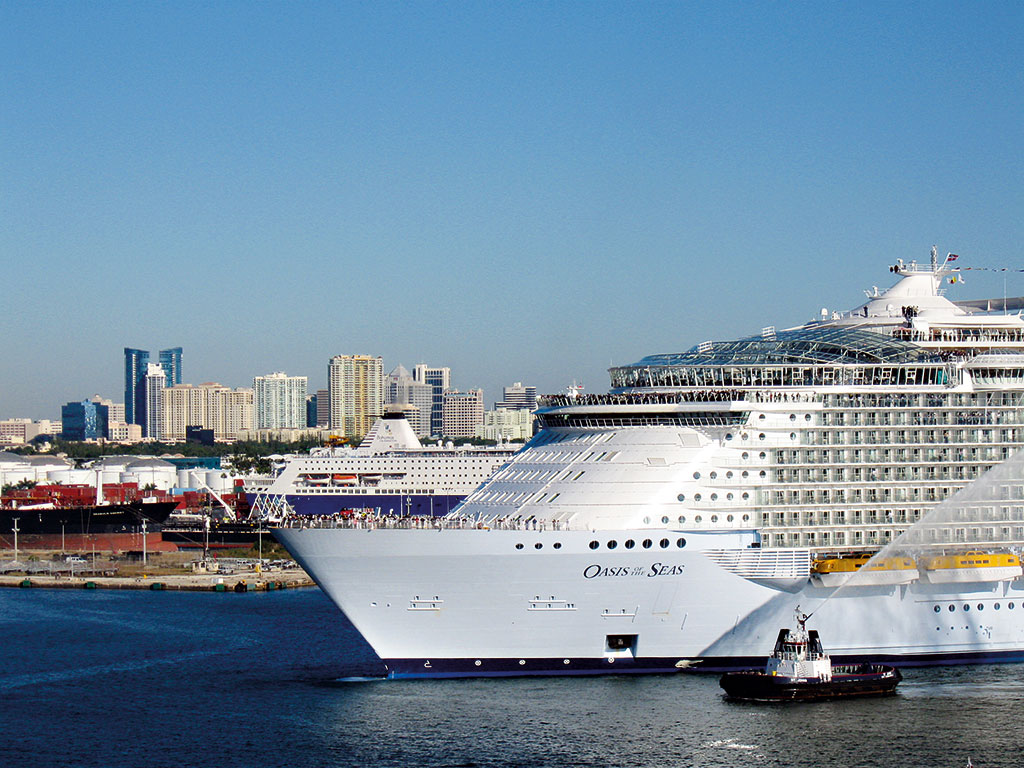
Chinese cuisine takes centre stage across the world

China’s emergence as a global economic powerhouse has led to it having financial interests across the face of the world. Investments range from African natural resources, American bonds and Australian metals to Russian energy, German engineering and British real estate. Such has been China’s rapid growth in importance on the international stage that every rise and fall of its stock market is met with countless opinion pieces and analyst’s notes on the potential impact on the wider world economy – so much so that it has rivalled even the US for prominence in global economic influence.

However, while China’s economic clout is undeniable, it is also starting to have a serious cultural impact on the rest of the world, much like the US has had over the last century. Chinese art is becoming hotly desired, while the country’s cuisine is becoming increasingly commonplace, with exotic spices and teas captivating European markets. As Chinese people begin to travel further across the world, so too will the country’s cultural heritage be exported to new places.

More travellers are visiting China and discovering for themselves that Chinese food is about so much more than the traditional takeaway

This is not the first time that China has so strongly influenced the culture of the world. For around 400 years, between the 14th and 18th centuries, the country was seen as immensely advanced compared to its European cousins. Ever since Marco Polo revealed China’s varied and exotic culture to Europe in the 1300s, the country began to export its many wares. In the 16th century, Jesuit missionaries – most notably, Matteo Ricci – further helped the expansion of Chinese culture, philosophy and innovation. However, by the dawn of the industrial revolution, China soon fell behind the West in its influence, and was routinely sacked by British and French colonial forces in their quests for resources.

During the 20th century – a relatively fallow period for Chinese influence – another country rose to dominate the world both economically and culturally: the US’ emergence as the leading global superpower led to it influencing many aspects of global culture. While Hollywood actors and American music stars have become recognisable the world over, the US’ influence on the eating habits of the global population can be seen from the ease with which anyone on the planet can now get a Coke and a hamburger.

The global stage
Now, with the US’ influence on the world apparently being replaced by that of China, so too is the Asian giant’s food starting to take centre stage. Chinese people are travelling all over the world, and are taking their culture with them. With Chinese cooking seemingly becoming an integral part of many of the world’s kitchens, restaurants are springing up to cater for this new interest. From street food to boutique restaurants, lovers of Chinese food are well catered for throughout the world. Many global cities boast their own China Towns, populated by Chinese immigrants and littered with all manner of restaurants. However, the very highest end of the market is now also becoming populated with many Chinese eateries.

At the Shard, one of London’s most iconic new buildings, a particularly unique Chinese restaurant has been making waves in the city’s flourishing culinary scene ever since launching two years ago. Hutong, an offshoot of a Hong Kong original of the same name that itself was so-called after the traditional narrow Chinese streets found in the north of the country, has built itself a reputation for offering Londoners a mix of typical Chinese dishes alongside gourmet versions of traditional street food. Part of the Aqua restaurant group, Hutong sits high up on the 33rd floor of London’s tallest building, offering breathtaking views of the city.

Earlier this year, Hutong welcomed a new chef into its kitchen. Bing Luo, who has brought a number of innovative new dishes with him, comes from the southwestern city of Chengdu. Luo has been cooking for most of his life, be it in restaurants or for his family.

Business Destinations caught up with the chef to find out more about his career, his thoughts on Chinese cooking, and how his country’s culture has captivated the world.

Bing Luo is the newest chef at Hutong – the luxury Chinese restaurant in London’s Shard
Interview by Jules Gray

Bing-Luo
Bing Luo prepares deep-fried turbot at Hutong, London

What inspired you to become a chef?
It was all I ever wanted to do – to provide for my family and to make sure there was always food on the table.

How long have you been cooking for?
All my working life. I studied at catering college and my first job was as a section chef. I trained in my home city of Chengdu, the capital of Sichuan province.

What are your favourite dishes to make?
I like to make dishes with strong, complex flavours, using Sichuan pepper, onion, chilli and garlic. A new dish I have just introduced to our lunch menu is Guaiwei seafood – Guaiwei is a complex type of seasoning popular in Sichuan, but hardly known outside of it.

How important is it to you that you are sharing the food of your home country?
Very important. I am proud of China’s great culinary heritage, and it gives me great pleasure to share it.

How different is it working in London to Hong Kong?
Actually, the two cities feel quite similar in terms of their energy and pace of life, and both have fantastically diverse restaurant and food cultures.

Do you think that Chinese food is becoming increasingly popular around the world?
Absolutely, both because Chinese people themselves are travelling more widely and taking their cuisine with them, and more international travellers are visiting China and discovering for themselves that Chinese food is about so much more than the traditional takeaway. This creates a demand back home for the diverse cuisine of my country.

How else is Chinese culture spreading across the globe?
Again, due to greater inbound and outbound travel, Chinese culture is spreading around the world. People are learning more about our many great artists, musicians, writers, poets… it’s an exciting time.

What can people expect at Hutong at the Shard?
To discover the exciting and diverse cuisines of northern China and Sichuan, in the form of authentic dishes many of which they will not find elsewhere, served in a beautiful space evoking the hutongs or alleyways of old Beijing.

What other plans are there for Hutong to expand?
We shall see – Aqua Restaurant Group (which Hutong is part of) has always grown organically, with our owners first finding new sites and territories that excite them, and then deciding what sort of restaurant to open there. Watch this space!

Online planning tool Cvent helps businesses master events

A major change is taking place in the hospitality industry. For years, event planners have looked enviously towards the tourist trade, where search engines can locate a suitable hotel in seconds and where aggregator sites provide travellers with a quick and easy way to compare packages. Similar online tools are now becoming available for booking conferences and events, and a huge opportunity awaits those hotels and conference venues that are shrewd enough to take advantage of them.

We are all familiar with the leisure travel sector’s marketing strategy: most of us, when looking for flights or hotels, will use a combination of search engines and comparison or aggregation sites to help us in our selection process. It’s easy to tap in a few simple criteria, such as length of stay, number of guests and preferred facilities, in order to receive an easily understandable list of options and recommendations. Hotels and travel organisations have made good use of these tools, using them to gather information about our preferences and offer us additional services tailored to our individual needs.

On the Cvent network alone, $8bn of business took place in 2014

Online tools
When it comes to group business and the MICE sector, however, things have been functioning very differently: planners have traditionally been obliged to go directly to venues in order to request pricing for their event, or to trawl through websites in search of a likely location. The proposals that they then receive are frequently presented according to the venue’s own pricing packages, making it extremely difficult to compare one offer with another.

Hotels and conference venues have also suffered because of the lack of online tools. To reach event planners, they have been obliged to rely on ‘old school’ methods such as direct mail, advertising and even cold calling, which are becoming increasingly ineffective. According to IBM, three quarters of B2B buyers are now influenced by social media, and over two thirds of the buyer’s journey now takes place digitally. Ultimately, the old marketing techniques just don’t work any more.

Part of the reason for the lack of new digital tools on the market is that hotels have been slow to push for progress. The chunk of income that the sector receives from group business has habitually been smaller than that it has received from tourist or transient business, thereby making it less of a focus for sales and marketing efforts. But the market is still vast: according to Frost and Sullivan, group business is bringing the sector $103bn in income every year, compared with $250bn from transient and leisure business. Significantly, however, the hospitality sector spends only four percent of its group business income on marketing, compared with 10 percent of its transient and leisure income.

Innovative event solutions
The good news is that the market is still wide open. 63 percent of planners say that they don’t have a preferred venue in mind when they begin their search, so it’s just a question of which venues are able to reach them with the most relevant information at the right time. With the right tools, hotels can soon catch up with their business customers – and there are already products on the market that enable a hotel or venue to manage its proposals, integrate with other sales and marketing systems and analyse success rates.

Cvent, which specialises in technology for events, has operated an online venue finding platform for the MICE sector since 2009. From the statistics gathered from its use, it is clear that demand from planners is increasing rapidly – since the company’s inauguration, the number of planner organisations issuing request for proposals (RFPs) for the first time on the network has grown by almost 1,000 percent. The numbers have increased steadily year on year and clearly demonstrate that planners are not merely using the internet as a search tool, but are also placing their orders there. On the Cvent network alone, $8bn of business took place in 2014.

The growing demand for online search tools for planners looks set to continue: Generation Y (in this instance, those people born in the two decades in the run-up to the millennium) are children of the digital age, and with many already in their 20s and early 30s, their attitudes are becoming representative of the workforce as a whole. If we ignore their opinions, we do so at our own peril.

Higher expectations
Cvent’s own research into the opinions of Generation Y event planners pinpointed more reasons why marketing efforts towards them need to be focused online. Firstly, the research showed that Generation Y planners are more likely than their peers to think that negotiating with a venue is the most difficult part of the sourcing process, indicating that they would rather discuss terms at a safe distance. When deciding how to contact a venue, the telephone is far lower down on the list than online sourcing tools or using a search engine.

Cvent also found that Gen Y planners are highly influenced by social media and blogs – something that is hardly surprising, coming from a generation that is used to online shopping and having access to peer and professional reviews for everything ranging from clothes to holidays.

Gen Y planners are also less likely to feel loyal to a particular hotel brand, or to source directly from a venue – being used to instant answers from online sources, they frequently feel that venues are too slow in responding. Finally, the research showed them to be 14 percent more likely to feel that responses are not fast enough, and so will quickly grow impatient and move on to the next option.

Picking up the pace
Hotels and conference venues need to move fast. Competition is on the increase as smaller players enter the market and boutique hotels begin to compete for group business. Cvent’s statistics indicate that smaller group bookings are on the rise, a trend that will further enable smaller players to compete with the giants of the conference and events world. The geographical spread of competitors has also extended, thanks largely to the internet. Hotels that might have previously been sitting below the planner’s radar, in regions such as the Middle East, are able to line themselves up against venues in central Europe. This is very helpful for the planner, who faces a wider choice of locations, but is yet another squeeze on hotels and venues.

All of these factors suggest that hotels and conference venues need to participate more actively in this online market in order to respond to the growing demand. In 2014, over a third of hotels lost market share, while the number of online RFPs from event planners increased by 27 percent. Even so, it’s an exciting time for event planners and hotels alike: the group business sector holds enormous potential for the hospitality sector with its multi-room, multi-day bookings, and the discipline of a more open online market will make life far easier for planners. The move to an online model for researching, comparing and booking venues for events is already happening, and it’s happening fast.

Those hotels wanting a share of the action will need to move themselves into position as soon as possible.