How to future-proof your hotel

Future-proofing is an often-neglected endeavour within the hospitality sector. To an extent, this is to be expected: in an industry where costs are a deciding factor, longer-term plans aren’t always high on the agenda. That said, neglecting opportunities to future-proof your property can be costly.

The hotel industry is competitive, and with the rise of private rentals and home-sharing services, having a reputation for being outdated can be a big blow to your business. Ultimately, it’s in every hotel’s best interest to look ahead and ensure they can keep up with the needs and expectations of their guests. With that in mind, here are three ways to prepare your hotel for the future.

1 – Migrate to the cloud
The future is in the cloud, which means your property should be too. The ability to access data from anywhere in the world means cloud-based management systems are becoming increasingly prevalent within the hospitality sector.

With the rise of private rentals and home-sharing services, having a reputation for being outdated can be a big blow to your business

Hotels should seriously consider migrating to the cloud in order to prepare for future growth. Cloud-based systems can expand or contract as a business does, and provide the kind of flexibility that can facilitate changes across multiple locations. Ultimately, having technology like the cloud onside will boost almost every area of your hotel’s operations. In the age of cyberthreats, the increased data security of cloud-based systems will prove a real bonus.

2 – Wi-Fi is key
Wi-Fi is essential for the modern guest. In this day and age, hotels are expected to provide a high-quality internet connection that allows customers to work, stream and browse without interruption.

Wi-Fi is a must-have amenity, which is why investing in a secure and reliable provider is essential. However, its benefits stretch beyond customer happiness: Wi-Fi can be incredibly helpful for marketing efforts and gaining an understanding of guests’ expectations for the future. Making and sharing engaging marketing content is a lot easier with a fast Wi-Fi connection – not just for you, but also for your guests. A quality Wi-Fi connection gives them the chance to generate their own content and use their social platforms to bring attention to your hotel.

The same goes for online reviews. These act as social proof of the quality of your property, and having a strong Wi-Fi connection maximises the chances of good ones being submitted. Furthermore, you can use the convenience of Wi-Fi to send guests review requests during their stay, while the experience is still fresh in their minds.

Ultimately, Wi-Fi will allow you to personalise guest experiences. With email addresses and other personal information being input whenever a guest logs in, this can be used to create personal touches – for instance, sending out special offers on a guest’s birthday. Though small, gestures like these will go a long way in ensuring guests feel valued, making it all the more likely they will return to your hotel in the future.

3 – Embrace automation
Processes are becoming more and more automated, and your hotel shouldn’t be left behind during this shift. Automation doesn’t have to mean cutting back on customer service – rather, it should mean enhancing it.

Guests should be able to do what they want on any one of their devices, including checking in and out. Staff should also benefit from this, using mobile devices to engage in a dialogue with guests and solve problems while undertaking other jobs around the hotel. Not only will this improve efficiency, but it will go a long way in improving customer service. Of course, no one can fully predict the future, but by making the guest experience as seamless as possible, you’ll find your hotel is one step closer to being prepared for the years to come.

This article was written by The Northern Quarters, an aparthotel offering fully equipped serviced apartments in Manchester’s trendy Northern Quarter neighbourhood.

Could ecotourism help protect the Amazon rainforest?

Between January and August 2019, more than 72,000 fires broke out across Brazil, with many blazing in the Amazon rainforest. This figure represented an 84 percent increase on the previous year. With the destruction of forests known to speed up climate change, a way to reduce or prevent deforestation must be found quickly before irreversible damage is done.

One solution is ecotourism, a form of responsible travel that aims to conserve the environment. Seeking to benefit local communities rather than cause further destruction to the environment, it is a trend that has grown significantly over the past few years.

Ecotourism has the potential to create employment opportunities, provide a platform for local goods to be sold from and ensure the natural environment is protected. However, this brand of tourism also has the possibility to become a form of mass-market tourism itself. For ecotourism to benefit both the environment and the economy, it is crucial that the concept is carefully calculated and viewed as part of a long-term plan, rather than as merely another transitory travel trend.

It’s getting hot in here
Experts estimate that cattle ranching is the driving force behind 80 percent of deforestation in the Amazon. This figure must be reduced if climate change is to be tackled, especially as the Amazon plays such a key role in capturing greenhouse gases like carbon dioxide, and therefore keeping global temperatures down. Conversely, the act of cutting down trees increases emissions by releasing any carbon the trees have already absorbed back into the atmosphere. Overall, tropical deforestation accounts for eight percent of worldwide carbon emissions, making it a bigger contributor than the EU, with forests most commonly being cleared to make way for soy and palm oil production.

Ecotourism must be carefully calculated and viewed as part of a long-term plan, rather than another transitory
travel trend

Cutting down trees so that land can be used for agricultural purposes isn’t entirely beneficial, even for farmers, as many of the land’s nutrients are contained within the forests themselves. Cattle ranching further contributes to climate change through the release of methane, as well as from the fertilisers used on the crops, which often emit nitrous oxide.

Keeping forests standing is an essential weapon in the fight against the global climate crisis. But as the world’s growing population needs to be fed, it is increasingly crucial that new strategies, such as crop intensification, are developed. This strategy allows more food to be grown on less land, ensuring more of the world’s forests can be saved.

Ecotourism to the rescue
To prevent deforestation, a new and equally economically beneficial use for the world’s forests must be conjured up. In the long term, forests used for ecotourism offer a solution, proving more profitable per hectare than those cleared for pastures and fields. To ensure forests are left undisturbed, it is critical that governments see the economic benefits of ecotourism and are encouraged to fund further ecotourism programmes. Dr Sweety Jamgade, an associate professor at the M S Ramaiah University of Applied Sciences in Bangalore, told Business Destinations that having the “governing body and local people as major stakeholders in ecotourism can bolster conservation and the protection of natural habitats”.

With the key reason for promoting ecotourism in the Amazon being the protection of the rainforest, it is of the utmost importance that any additional tourism will not destroy the environment further, even if it can be confirmed as economically viable. Furthermore, as it has been reported that short-term tourism can cause as much harm as unsustainable logging, careful planning is required. Ecotourism must only be viewed as an answer once long-term plans have been put in place.

Another key priority for ecotourism should be the local community. Local people – many of whom face disruption at the hands of the tourism industry – must receive compensation, partially in the form of employment, but also by giving them an opportunity to sell local produce and handcrafted items. The involvement of local communities in ecotourism is especially important on ethical grounds: if a travel company works with locals and shows them respect, then tourists are more likely to do the same.

“Ecotourism, when properly managed, places a non-extractive and sustainable, long-term monetary value on wildlife-rich tropical forests,” Ash Card, founder of ecotourism travel firm Tour the Tropics, told Business Destinations. This long-term monetary value is a crucial factor in convincing governments that ecotourism is worth investing in.

For ecotourism to work effectively, travel companies must ensure tourists arrive in small, controlled groups to protected areas

Establishing tourist destinations in areas where resident settlements already exist is also important for maintaining sustainability, as this allows tour groups to avoid more fragile, uninhabited areas. Additionally, this means prime tourist locations will be situated in areas where transportation already exists, reducing the need for construction and therefore preventing further disruption to local communities.

Too many tourists are a crowd
Any negative factors relating to tourism must be carefully considered, no matter the location. In Indonesia, for example, a rise in tourism in 2014 caused the mortality rate among wild apes to increase, due to orangutans becoming infected with human diseases. These were largely transmitted as a result of tourists offering food to the primates. Mass-market tourism can be incredibly damaging due to a huge influx of people overwhelming forest areas; for ecotourism to work effectively, travel companies must ensure tourists arrive in small, controlled groups to these protected areas.

There is also a danger that if too many tourists arrive, local people will be displaced from their homes in order to accommodate new arrivals. This further illustrates why organisations must work alongside locals to maintain a healthy balance. This is something that travel company kimkim is already doing.

“Kimkim partners with local companies that plan and operate trips in their home countries,” company spokesperson Chris McCarty explained. “Our partners are often small companies [that] experience the changes in their environments first… Protecting these areas is critical to their success and future.”

A light in the dark
Brazil is currently struggling, to a significant extent, with mass deforestation, largely due to the country’s president, Jair Bolsonaro, believing it imperative that the rainforest’s riches are harvested. Alongside him, Brazilian Minister of Foreign Affairs Ernesto Araujo believes climate change is a Marxist plot designed to stifle western economies and promote the growth of China. It’s therefore fair to suggest the Brazilian Government is largely ignoring the climate crisis and its impact on the world’s largest rainforest in order to focus on economic growth.

Although he temporarily banned the setting of fires for clearing land in August, Bolsonaro would like to see commodities mined from the Amazon and then exported globally, thus improving Brazil’s economy. Consequently, the financial benefits of ecotourism must be promoted to the government if Bolsonaro is to be convinced that the Amazon rainforest does not need to be destroyed in order to boost the economy.

It is clear deforestation must end in order to fight the climate crisis and protect the planet. However, to end deforestation in the Amazon rainforest – within Brazil in particular – national governments must be presented with an economic alternative. The most viable is currently ecotourism, which, if carried out correctly, can provide employment and a steady income for local people, while also making tourists aware of the importance of protecting these natural areas.

Top 6 most unique hotels

In terms of aesthetics, thousands of hotels the world over are actually quite similar. Of course, they vary in terms of the furnishings they use, the colour schemes they adorn themselves with, the grandeur of their lobbies, and the finer little touches – yet, aside from some minor variances, hotels often share the same characteristics. These can include white walls so as to open a space, chrome fixtures that give a contemporary feel, or a large reception desk to provide a grand first impression.

To stand out, some hotels have gone down the boutique route, offering rooms that are distinct from one another – artful, funky, fun, or all of the above. While these are welcomed by guests who appreciate something different, there are some hotels that have taken the gauntlet to mesmerising new extremes. Through the incredible imagination of those who delight in bucking trends, travellers can now stay in lodgings that are more fantasy than reality. We take a look at some of the most unique lodgings to be found in the world today.

Hotel Costa Verde, Quepos – Costa Rica
Tree houses are a feature of many backyards, providing an escape among the greenery for children and adults alike. In recent years, however, they have become increasingly popular structures among hotel developments too. While staying in a luxury tree house – particularly one that provides all the amenities one could hope to find in a standard hotel – is a great novelty for most, there are some tree house hotels that are extraordinary even among this already unique group.The Hotel Costa Verde is set amid the Costa Rican rainforest, and its star attraction is its 727 Fuselage Home – a 1965 Boeing 727 aircraft that has been fully refurbished to the highest specifications.

The repurposed aircraft features two air-conditioned luxury bedrooms (each with a private en suite), a kitchen and a dining area. All rooms are clad with teak and filled with hand-carved furniture. The space truly resembles a treetop home that could have been featured in The Swiss Family Robinson.The suite also offers two private balconies over each wing, allowing guests to fully immerse themselves in the jungle’s canopy while looking out to views of the Pacific Ocean. Sloths, monkeys and toucans are among the many neighbours that guests will encounter during their stay. The 727 Fuselage Home therefore provides a remarkable insight into the forest itself. With ocean views, the wonders of the rainforest all around and the sheer delight of staying in a radically up-cycled airplane, Hotel Costa Verde offers an extraordinary experience that guests will never forget.

Sala Silvermine – Sweden
Out of the rays of the South American sun and far away from tree canopies, there is a hotel unlike any other in the deepest depths of Sweden. As one of the world’s best-preserved, disused mines, the Sala Silvermine is a popular tourist attraction that gives visitors breathtaking tours of winding galleries, cavernous corridors and green-lit lakes. For those that wish to stay a little longer in this mystical place, the Sala Silvermine also offers an overnight stay in the deepest hotel suite on the planet.Upon arrival, guests make their way down 370 steps, during which they learn about the lives of miners. When they are 155m underground, they’ll find their room set in a snug alcove and lit only by candlelight.

Sala Silvermine, Sweden

The mine’s bare walls, juxtaposed with plush silver chairs and other furnishings, give the room an otherworldly feel. Although the corridors leading up to it are cold and damp, guests needn’t be worried about the temperature of the room, as it has been carefully heated to a comfortable degree.Despite its lone situation, the Sala Silvermine’s workers tend to guests as usual, greeting them with a basket of fruit, cheese, biscuits, chocolates and sparkling wine, and then hand delivering breakfast the following morning. There is also an intercom radio for communication, as – unsurprisingly – mobile phones do not work at such depths. After breakfast, guests can go back up to ground level and enjoy one of the many events and attractions that Sala Silvermine has to offer, including Viking tournaments and Middle Age-themed markets.

Huilo Huilo Montaña Mágica Lodge – Chile
Another extraordinary hotel located in a South American rainforest ­– though this time in southern Chile – is the Huilo Huilo Montaña Mágica Lodge, which offers an experience unlike anything guests will have encountered before. The hotel itself is a spewing artificial volcano that erupts with water every day, giving those inside the feeling of being behind the curtain of a cascading waterfall. Accessible only by drawbridge and covered in masses of greenery, the Montaña Mágica Lodge is like something straight out of a fairy tale – an abode fit for elves that, as the name suggests, is truly magical.According to the hotel’s website, this accommodation “serves as a reminder of the majesty of Mother Nature”. Indeed, the significance of Mother Nature’s presence stretches far beyond the Montaña Mágica Lodge, as the hotel itself is set within the Huilo Huilo Biological Reserve, a UNESCO-protected site in the centre of the Patagonian rainforest. As one of the only places on the planet that is cloaked in temperate humid forest, those visiting the Montaña Mágica Lodge are certain to find themselves surrounded by a unique collection of flora and fauna. Furnished with natural materials throughout, the hotel is as eco-friendly as its surroundings demand. Yet, as much as nature has influenced the Montaña Mágica Lodge, there is also a touch of luxury on offer through its spa facilities, including a heated pool, infrared relaxation room, and wet, dry and cold saunas. For nature lovers the world over, the Montaña Mágica Lodge calls out as a home away from home.

The Manta Resort – Tanzania
Some of the most wonderful sights the world has to offer can be found below sea level. While snorkelling and scuba diving are fun, and submarines are obviously a little harder to come by, there is another option for those who want to experience sea life in its truest form.The Manta Resort in Tanzania offers a single luxury bedroom that is located just inches above the seabed of the Indian Ocean. This one-of-a-kind, Swedish-engineered structure has three levels: first, the roof, which offers a sunbed and priceless views of the pristine, azure water as far as the eye can see. Staring out at the star-filled sky is just as delightful – with the room located 250m away from the shoreline, the feeling of serenity this place offers is simply priceless.

The Manta Resort, Tanzania

The second area is the landing deck, which is set at sea level. This space features a sheltered outdoor living area and minibar, as well as a bathroom with an open-air shower and an eco-friendly toilet system. Lunch, breakfast and dinner are all served on this level, delivered from the shore by boat. Then comes the star attraction of the entire Manta Resort: the underwater bedroom. With windows placed on all sides, guests can delight in their own private show of exquisite reef fish and coral heads. At night, spotlights provide a magical luminosity to the surrounding water, and also attract some of the sea’s shyer inhabitants. The room even has its own regular visitors, including three batfish and a trumpet fish, while octopi and Spanish dancer fish love to attach themselves to the glass panels. This wooden private island is simply ingenious.

Hippo Point – Kenya
A far cry from the all-too-common luxury tents offered when on a Kenyan safari, Hippo Point is a pagoda tower that overlooks miles upon miles of African wilderness. The hotel is situated amid a wildlife sanctuary that boasts more than 1,100 animal and 500 bird species, offering guests an incredible insight into their thrilling surroundings, 24 hours a day. The tower itself has been constructed from Kenyan cypress, and so blends perfectly into the environment. It has become so much a part of the scenery, in fact, that giraffes and zebras regularly graze around the site. Built in 1993, the 120ft structure boasts four double rooms and a single room on the ground floor, making it ideal for families or small groups wishing to hire the whole place. There is also a kitchen, a dining room, a sizeable living room with a balcony, a meditation room and a writing room, as well as a viewing room and a swimming pool. This outstanding range of spaces has earned Hippo Point a reputation as one of the world’s top wildlife retreats. At night, guests can relish views of a boundless glittering sky while enjoying the sounds of the forest, which includes the characteristic calls of hyenas and hippos. But as much as wildlife is a key characteristic of any stay at Hippo Point, so is wellness: with its uniquely tranquil atmosphere, many visitors consider it the perfect place to unwind and rebalance through meditation, yoga at sunrise, bike rides to Lake Oloidien, and jogging alongside the many creatures that inhabit the area. Luxury and nature meet perfectly at a unique hotel that offers nothing but sheer delight.

Hotel Kakslauttanen – Finland
Perhaps the most commonly touted natural wonder to be seen before you die is the Aurora Borealis. The dancing colours of the Northern Lights enthral and delight all those lucky enough to bear witness to them. Though there are numerous types of accommodation across Norway, Finland, Sweden and Iceland that offer great views of this majestic phenomenon, there is one that stands out in particular. In addition to romantic timber cabins and authentic snow igloos, Hotel Kakslauttanen also offers visitors the chance to stay in an igloo made of glass. These dome-shaped structures offer phenomenal views of the aurora in absolute comfort and luxury. Each igloo even has reclining beds that allow guests to lie back, relax and watch the most wondrous spectacle the natural world has to offer, all in complete privacy.

Hotel Kakslauttanen, Finland

What may come as a surprise to guests is that, despite temperatures dropping to -30 degrees Celsius outside, visitors can stay comfortably warm as a result of the igloos’ thermal glass walls. The innovative material also prevents condensation from forming inside the igloos, or frost building outside, thereby offering guests pristine views of their surroundings. This is a key feature of the glass igloos, for as well as the wonders of the skies above, masses of sparkling white snow, towering evergreen trees and glimpses of husky-driven sleighs and whizzing snowmobiles are also visible all around. The resort offers a range of other activities, from reindeer sleigh rides and steaming saunas to skiing, snowboarding, ice swimming and fishing. Guests are therefore never short of once-in-a-lifetime experiences during their stay at the enchanting Hotel Kakslauttanen.

Anime enjoys explosive popularity in China

From the Oscar-winning Spirited Away to summer 2016’s ubiquitous Pokémon Go, the influence of anime on western culture is undeniable. Wildly popular in its native Japan, anime is quickly crossing national borders, winning fans with its stunning visuals and engaging storylines in markets as diverse as Russia and Mexico. And yet, while we may think of anime as a modern phenomenon, we have actually been feeling its cultural influence for some time.

“Anime has been around on western screens for a lot longer than people think,” said Griseldis Kirsch, Senior Lecturer in Contemporary Japanese Culture at SOAS University of London. “Early shows such as Marine Boy simply weren’t marketed as anime, but were merely seen as cartoons like any other. No one thought of them as Japanese.”

In the years since these small-screen anime debuts, the genre has gone from strength to strength. The breakthrough success of Sailor Moon and Pokémon propelled anime into the cultural mainstream in the 1990s, and by the 2000s, it had become a truly global phenomenon. The industry’s astronomical rise is still showing no signs of slowing down, with 2016’s Your Name emerging as the most commercially successful anime film ever released, smashing box office records both at home and overseas.

Significantly, the sentimental coming-of-age movie has also captured the hearts of cinemagoers in China, meaning it is fast becoming the most successful Japanese film ever shown in the nation. The film’s runaway success at the Chinese box office is not only testament to director Makoto Shinkai’s masterful storytelling, but also the rapid growth of the Chinese anime market. Estimated to be worth more than $21bn, China’s flourishing anime industry is expected to outgrow Japan’s as early as this year.

Cross-cultural appeal
Raking in a staggering $41m at the Chinese box office in its opening weekend, Your Name is something of a standout smash hit in China. Film experts believe the dreamy teen drama has tapped into some of the country’s unique anxieties, while its bittersweet tale of star-crossed lovers and missed connections has struck a chord with young Chinese citizens yearning for escapism. And yet, such emotional depth and complexity of plot is by no means unique to Your Name.

“Japan has really been at the forefront of psychological fiction for 1,000 years,” said Susan Napier, Professor of Japanese Studies at Tufts University and author of Anime from Akira to Howl’s Moving Castle: Experiencing Contemporary Japanese Animation. “The world’s first psychological novel – The Tale of Genji – was written in the year 1000 by a Japanese woman, and it’s very psychologically deep and introspective.”

Estimated to be worth more than $21bn, China’s flourishing anime industry is expected to outgrow Japan’s as early as this year

Napier believes, in many ways, anime continues this rich literary tradition, creating complex characters and weaving storylines that navigate oft-unexplored emotional landscapes. Crucially, anime plots often focus on the whirlwind emotions and coming-of-age moments of youth, winning the genre many young fans across the globe. While European and US cartoons tend to be more simplistic in their storylines (often leaning heavily on humour), anime paints a more nuanced picture of the human experience.

“Anime really touches on all of the emotional bases in a way that’s really amazing,” said Napier. “Anime can be funny, but it can also be dramatic, tragic and apocalyptic. For young people who are grappling with some big life questions, anime really taps into what they are feeling.”

Whether exploring love or loss, anime focuses on themes everyone can easily relate to. What’s more, the genre deals with these universal human emotions while also commenting on an array of contemporary concerns, including gender inequality, mass urbanisation and government control. By appealing to both the universal and the specific, anime has captured the imagination of young people around the world, with Chinese youth responding particularly positively to the genre. Not only do certain anime franchises perfectly capture the modern-day concerns of young Chinese citizens, they also provide the perfect medium for viewers to escape from these pressing anxieties.

Visually speaking, anime creates a magical, dreamlike realm, where fantasy and reality blend together seamlessly. For those looking to lose themselves to pure escapism, this otherworldly element provides the ultimate release. Worlds that appear logical will suddenly give way to the fantastic, offering an appealing alternative reality to world-weary viewers.

Big-money business
Thanks to a surge in Chinese interest, anime sales are now booming: in 2015 alone, sales of the Japanese cartoons rose by 79 percent, with more than half of that increase coming directly from Chinese buyers. Having captured the hearts of the Chinese youth, anime is now coming for their wallets too.

After a stringent government crackdown on online piracy, legitimate streaming sites such as Youku and Bilibili have been paying extraordinary sums for anime streaming rights. It is not unusual for an episode of one of the most popular shows to sell for more than $100,000, while an entire series can cost upwards of $1m. While this is an incredible amount of money to be spending on licensing, the viewing figures prove this hefty investment is worthwhile: for example, on Youku alone, episodes of the popular ninja series Naruto have more than 2.5 billion views.

As this appetite for anime grows among the nation’s youth, China’s internet heavyweights are looking to a future beyond licensing rights. Instead of simply importing Japanese anime, China is hoping to create its own original content, and is pouring billions of dollars into home-grown animation studios. Leading the way are web giants Alibaba and Tencent, which are increasingly looking to partner with Chinese animators and domestic art studios.

$41m

Your Name’s opening weekend takings at the Chinese box office

79%

Rise in Japanese cartoon sales (2015)

In November 2015, Tencent paid $30.5m for a 15 percent stake in video-streaming site Bilibili. Since forming the partnership, Tencent and Bilibili have been creating a steady flow of Chinese-language shows, agreeing to make 20 original anime series over the course of two years. However, luring Chinese anime fans away from their beloved Japanese shows may prove an incredibly difficult task, even for internet titans such as Tencent and Alibaba.

“Currently, the label of ‘Japanese’ does still seem to matter enormously to anime fans,” said Kirsch, as she explained why Chinese consumers might be reluctant to embrace domestic productions.

Indeed, in a recent survey of Chinese anime fans, 82 percent of respondents said they watched Japanese anime, while just 14 percent said they preferred Chinese animations. With billions of dollars being spent on bringing in top animation talent from Japan, however, China’s domestic studios are gambling big money on winning over these sceptical audiences.

Cartoon communities
As anime fever sweeps the nation, China has wholeheartedly embraced fandom culture. Anime conventions are springing up in almost every major city across the country, bringing thousands of ‘superfans’ together in mass social gatherings. Many attendees dabble in cosplay, dressing up as their favourite anime characters for a fully immersive convention experience.

In April, anime fans descended on the city of Hangzhou, where this year’s China International Cartoon and Animation Festival was taking place. The event attracted more than one million attendees over a six-day period, with fans shelling out more than CNY 2bn ($290m) on goods and merchandise. Thanks to China’s booming middle class, many young city-dwellers now enjoy a certain level of disposable income, far outspending previous generations when it comes to pursuing hobbies and interests.

Aside from generating record sales, these events are also places where lifelong friendships are formed. There is a strong sense of community among the anime fandom, with enthusiasts united by their shared passion for this somewhat underground culture. Of course, the advent of social media has only helped fuel the growth of these communities, with fans instantly able to connect with likeminded anime lovers from all over the world.

“Social media is really important, of course,” said Napier. “But what really brings them together is this sense of having a special relationship with something that’s a little bit different.”

For these fan communities, part of their enjoyment of anime seems to stem from this feeling of ‘otherness’ – that they are all involved in something outside of mainstream entertainment. And yet, as anime films scoop Academy Awards and break box office records worldwide, the genre is beginning to enter the global cultural consciousness in an unavoidable way. Indeed, Your Name has become such a smash hit that its director, Makoto Shinkai, has said the film’s overwhelming popularity is “not healthy”. In fact, the filmmaker has gone so far as to say: “I don’t think any more people should see it.”

With films such as Your Name enjoying such mainstream success, anime can no longer be truly considered a subculture. Director-animator Hayao Miyazaki has become something of a household name, and streaming service Netflix is even in the process of producing its own original anime shows. The genre has largely moved away from its underground roots, and now sits at the forefront of the global entertainment industry. As to whether this newfound popularity will alienate anime from its die-hard fans, only time will tell.

Weak pound sees tourist numbers soar in the UK

The UK is becoming an ever-more attractive destination for holidaymakers, thanks in part to a weak pound in the wake of last year’s Brexit vote. The UK welcomed a record 8.3 million tourists in the first three months of 2017, marking a 10 percent rise on the same period last year. According to the Office for National Statistics, these record-breaking figures reflect the UK tourism industry’s best first quarter of any year in history.

The fall in the value of the pound is thought to have been a principal factor behind this spike in tourism, as foreign visitors can now get more for their money, particularly in the nation’s famously expensive capital. The pound has weakened dramatically against the dollar and the euro in the aftermath of last June’s Brexit referendum, and shows few signs of strengthening as the UK enters exit negotiations with the EU.

Terrorism fears have had a dramatic effect on France’s tourism industry, but the UK’s tourism numbers appear largely unharmed

While this decline makes foreign travel more expensive for British holidaymakers, it has enhanced the UK’s appeal as a shopping destination among visitors. In the first quarter of the year, tourist spending rose by an impressive 16 percent, with international visitors parting with a record £4.4bn ($5.7bn).

Visitors from China and the US have been leading the tourism boom, and bookings from both nations are also up for the summer season. Between January and March, the number of Chinese visitors to the UK rose by 29 percent, with a record 54,000 holidaymakers flocking to the UK.

Chinese tourists spent £91m ($118m) in the UK in the first three months of the year, with London’s famous shopping districts proving particularly popular with Chinese shoppers. It is estimated that some 70 percent of shoppers in Burberry’s Regent Street store are Chinese tourists, while department store Harvey Nichols has recruited Cantonese and Mandarin-speaking staff to accommodate Chinese customers.

With bookings for the summer months looking strong, it appears that the UK’s recent series of terror attacks has had little impact on tourist interest in the country. Terrorism fears have had a dramatic effect on France’s tourism industry, but the UK’s tourism numbers appear largely unharmed.

The UK tourism industry has now been growing steadily for six years, with 2016 marking a record year for foreign holidaymakers. Last year, visitor numbers grew by four percent to a staggering 37.6 million. If this tourism boom continues, 2017 may well prove to be the most successful year on record for the UK tourism industry.

The world’s most walkable cities

A growing focus of urban design, walkability is a measure of how easy it is to access the amenities and culture of a place on foot. Not only is improving a city’s walkability better for the environment, but also it promotes social cohesion, healthier people and, ultimately, more vibrant communities.

For travellers, more walkable cities make destinations more exciting, as well as far easier to navigate. Here are five of the world’s most walkable cities:

1. Edinburgh, Scotland

With its relatively compact size, Scotland’s capital is easy to traverse. The city’s Georgian New Town is thoughtfully laid out, while the Old Town offers a multitude of nooks and crannies for curious travellers to explore. The North Bridge and South Bridge connect the two, making it extremely easy to find a way across town. A destination overflowing with history, figuring out the direction your next point of interest only requires a look at the skyline. But be prepared for a climb; Edinburgh is particularly hilly.

2. Melbourne, Australia

Located in the southeast of the country, Australia’s second largest city enjoys a temperate climate. Melbourne also boats a huge variety of world-class walks only a short distance from the central business distract. The Tan Track is a 3.84km-long walking trail around the city’s Royal Botanic Gardens that often edges along the banks of the Yarra River. St Kilda beach is a far more relaxed affair, offering stunning views of Port Phillip Bay. Travellers can also spend entire days exploring the city’s famous network of graffitied alleys and shopping arcades.

3. New York City, US

New York’s walkability is legendary, with many of its residents easily going their entire lives without ever owning a car. The city’s density means it is constantly bustling with life, while public transport is never more than a 15-minute walk away. Central Park – the most visited urban park in the country – is also available to provide some respite from the skyscrapers. New York is a breeze to navigate, with its main streets serving as arteries for the many neighbourhoods that branch off from Manhattan. For urban exploration, there is no better destination.

4. Marrakech, Morocco

Morocco’s fourth largest city is best traversed on foot, as any other mode of transport could cause visitors to miss out on the majority of what the city has to offer. While the ancient meeting square Jemaa el Fna is a highlight, navigating the city’s famous covered markets will take up most of your time. The souk boasts myriad exotic products for sale, including spices, leatherwork, textiles and traditional Moroccan fashion, while Majorelle Garden offers a more relaxed atmosphere for when the shopping gets too much. Just beware of the occasional dead end; Marrakech’s labyrinthine layout has left it with more closed off roads than the average city.

5. Venice, Italy

The fact that Venice is deemed one of the world’s most walkable cities should come as no surprise; there isn’t much of an alternative when it comes to getting around. While the canals may make boat travel an easy option, the greatest joy of Venice comes from what you stumble across while navigating the perilously narrow streets. One of the few cities where it is actually enjoyable to get lost (and you almost certainly will), hundreds of years of history are on display in both the buildings and culture. While the streets are chaotic, a waterway that leads back to the Grand Canal is never too far away.

The Convention Centre Dublin

Over the last decade, Ireland has established itself as one of the world’s leading locations for business, becoming a centre for excellence in research and development; according to Forbes, Ireland is one of best countries in the world in terms of the ease of doing business. This may go some way to explaining why Ireland is currently the fastest growing economy in the advanced world, according to IDA Ireland.

On top of this, Ireland’s idyllic setting also acts as a gateway to the rest of Europe, offering many logistical benefits as a destination for any business. Ireland’s capital city, Dublin, is now home to nine of the world’s top 10 ICT companies, the top 10 ‘born on the internet’ companies, and nine of the top 10 global software companies. Ireland continues to attract investment from some of the world’s largest companies, with Microsoft, Google, Facebook and Airbnb just a few of the names on a growing list.

The CCD is not only famed for its iconic building and convenient location, but for its exceptional customer service as well

A small and compact city, Dublin’s great transport links mean navigating is easy, and nothing is ever too far away. With Dublin Airport serving over 180 routes, including direct flights to the UK, US, Europe and the Middle East, the Irish capital is highly accessible to all.

Education and innovation
However, Dublin is more than just a great conference location. With a solid reputation for education and innovation to go along with its great accessibility, it is no coincidence Dublin is now the European headquarters for many of the world’s leading corporations and a hub for academic research and innovation.

The city is also steeped in a rich cultural heritage of music, art and theatre, all complemented by a range of restaurants, cafes and shops waiting to be explored.

The home of conventions
The Convention Centre Dublin (CCD) is located in the heart of the city, just 15 minutes from Dublin Airport. As Ireland’s only purpose-built convention centre with the capacity to host more than 5,000 people, the CCD has become a venue of choice for many global organisations and associations. Its central location provides conference organisers with the choice of over 20,000 competitively priced hotel rooms, all within easy reach.

Since opening in September 2010, the CCD has hosted more than 1,350 events, winning 33 industry awards and welcoming a number of high-profile and high-calibre events. It is one of the most technologically sophisticated venues in the world, boasting state-of-the-art equipment in every room, complimentary Wi-Fi throughout, and a range of advanced communications, technology and IT solutions to enhance every event.
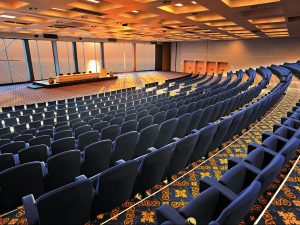
There is a range of multi-functional rooms available – suitable for events and conferences of all shapes and sizes – including a 2,000 seat auditorium, a 4,500sq m exhibition space and banqueting facilities that can accommodate up to 3,000 guests. Six foyer spaces flood the venue with natural light, offering panoramic views of the city and providing the perfect setting for registration and hospitality.

The CCD is not only famed for its iconic building and convenient location, but for its exceptional customer service as well. The venue prides itself on offering first-class service, drawing on its high level of expertise and providing a sense of Irish warmth and hospitality. The CCD allocates a dedicated team to each event, ensuring all levels of service are consistently high and guests are treated to an unrivalled experience.

For more information:
theccd.ie

Miami Beach Convention Centre

Spectacular beaches, world-class boutiques and the trendiest clubs and restaurants – these are just a few of the wonders that await visitors in Miami and Miami Beach. Amid state-of-the-art performing arts playhouses, sports venues and the bustling downtown area sits the 130,064sq m Miami Beach Convention Centre.

Whether you are soaking up the sun or savouring the taste of the city’s trendsetting cuisine, to truly appreciate Miami and the Beaches you need to experience it. No tweet stream, blog spot or feature article can capture what makes Miami and the Beaches so meeting-worthy.

The Miami Beach Convention Centre is reinventing itself right before our very eyes

If you are looking for the most exciting, outstanding, sensuous and memorable site in which to hold your next meeting, three short words say it all: it’s so Miami.

The $615m facelift
Meeting planners around the world are no strangers to the phenomenal sun, surf and fine dining Miami Beach has to offer. A globally recognised, first-class destination, Miami Beach hosts world-renowned festivals such as Art Basel Miami Beach. What some might not know, however, is the convention centre is reinventing itself right before our very eyes.

Through municipal bonds, the Miami Beach Convention Centre is currently undergoing a magnificent $615m transformation, reimagined as a state-of-the-art, LEED-certified facility accommodating both national and international events and conventions.

The centre has remained open for business throughout the majority of this process, only briefly closing between January and May 2017. Renovations will be completed in 2018, and bookings are already filling up. Last year alone, more than 1.2 million delegates met in Greater Miami and the Beaches, and as Miami Beach Mayor, Phillip Levine, put it, the new facility will be a “centre for creative collaboration”.

Miami Beach is not only on track to keep up with the demands of a competitive national and international convention community – its new outdoor public spaces will also improve walkability for attendees and visitors alike, connecting the centre and the city’s historic cultural district and resorts.

Space to breathe
Large or small, if you can imagine it, the centre can handle it. Upon completion, more than 17,650sq m will be dedicated to 81 breakout rooms featuring flexible arrangements for attendees. Known for their grand-scale iconic public spaces and leadership in sustainable design, the nationally acclaimed team at Fentress Architects will oversee this renovation, delivering meeting rooms with the latest in AV technology, soundproofing and attendee comfort.

This 130,064sq m LEED-certified convention centre is a dream come true for industries such as medical tourism, insurance, technology, sports marketing and pharmaceuticals. Its 46,452sq m of forward-thinking, renovated and versatile exhibition space – including four massive halls – is set against a stunning backdrop of beaches, fine dining, art, shopping, luxury rooms and – of course – sunshine. Not to mention a state-of-the-art 5,574sq m grand ballroom, 1,858sq m glass rooftop junior ballroom and the reimagined indoor and outdoor public spaces.

For more information:
miamibeachconvention.com

Bernardin Hotels

Bernardin Hotels has opened up the wonders of southeast Europe to the rest of the world. The group manages three resorts on the Slovenian coast – St Bernardin, Salinera and San Simon – where the blue Adriatic reaches into the very heart of central Europe.

All of the group’s resorts are perfectly constructed to cater for all types of traveller, whether they want to relax, engage in business, or combine the two. One of the group’s largest offerings is St Bernardin, which offers plenty of accommodation options, including the five-star Grand Hotel Bernardin – the first and largest convention hotel in Slovenia, with 241 rooms and suites. It also has the four-star Hotel Histrion, with 276 rooms, and the three-star Hotel Vile Park, with 239.

There are many interesting events to take staff members to, especially as Slovenia has a rich mixture of festivals each year

The Grand Hotel Bernardin not only provides a comfortable stay, but also comes equipped with an extensive convention centre that is designed to meet a variety of conferencing needs, including seminars, presentations, banquets, product launches and fashion shows. In total, the hotel has 19 multifunctional meeting rooms and a divisible main hall.

Natural surroundings
When guests are not conferencing, they can explore the stunning surroundings of Slovenia. The Strunjan nature park is one of the best sites to adventure to, with idyllic cliffs and fantastic views over the fresh seawater. There’s also the Istria, which is packed with restaurants and bars to sample. Visitors can even enjoy the great range of activities available in Slovenia, whether they want to try snorkelling, wakeboarding, sailing, swimming, or go on a pleasant walk.

The area is blessed with fantastic weather and vegetation that has naturally boosted the local gastronomy scene. Slovenia boasts exceptional olives, used to produce some of the finest oil in the world, and is renowned for its top quality fruits and vegetables.

All of Bernardin Hotels’ resorts are ideally located for any business traveller; the scenery and comfortable climate spurs the flow of communication, pursuit of new ideas and the productiveness of teambuilding. There are many interesting events to take staff members to, especially as Slovenia has a rich mixture of festivals each year, including Tartini, Extempore, Forma Viva and the Festival of Salt. The locals are open, friendly, authentic and caring, and are always keen to welcome international visitors.

Drawing the crowds
The convention centre at the Grand Hotel Bernardin has become so popular that it now hosts 300 events per year, attracting individuals from all kinds of sectors, whether economic, technological, political or creative. Mark Tandy, who previously stayed at the Grand Hotel Bernardin and is Technical Manager at the International Whaling Commission, said: “The delivery of large catered functions was dealt with efficiently and economically. I commend the staff for their friendliness and dedication to their work.”

Staff members at Bernardin Hotels pride themselves on their attentive, warm and welcoming manner to guests. They do their utmost to fulfil the wishes of each and every guest. The three resorts have therefore become as celebrated as Slovenia itself, and highly praised for their radiance and world-class hospitality.

For more information:
bernardingroup.si

Cape Town Convention Centre

As a global destination of choice, Cape Town is hotter than the African sun. Winner of the 2015/16 Telegraph Travel Award for the Best City in the World and the Condé Nast Readers’ Choice Award for the number one food city in the world, the South African city offers an exciting backdrop for any event.

Enter the Cape Town International Convention Centre (CTICC). Located on Cape Town’s northern foreshore, the centre sits at the foot of Table Mountain – voted one of the New7Wonders of Nature – and is surrounded by the beautiful beaches of the Atlantic Seaboard. The CTICC provides a world-class experience for business travellers: only a 20 minute drive from Cape Town International Airport, it offers a state-of-the-art, versatile meeting facility with 11,399sq m of dedicated exhibition space, two raked auditoria which seat 1,500 and 612 delegates respectively, a sub-divisible 2,000sq m ballroom, and 33 break-out rooms.

Hosting any event at the centre gives organisers an ideal platform from which to reach African businesses

Leading the pack
The CTICC also provides a wide range of event management services and extensive catering concepts, while its talented and dedicated staff can convert almost any space you can imagine. It has become one of the leading and biggest events and conference centres on the African continent and has hosted more than 5,500 international, regional and national trade shows, conferences, congresses, exhibitions, film shoots, concerts and special events since opening its doors in 2003.

The centre has become the number one conferencing venue for association meetings in Africa. Hosting any event at the centre gives organisers an ideal platform from which to reach African businesses.

Growing roots
The CTICC’s offering will soon extend to an additional facility: the 31,148sq m CTICC 2, which will officially open in July. With 10,000sq m of multipurpose exhibition and conference space, 3,000sq m of informal and formal meeting space and a show-stopping sky bridge, CTICC 2 will give clients a unique venue ideally located close to dozens of world-class hotels and restaurants.

Cape Town’s beaches regularly top international ‘must see’ lists, while the city is also mere minutes away from some of the best vineyards in the world. Furthermore, as a hub of academic and research excellence and the home of four of the country’s leading universities, the destination offers organisers and travellers unrivalled tourism experiences and opportunities to create field tours for valuable knowledge exchange.

The CTICC was the first convention centre in Africa to hold three international management system certifications simultaneously: it currently holds HACCP (Hazard Analysis and Critical Control Points) certification and has a five-star grading from South Africa’s Tourism Grading Council, both of which guarantee delegates the highest possible level of quality, care, safety and sustainability.

Due to its expansion, the centre has already secured the hosting rights to the World Ophthalmology Congress, during which it will see 15,000 delegates descend on the centre in 2020. Other notable events such as Africa Travel Week, AfricaCom and the renowned Cape Town International Jazz Festival have expressed keen interest in the centre’s expanded offering.

For more information:
cticc.co.za

Jerusalem International Convention Center

In a world where most people are connected to the internet – a world in which WhatsApp, Facebook, Twitter, cell phones, email and video chats facilitate immediate, non-stop, interpersonal communication – one might be tempted to think the demand for conferences, conventions and personal interaction between colleagues is on the wane. In fact, what we are seeing is precisely the opposite.

As the leading convention centre in Israel – and the entire Middle East – and a member of international organisations such as ICCA and AIPC, we at Jerusalem’s International Convention Center (ICC) have seen the industry’s rapid growth first-hand.

Demand is increasing for professionally produced conferences, conventions and exhibitions. Today’s organisations are setting ever more rigorous standards, expecting the highest level of professionalism and creativity in planning their business events.

Israel is located at a historical crossroads, in the cradle of the world’s monotheistic religions

Since its establishment, the ICC has consistently earned the respect of customers from around the world. As Israel’s official representative convention centre, the ICC is considered a national institution. But while our events always have a characteristically Israeli flavour, we make sure each one is unique and innovative, with a style that reflects the constantly changing times.

A unique experience
Location is a decisive consideration when planning an international event. Israel is located at a historical crossroads, at the meeting point of key international trends and in the cradle of the world’s monotheistic religions.

Israel’s heart is the city of Jerusalem, which is familiar to millions of people as a crucible of world culture and is holy to Christianity, Islam and Judaism. The ICC complex is located at the very gates of the city, astride its main geographic entry point.

For decades, our location has served as a powerful magnet for conference organisers and participants alike. The excitement of being at the epicentre of world culture makes every event uniquely compelling. No convention in any western capital (impressive as they may be) can match the thrill of visiting the city of kings and prophets, where the adventures of King David and the passion of Jesus of Nazareth took place – a city whose very name is an indelible part of mankind’s spiritual heritage.

Jerusalem arouses powerful feelings among conference guests. Naturally, most take advantage of their ICC event to visit the abundance of historical and religious sites, artistic venues and culinary institutions the city has to offer. Since Jerusalem is one of the world’s most important and impressive destinations, the ICC endows any event with a uniquely festive aura and sense of prestige.

Promoting high standards
True performance, however, requires more than just a good location. More than six decades of success point to the ICC’s outstanding level of service, wherein congresses, conferences and exhibitions are highly detailed productions that require precise coordination, planning and execution. What make it all come together is a uniquely talented professional management and staff with the highest level of expertise.

Producing a successful international event is a lot like conducting a philharmonic orchestra with dozens of musicians: everything must be organised and carried out with flawless accuracy. At the ICC, the staging, speakers, seating arrangements for the audience, integration of sound and video, splitting up into separate sessions, timing of meals, catering, refreshments, design, registration and reception of participants are all seamlessly coordinated. The greatest compliment we can – and often do – receive is praise for the quality professional staff members of the convention centre and their ability to make a hugely complex operation work together without a hitch.

We adhere to the highest standards of efficiency and service. The events we organise are not ours, but our customers’, and the unwritten code that guides every action of every employee at the ICC is ‘the customer comes first’. Our staff force is always available, accessible, open and cooperative, endlessly patient and ready to serve with a smile. This is not just a mode of operation: it is our professional worldview, business strategy and way of life.

Our mission is to ensure everything happens according to the plans and wishes of the customer. We remain single-mindedly dedicated to our customer’s vision, all the way through from the initial concept to the successful finale. All the customer has to do is enjoy the praise of their conference guests. At any given moment, the professional staff members of the ICC are working on the centre’s next event, preparing to transform another customer’s vision into reality.

No event too big
In addition to selecting the right international venue for a large-scale congress or conference, choices must be made about the nature of the event: will it be a fair or an exhibition, a political convention or an international festival, or a gala event? Here our two key advantages come into play: the ICC offers state-of-the-art facilities that can accommodate events of all types and sizes, along with a top-notch planning and development team with unparalleled experience in organising world-class events.

The ICC contains no fewer than 27 physical spaces of different varieties and sizes. Our accessible parking facility is adjacent to the centre and has been designed to meet the needs of every type of event. Physical spaces include: a plenary auditorium, which is the largest and most advanced in the Middle East with a capacity of 3,000; the spacious Teddy Hall, a venue that has easily hosted a car show with room to spare; impressive lounges; elegant lobbies; conference rooms of varying dimensions that can be resized by splitting or joining them together; auditoria with glass ceilings; inner courtyards; and a large garden space at the rear of the building, which is uniquely suited to outdoor events for large numbers of participants.

Over the years, the team at the ICC has organised the widest range of events imaginable. These have included the historic visit of President Barack Obama, who chose the ICC as a platform from which to address the Israeli people, and the visits of former US Secretary of State Henry Kissinger, former US President George Bush, former General Secretary of the Soviet Union Mikhail Gorbachev, and former UK Prime Minister Tony Blair. Furthermore, the ICC was always the venue of choice for the late Israeli President Shimon Peres. It has hosted the Eurovision Song Contest twice, and is the home of the annual International Bible Contest.

Maintaining a reputation
But how does an institution with such experience and prestige continue to offer an attractive and relevant alternative, year after year? Mira Altman, ICC CEO, former Director General of Israel’s Ministry of Tourism and former Deputy Chair of Israel’s Hotel Association, explained: “We are fortunate to be located in a central hub of world culture. Israel, and Jerusalem in particular, are magnets for people from different countries and religions from around the world. But at the ICC, our professional drive does not permit us to rest on our laurels.

“For more than six decades the ICC has been an internationally recognised industry leader in hosting conferences. A commitment to excellence guides each and every one of our employees. Whether the event is large scale, medium or small, we start by getting inside the customer’s head, by getting to know their needs and what they wants to achieve. We put the vast experience we have accumulated in planning and execution to work for them.

“The guidance we provide throughout the entire process instils the customer with confidence, and us with a great sense of pride. Above all (and for us this is virtually an article of faith) we are committed to constant innovation: new initiatives, creative ideas, advanced equipment, the latest technology. The ICC is always changing with the times, leading the entire industry. That’s what we will continue to do as we go forward.”

For more information:
iccjer.co.il

Kitzbühel Tourismus

A small, picturesque town located along the river Kitzbühler Ache in Austria, Kitzbühel has long been a favourite location among sports-loving tourists. A city home to competition and tradition, Kitzbühel’s inspiring atmosphere is also the perfect environment for a conference or event.

With a range of exciting activities on offer after the event as well, Kitzbühel encourages creative thinking and new perspectives for all who visit.

Boasting a town centre that dates back 700 years, Kitzbühel has long been a destination for people seeking to challenge themselves. Nestled below the Kitzbühel Alps, the city is home to internationally renowned events such as the Snow Polo World Cup and the Hahnenkamm Race, one of the most challenging downhill ski events in the world. When not blanketed in snow, Kitzbühel boasts four golf courses and has several picturesque hiking trails to explore. The city is also a striking destination in which to arrange a meeting or conference.

The region’s alpine lifestyle is the perfect environment in which to encourage creative thinking

Meeting responsibly
As a destination for MICE events, Kitzbühel excels thanks to its diverse atmosphere and infrastructure. More than 9,000 beds are available in the region, offering an outstanding range of accommodation options. The city also has all the amenities required for any conference or event. Whether it is a product launch or a medical congress, Kitzbühel has the space and events team necessary to arrange it.

Event organisers looking to stage a conference have access to a wide range of spaces, of many different shapes and sizes. For larger events, K3 KitzKongress is the location of choice. This modern conference centre has all the amenities one would expect, which it offers with minimal impact to the environment. At the beginning of 2015, the centre received an Austrian national award in recognition of its environmental credentials, naming it a leader among the growing ‘green conference’ movement.

Beyond its facilities, Kitzbühel also casts an inspiring atmosphere over guests looking for fresh energy and new enthusiasm in their work, with the spectacular Austrian landscape stretching out in every direction. In the town centre, exclusive boutiques and award-winning restaurants give visitors the perfect opportunity to recharge their batteries. The Alpine lifestyle that the region is so famous for is the perfect environment in which to encourage creative thinking, while relaxing.

After the meeting
Even following a conference, there is much more of Kitzbühel to explore and experience. The variety of activities that Kitzbühel can offer for visitors following their MICE event is unparalleled: element3, Kitzbühel’s local incentive and event agency, can arrange a variety of activities to supplement any meeting or conference. Besides the obvious snow activities of skiing, snowboarding and tobogganing in the winter, more adventurous activities can also be arranged, such as ballooning, husky dogsledding adventures and ice climbing.

For the warmer months, stand up-paddling, vintage car tours and maypole raising are just some of the activities on offer. All year round, guests can engage in tandem paragliding, embark on a gourmet food expedition or ride the stunningly scenic flying fox. These events can be tailored to the specific needs of groups of any size.

Aside from the 77th Hahnenkamm Race and 15th Snow Polo World Cup, Kitzbühel will be playing host to a number of other spectacular events in 2017. One of the most beautiful classic car rallies in the world, the 30th Kitzbühel Alpine Rally, is taking place in June, while the 15th Kitzbühel Golf Festival will see the city host 11 tournaments in a week. A more historic event, the 93rd Annual Fair of the Kitzbühel Town Band, will see crows gathering in traditional Tirolean costumes in August.

With an overwhelming variety of events and everything any conference organiser could hope for, Kitzbühel is a prime destination for any international conference or event.

For more information:
kitzbuehel.com