Confit or not to be? France’s fight against fake food

Food is integral to French culture and lifestyle. A good boeuf bourguignon can warm the coldest heart, and a chocolate éclair never fails to bring a smile to a child’s face. But traditional French cuisine as we know it today – fresh, rich and labour-intensive –might be under threat from industrialised fare.

Recent research by the French restaurant association Synhorcat revealed that up to 31 percent of restaurants claiming to serve authentic French cuisine do not make all of their food from scratch – a mortal sin in the Cordon Bleu nation. These rumours are not new by any means, but it is the first time that French hospitality experts have recognised the problem. And while industrialised, frozen or pre-prepared food might be de rigeur in virtually all other restaurants in the world, it simply does not fly in France.

“We are supposed to be the land of gastronomy, but someone had to set up a website to find real food,” Daniel Fasquelle, a French Member of Parliament told Businessweek.

“I don’t want to be left with a few starred restaurants no one can afford and then everyone else eating the same thing.”

We are supposed to be the land of gastronomy, but someone had to set up a website to find real food

It might not seem like such an important issue – pre-prepared food can save time and cost in the kitchen, increasing efficiency and productivity. But the French tourism industry is a huge source of income for the country, and the local food and beverage market is vital to this. Gastronomic tourism is a growing industry in itself, and one that France, with its culinary tradition and reputation, is well placed to take advantage of.

A survey by Mandala Research for the World Food Travel Association revealed almost a third of respondents choose travel destinations based on activities related to local food and drink, and 51 percent said they travel to enjoy unique eating and drinking experiences.

France has been active in pushing the European Union to regulate food labels, to protect its heritage. For instance, only sparkling wine from grapes grown in in the Champagne region that follow strict secondary fermentation principles can be called champagne. Anything else is just sparkling wine. Since 1998, no baker in the country can call itself a boulangerie unless all the bread dough was produced at the site.

The same stringent principles are applied to numerous other French products, from salt to cheese and chocolate. It might not come as a surprise, then, that restaurateurs up and down the country are up in arms about what they perceive as a watering down of their standards. The restaurant industry is worth €43bn annually, but is not yet subject to similar regulation.

Restaurante, bistrô or brasserie?
Since the Synhorcat research was published, France is considering limiting the use of the title ‘restaurante’. At the moment there are no labelling restrictions, so anyone can open a restaurante, a bistrô or a brasserie, despite each serving drastically different fare. And what’s worse, there is nothing to stop a chef microwaving ready meals and passing them off as preparé á la maison.

If Fasquelle has it his way, a new bill will limit the use of the label ‘restaurante’ to places where all food is prepared and cooked on site, from fresh or frozen raw materials. Though Synhorcat and some lawmakers back the proposal, others are sceptical. Sylvia Pinel, Minister for Crafts, Commerce and Tourism, is one of them; her office told Bloomberg they want to keep the industry “positive” rather than “divisive”.

But the statistics are shocking. In 2007 the French government launched the Maître Restaurateur, an industry standard title recognising professionals using traditional skills and fresh ingredients. By 2012 there were only 3,000 holders of the title, a minute number considering there are over 147,000 restaurants in France, according to the UMIH, a leading hospitality industry trade union.

But, because the market is so huge, many restaurants are looking to cut costs and corners to contend with the top chefs – especially when they are competing for the custom of foreigners with less-than-discerning tastebuds. According to a report in Marianne, a portion of tuna cooked in the traditional Provençal style costs around €4 at a restaurant supply factory and can be stored for a long period of time in a freezer and then sold for €17 after a mere three minutes in the microwave. The report prices a chocolate éclair at €0.60 from the supplier, sold on at restaurants for up to €4. In both cases the restaurant turned a profit of several hundred percent, with minimal investment and effort.

Regulating the lexicon
Restaurants in France are not required by law to inform patrons that products they are serving are frozen or pre-prepared. However, since June it has been illegal to describe any item as homemade, or advertise the restaurant as serving homemade food unless the food is prepared “on the spot from raw materials”.

Pinel and her office were behind the bill, which allows the use of a special logo qualifying foods, with the implication that restaurants not displaying the logo are serving factory-frozen food. According to Pinel, the system will “better inform consumers and promote quality in the restaurant business”.

There have been some very vocal supporters of Pinel’s plan, like Thévenoud Thomas, representative of Saone-et-Loire, who told the AFP: “We must end the mystery of the plate. The bill will defend restaurateurs who are not heaters or assemblers.” But the bill still falls short of Fasquelle’s proposal to restrict use of the word restaurante, and therefore considered a defeat in some quarters.

“Today, a third of French restaurants use industrial products. According to a study commissioned by the Synhorcat, 67 percent of these restaurants are willing to give up for protection of the designation restaurant,” Fasquelle told Liberatión.

“We have to value the business and reward those who make the effort to have competent kitchen staff.”

But not everyone in the industry is supportive of this enforced standardisation of French restaurants. UMIH has been vociferous in its rejection of Pinel and Fasquelle’s ideas. They told the AFP that Fasquelle’s proposal in particular would “create complete confusion with the public, clients and especially tourists,” and that it would have “drastic consequences in terms of employment, especially for youth”.

Other initiatives have been launched by professional bodies to curb the problem of sub-standard food, without resorting to restrictive regulations. In April, the College Culinaire de France, headed by 15 of the country’s most celebrated chefs including Alain Ducasse and Joel Robuchon, launched the Restaurant de Qualité label, which will guarantee that label-bearing restaurants meet top industry standards.

“Of the 150,000 French restaurants, three quarters cook industrialised meals. The others are struggling to cook fresh produce. It is to them that we speak,” Ducasse told Le Monde.

Around the country a number of industry groups are emulating the College Culinaire de France in their attempt to educate diners. It is perhaps a more sensible approach; considering that fast food and takeaways account for up to 54 percent of the country’s restaurants, restricting such a major part of the industry seems not only difficult, but downright foolish. Now, for the first time in history, sales at these kinds of eateries has outstripped those of traditional restaurants. Perhaps it is a sign of the times, that modern France does not have time for the tradition its legislators are so keen to preserve.


FRENCH SPECIALITIES

Camembert-de-Normandie

Dijon-mustard

Confit-de-canard

Champagne

Roquefort

Abu Dhabi’s du Forum: the ultimate events venue

Nestled in the heart of Yas Island, the du Forum is the ultimate events venue. Purpose-built and uniquely designed to provide unsurpassed versatility, the venue is the perfect fit for a wide range of events. Offering one of the largest pillar-less event spaces in the whole of Abu Dhabi, the du Forum’s blank canvas allows organisers and planners the freedom to fashion an event tailored to their every wish, and ensure a lasting impression in the memories of their delegates and guests.

Du Forum

  • 2,500sq m of indoor, pillar-less space
  • 60,000 sq m car park with parking for 1,500 cars
  • Outdoor activation areas for additional events space
  • Onsite production offices and speaker green rooms
  • Seven internationally recognised hotels in walking distance
  • Seven minutes from Abu Dhabi International Airport, and only 45 minutes from Dubai
  • 4,000 for standing cocktail reception
  • 2,500 in theatre-style plenary session
  • 1,500 for a gala dinner
  • 120 exhibition booth spaces

An exceptional destination
The du Forum is perfectly located to take advantage of all Yas Island and Abu Dhabi has to offer. As Yas Island rapidly builds its reputation as the region’s prime leisure and entertainment location, the destination’s success at attracting regional and international business tourism is also on the rise. Located only seven minutes from Abu Dhabi International Airport and 45 minutes from Dubai, Yas Island is the perfect place to inspire guests with a unique environment without the burden of being off the beaten track.

With seven hotels (rated from three to five stars), and attractions offering exceptional service and once-in-a-lifetime experiences, Yas Island is built to fulfil all of your business needs. The island is home to world-class facilities such as Yas Marina Circuit (the official host of the famous Formula 1 Etihad Airways Abu Dhabi Grand Prix), O1NE Yas Island and Ferrari World Abu Dhabi – the world’s first Ferrari-branded theme park). However, your team and clients will also be thrilled to find themselves in a stunning natural environment, featuring mangrove-fringed islands, turquoise waters and warm sandy Yas Beach.

An expanding repertoire

Built in 2009 to host live music events by Flash Entertainment, the du Forum has surpassed its original objective and now fulfils a pivotal role in Abu Dhabi as a multi-purpose events venue. Business Destinations has recognised it as Best Venue for Corporate Events, Middle East, 2013.

With its management now in the hands of Global Spectrum – a US company which operates public assembly facilities and is a fully owned subsidiary of Comcast Spectator, a Philadelphia-based sports and entertainment group – the versatile venue is poised to add MICE to Yas Island’s existing leisure and entertainment proposition.

The award-winning du Forum offers Abu Dhabi's MICE visitors a unique alternative to hotel ballrooms
The award-winning du Forum offers Abu Dhabi’s MICE visitors a unique alternative to hotel ballrooms

Between hosting international acts such as DJ Tiesto, Tom Jones, Scissor Sisters and Dora the Explorer, the du Forum is now filling its calendar with international conferences, gala dinners, corporate family fun days and community events such as the Abu Dhabi Pet Show. The fully air-conditioned facility, which covers 2,520sq m, offers the largest plenary space on Yas Island, perfectly complementing the smaller hotel ballrooms and meeting rooms, as well as offering delegates access to some of the world’s most unique team-building and leisure experiences.

Du Forum is filling its calendar with international conferences, gala dinners and community events, such as the Abu Dhabi Pet Show

Endless possibilities
Built from high tensile steel and covered with a unique ‘Duraskin’ membrane, the superior craftsmanship of the du Forum allows production companies and event organisers some of the most creative event space in the world. The pillar-less, fully air-conditioned event space can accommodate all business elements relevant to the MICE market.The venue offers the flexibility to host stimulating plenary sessions, inspirational gala dinners and thought-provoking exhibitions. By leaving the hotel ballroom behind, delegates will find a unique venue with endless possibilities.

Organisers will further benefit from the hands-on and customer-focused philosophy of the Global Spectrum management team at du Forum. The fastest-growing venue management firm in the world today, the Global Spectrum portfolio includes some of the largest and most modern venues in the US, Canada, the Middle East, and Southeast Asia. This international expertise coupled with regional experience and know-how ensures first class handling of every event.

Organisers will also be able to take advantage of a full range of in-house equipment including a performance stage, tiered seating system, banqueting chairs and tables, LED screens, and an integrated lighting system for theming both the internal and external structures of the venue. Coupled with a list of preferred suppliers and partners, the du Forum has all bases covered to ensure a successful event.

For further information email info@duforum.ae

Le Méridien Taipei: a space for creativity

Le Méridien brand’s first hotel in Taiwan ushers in a new dimension of timeless chic and is a gathering place for creative guests, with an emphasis on the arts, an inspiring atmosphere, and innovative cuisine. Going beyond the notion that a hotel should purely be a functional space for sleeping, Le Méridien Taipei offers guests unforgettable experiences that stimulate creativity and appeal to all five senses.

Located in Xinyi District, one of the most desirable addresses in Taiwan, Le Méridien Taipei is a refined starting point for exploring this intriguing city. A financial hub and premier shopping destination, the Xinyi District suits guests visiting for business and pleasure alike. Just a few steps from the hotel are some of Taiwan’s most recognised landmarks, including Taipei 101, the second-tallest building in the world, the Taipei World Trade Centre, and an array of boutiques and department stores.

Discover nearby cultural attractions, the impressive National Palace Museum, Yang-Ming Mountain National Park and Longshan Temple. Taoyuan International Airport is located just 30 minutes from the city.

Le Méridien’s arrival experience
Proprietary customer research shows the first 10 minutes after entering a hotel defines the guests’ entire experience and establishes their mindset. Le Méridien Hotels and Resorts has been recognised for its signature brand initiative, the Arrival Experience, receiving the award for Best Innovative Concept in Full Service Hotels at the Worldwide Hospitality Awards in Paris. The Arrival Experience was introduced in 2008 as part of the re-launch of Le Méridien brand and ensures the first 10 minutes after arriving at the hotel is memorable and unique.

As part of Le Méridien Taipei’s Arrival Experience, Li Hui’s Giraffe – Be My Guest is showcased in the hotel lobby. Created exclusively for Le Méridien Taipei, the work of art depicts a stainless steel giraffe lowering its head and resting. Hui’s use of the heavy-duty metal coupled with the sculpture’s placement symbolises the conflict between industrial civilisation and the environment. As guests approach the hotel, Hui’s contemporary creation offers a visually and mentally stimulating experience.

Another unique component of Le Méridien Taipei’s Arrival Experience is the Le Méridien Unlock Art programme, which includes an artist-designed key card collection that offers access to more than the guest’s hotel room. Le Méridien Taipei’s keycard has been created by LM100 member Yan Lei, and is intended to become a collector’s item that also grants guests complimentary access to a local cultural institution – the Museum of Contemporary Art Taipei.

Timeless chic for creative minds
Sophisticated and original in style, Le Méridien Taipei’s design approach is understated and timeless, featuring over 700 original artworks created exclusively for the hotel by
contemporary artists from around the world, including Taiwan, China, Japan, Belgium, the UK and Germany. This modern space is imbued with a sense of culture and art.

The hotel’s spatial design uses elegant black and white patterns to present an unconventional modern style. Emphasis is placed on clean design layout to offer a serene, welcoming atmosphere. The rooms were designed with the same openness in mind, with clean, uncluttered lines and soothing, unobtrusive colour palettes.

This modern space is imbued with a sense of culture and art

Le Méridien Taipei is committed to bringing a rich cultural experience to Taipei, inspiring guests to gain a new perspective on the region. Creative people gather to converse, debate and exchange in Le Méridien’s innovative hotel lobby – Le Méridien Hub.

This art café concept satisfies the target customer, ‘the creative minds’, by offering an inspiring environment and a new perspective through art and culture, and by transforming Le Méridien hotels into creative hubs. Le Méridien lobbies worldwide offer an environment of curated contemporary art in which guests can socialise, debate and exchange over coffee. Le Méridien’s coffee house atmosphere is enhanced by its collaboration with the renowned Italian coffee brand illycaffè. Le Méridien believes sharing coffee can lead to inspiration.

Innovative cuisine
Le Méridien Taipei offers a range of innovative dining options, certain to impress the most discerning guests. The hotel surpasses the traditional five-star dining experience through its partnerships with three-star Michelin Chef Jean-Georges Vongerichten and globally acclaimed mixologist Ernesto Lechthaler.

My Humble House features traditional Cantonese cuisine in a casual but sophisticated setting, while international and local flavours abound at Latest Recipe. The famous Signature Breakfasts and Eye Openers created by Jean-Georges are also featured at Latest Recipe for an enchanting start to each guest’s day. At ChocoArt, guests will discover the pleasures of chocolate in surprising new ways.

While taking a break from exploring the dynamic Xinyi District, guests and locals have ample venues to socialise in, such as lobby bar Latitude 25. On the fifth floor, the chic lounge bar Quube is one of the few in Taipei with generous outdoor seating. Quube boasts a commanding view of the inspiring skyline. Brunch is offered on weekends, in addition to elegant high tea, a sumptuous à la carte menu, and cocktails that are available daily. At Le Méridien Taipei, cuisine is a great way to express arts, culture and creativity.

Rooms and events
Designed with the curious traveller in mind, the 160 luxurious rooms start at 38sq m. Facilities include: 42-inch flatscreen TV, Nespresso machine, media hub, in-room safe, DVD player, hi-fi stereo, high-speed internet, luxury bathroom, separate shower space, sumptuous sitting and work areas, the Le Méridien signature bed, state-of-the-art technology, elegant bathrooms with rainforest shower and separate bath tub.

Bathrooms utilise sliding doors so they become part of the wall; the minimalistic designer fixtures create a sense of freedom and space in each room. The concept can be summed up in one sentence: Le Meridien Taipei is a living, breathing urban hospitality space where mind, body and soul find inspiration and relaxation.

Le Méridien Taipei takes the stress out of planning for business-minded guests. Its facilities and staff have seen it named Business Destinations’ Best Business Hotel, Taiwan, 2013. Work can be done efficiently with the hotel’s state-of-the-art audiovisual technology and professional business centre. With over 1,620sq m of contemporary meeting and function space, Le Méridien Taipei serves as an ideal venue for business gatherings, weddings, creative meetings and private events.

One ballroom is divisible into three sections and two VIP private rooms are located on the third floor; six function rooms and a coffee bar are on the second floor. In addition, wireless internet is available on the banqueting floors. The talented creative event staff accommodates every need, making it almost effortless to host an inspiring and
successful event.

The top destinations for ice climbing

As temperatures plummet, the temptation for many is to retreat to home comforts, restricting outside ventures to ones that are forced – such as going to work. But for some, freezing winter is the perfect opportunity to head out and find adventure, getting adrenaline pumping through those cold bodies.

While many winter-sport enthusiasts choose to ski, a growing number are strapping on hiking equipment and going in search of the nearest steep ice formation – glaciers, frozen waterfalls, and precarious, frosty rock edges.

For readers that aren’t yet experts on huge slabs of inclined ice, Business Destinations has compiled a list of the eight top destinations for ice climbing, and the varying difficulties of many of the best climbs.

Valdez
Alaska (Valdez-Cordova)
Frequently named the best destination in the US for ice climbing, the state of Alaska’s breathtaking Valdez region houses vast glaciers and mountains that tower out of the sea. The best climbing locations are Mineral Creek, Solomon Gulch, the Keystone Canyon, and the 17 Mile Wall, although the majority of these take less than a day to complete. Valdez has long been a popular destination for ice climbers, with roots stretching back to the 1970s when climbers discovered the attributes of Keystone Park. Since then, a community of ice climbers and other winter sports obsessives has grown here. The area records 300 inches of snow each year in the city, while just outside it gets much thicker, meaning all sorts of winter activities are perfectly catered for. It is now host to an annual ice climbing festival, which attracts thousands of enthusiasts. Other activities in the area include glacier hiking, sled trips, snowcat skiing, and heli-skiing in the nearby Chugach Mountains.

Yosemite
California (Yosemite National Park)

One of the lakes at California's Yosemite National Park
One of the lakes at California’s Yosemite National Park

California might not be the first place you think of when seeking icy cliffs, but the state’s Yosemite National Park boasts some of the world’s best. The Widow’s Tears is the longest continuous ice climb in the entire US mainland and takes 18 hours to complete. Other easier formations include the Silver Strand Falls, which has a 175m drop, or the 150m-high Upper Sentinel Falls. Writing in 1963, famed climber, businessman and environmentalist Yvon Chouinard stressed the importance of the national park to all climbers. “Yosemite climbing is the least known and understood, and yet one of the most important schools of rock climbing in the world today. It is a strange, passionate love that I feel for this valley. More than just climbing, it is a way of life,” he enthused.

Chouinard is believed to have invented the curved pick while climbing the Mendel Right route in 1966

Mammoth Lakes
California
Another snow-capped, mountainous location in California shows the state is not just sunny beaches, tech start-ups and desperate film stars. Mammoth Lakes is the best place from which to tackle the towering Sierra Mountains, Owens River Gorge or the large walls of nearby Yosemite National Park. The area is surrounded by steep, rugged masses of rock that are covered in sheets of ice during the winter months. Some of the most popular ice formations for experienced climbers include the 2,453m-high Deadman Summit, the Indiana Summit, the Geothermal Boulders, Rock Creek, the Buttermilk, and the remote Alabama Hills. Some consider the Lee Vining Canyon area the best place in California for ice climbing, which has plenty of schools for the less experienced climbers. Close to Mammoth Lakes are the world-renowned Mendel Couloir climbs, which sit either side of the north face of Mount Mendel. Chouinard is believed to have invented the curved pick while climbing the Mendel Right route in 1966.

Keene
New York (The Adirondack Wilderness)

A sign for New York's Whiteface Mountain
A sign for New York’s Whiteface Mountain

The largest wilderness on the east coast of the US, the Adirondack Mountains are an unusual formation to the northeast of Upstate New York. A perfect setting for busy big wigs on Wall Street keen for a bit of adventure on the weekend. The land, which stretches across six million acres, has been protected from development by legislation dating back to 1885, and is the largest state park in all the 48 connected US states. It is a rare and untouched expanse of forests, mountains, and water sources. The area has over 250 climbing spots, and popular ice formations include the Pharaoh Mountain that gives spectacular views once completed. A half-day climb, it initially takes in a 30ft vertical section before easing up. The Trap Dike, which gives climbers a continuous route to the summit of Mount Colden, and Avalanche Lake are also popular spots.

Rjukan
Norway
The best locations for extreme ice climbing aren’t just found in the US. Europe has plenty of its own ice formations for climbers to tackle – not least, the stunning frozen waterfall in Rjukan, Norway. Climbs tend to be in the WI2 to WI5 grade range – meaning ice sheets at 60° to 90° angles, most of which allow a few rests on the way up. Located in a valley in the southern part of the country, Rjukan has grown to be Europe’s premier destination for ice climbers. In 2005, a local named Andreas Spak set up the Rjukan Ice Festival, which has become the European version of Ouray. It gets busy during February, when the region is at its coldest, and is also a popular destination for skiers. Climbers can also visit the site in Rjukan where a daring attempt by Norwegian paratroopers during World War II to prevent the Nazis from building an atomic bomb took place. The story was made into the acclaimed 1965 film The Heroes of Telemark.

Ouray
Colorado, USA

Ice climbing at Ouray in Colorado

Located in the San Juan Mountain Range, Ouray has become so popular for ice climbing that it now hosts its own sporty gathering, the Ouray Ice Festival, which many consider the pinnacle of ice climbing events. Again, climbers began turning up in the 1970s to take in the vast landscape and defeat the sheer walls of ice on the Uncompahgre Gorge. While the challenges in Ouray were already considerable, in 1994 climbers manipulated a local water source over the gorge, creating even more gruelling routes. It’s known as the Ouray Ice Park, and houses the annual festival. Running every January since 1996, the festival welcomes all manner of ice climbers, speakers and experts, as well as acting as a showcase for equipment manufacturers to test out new methods.

Kandersteg
Switzerland

Exploring the mountains in Switzerland

Another European ice climbing festival can be found in the Swiss municipality of Kandersteg. Although the ice here is not as reliable as in other places, when the waterfalls of Kandersteg freeze, many say they provide the most challenging and enjoyable climbs in the world. Near the Oeschi Forest are waterfalls that offer beginners the perfect type of formation to practice climbing on, although they can get very busy. Another area, the Allmenalp Waterfall, has stunning ice formations, but the temperature can be quite volatile, so the conditions are often unreliable. The Kandersteg Ice Climbing Festival, now in its fourteenth year, runs at the beginning of January for three days and offers climbers numerous competitions, training classes, talks from world-renowned climbers, as well as a massive party.

Helmcken Falls Spray Cave
BC, Canada

A view from the top: Canada's Helmcken Falls Spray Cave
A view from the top: Canada’s Helmcken Falls Spray Cave

Hard to reach, but certainly worth the journey, the Helmcken Falls Spray Cave in Canada is a staggering icy hollow. Featuring steep, treacherous climbs, the cave becomes a vast ice cone during the freezing winter months. Some climbers describe it as the single most difficult ice climb in the world. A 141m waterfall on the Murtle River within the Wells Gray Provincial Park of British Colombia, the Helmcken Falls Spray Cave is the fourth-highest waterfall in Canada. During the winter, the ice cone can grow to 50m, and the best time to see it is towards the end of January and throughout February. For a place to stay while visiting, the Helmcken Falls Lodge offers special winter rates that allow easy access to the cave. Other activities include snowshoeing, cross-country skiing, and sledding.

Philips TV: smart hospitality

Back in your hotel after a long day doing business, all you want to do is relax for a while before falling asleep. Watching a movie, the latest news, or your favourite TV series on your hotel room’s TV is the best way to unwind. Despite the enormous popularity of smartphones and tablets, the television remains the digital centrepiece of every guestroom.

The additional features that hotel TVs offer over standard consumer TVs often go unnoticed, but hoteliers and hotel guests alike have special requirements. The Philips TV brand has been addressing these needs with specialist hospitality TVs for more than 30 years. TP Vision provides the Philips hospitality TVs, which are Business Destinations’ Best Televisions for the Hospitality Sector, 2013.

Philips hospitality TVs offer a dedicated feature set, called OXIGEN, providing ease of use, the latest in connectivity, Smart TV, info services and remote management tools that ensure a low total cost of ownership.

When watching TV during a hotel stay, guests want the same superb TV experience with the same high picture quality they are used to at home. But first and foremost, guests are concerned with a TV’s usability. No one wants to waste time fiddling with the set in their hotel room. They just want to relax and get on with enjoying their spare time. Therefore, Philips hotel TVs are equipped with an intuitive user interface that allows guests to choose their preferred language easily, and to access news or hotel information quickly.

Smart solutions
Smart TV is one of the most important trends in the TV industry. In 2013, according to GfK, 46 percent of all TVs sold in Europe will be Smart TVs – a rise of 52 percent, compared to 2012. Increasing numbers of hotel guests expect to have online TV services available during their hotel stay, as that is what they have at home.

Smart TV offerings need to be carefully adapted to hotel requirements. Hotels with multinational customer bases must meet many different requirements; for instance, it is unlikely that somebody from the Netherlands will be looking for the same apps as a guest from Turkey, Russia, or Brazil. That is why Philips hotel TVs offer country selection filters, which preselect apps, stored in the cloud, in the guests’ native languages. This also enables guests to find apps from their home countries, like catch-up TV.

In addition, a tool called Appcontrol enables hotels and system integrators to remotely manage the apps displayed on the portal of each TV. This means hoteliers can personalise the Smart TV offering for different rooms. On hotel TVs, data protection and data privacy requirements have top priority. Accessing social media networks and emails on the TV screen requires guests to type in passwords. Philips hotel TVs ensure that all that personal data is automatically deleted after use.

Today, guests carry a lot of personal content on their mobile devices and they want to keep that private. Philips hotel TVs offer the latest connectivity, allowing guests to watch content stored on mobile devices on the larger TV screen. However, when guests wirelessly stream content from their smartphones, neighbouring guests must not be able to inadvertently receive it on their TVs. Philips Hotel TVs prevent this from happening as they feature Secure SimplyShare – a secure pairing solution for TV and mobile devices.

Designed for hoteliers
SmartInstall on Philips hotel TVs enhances the guest experience while minimising the effort hoteliers need to make regarding set-up and installation. Thanks to a PC tool, hoteliers can remotely configure and install all TVs without visiting rooms and disturbing guests. They can upgrade software, install new channels, or update SmartInfo pages, which provide guests with useful information about hotel services or the city.

Features such as AppControl and SmartInstall ensure that set-up and running costs are kept to a minimum. These low costs in turn allow hoteliers to install the best, state-of-the-art hotel TVs, which fit the design of each guest room perfectly.

The Philips hospitality TV portfolio comprises four different ranges. The Signature range features the unique Ambilight and is ideal for hotels looking for incomparable design and hi-tech viewing experience for their guests. MediaSuite was designed for hoteliers that need a future-proof solution as well as extremely easy installation and cutting-edge Smart TV features. The EasySuite and Studio ranges are the ideal choice for smaller hotels or studio guest rooms. Although very cost-efficient, they are incredibly easy to install.

Deconstructing tradition: the rise of Renzo Piano

The story goes that, while waiting on a meeting with property developer Irvine Sellar, Renzo Piano haphazardly scribbled an image of a tower on a napkin. With that flash of inspiration was born one of Europe’s tallest buildings, a colossal architectural feat that would later dominate the London cityscape, casting a sail-like shadow upon the river Thames.

The so-called Shard of Glass was christened over a decade later in the summer of 2012, its peak 1,000ft from the ground, the number 32 pasted on its front, and its construction smashing through an estimated £1.5bn. Shortly after came the all-too-familiar flood of criticism, a phenomenon that has followed in the wake of Piano’s greatest creations for nearly half a century.

The Shard building London
The 245m-tall London ‘Shard of Glass’ at sunset

Early life
Born in Genoa in 1937, Piano’s beginnings were unremarkable, characterised by an absorption in the world of construction. “My father was a builder and what I loved above all else was to spend time on the site,” recalls Piano. “A construction site is the best place to be when you’re a little boy, it’s where the sand becomes concrete and the brick becomes wall, it’s kind of a magic place where things keep changing.”

A childhood spent amid the bustle of construction sites inspired him, when adulthood came, to enter that world, but from an entirely different angle. Piano showed a fondness for architecture from an early age and as a teenager expressed a desire to enter architecture school. “Why do you want to be just an architect? You can be a builder,” his father would reply.

Nonetheless, Piano attended Milan Polytechnic Architecture School, graduated in 1964 and spent the next year working for his father’s construction company. It was here that he would design under the tutelage of neo-rationalist architect Franco Albini, and begin to hone his craft as an architect.

The next half a decade would be spent travelling and researching until he set up Piano & Rogers with Italian-born British architect Richard Rogers in 1971. It was at this point that his most significant steps into the world of architecture began.

Pompidou Centre
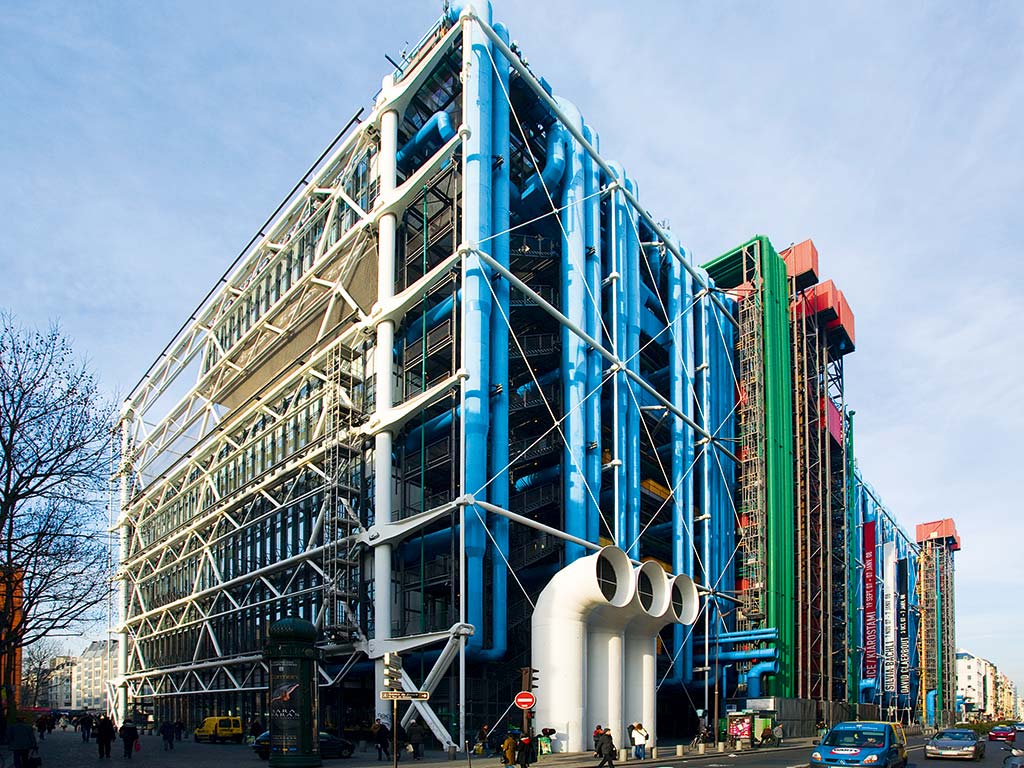
The now iconic partnership of Piano and Rogers soon secured a contract for the Centre Georges Pompidou in Paris, a space that would later house Europe’s largest collection of modern art and serve as a centre for music and acoustic research. Piano claims it was the “right time to switch from a museum being for a few people, to a place for everyone,” and with this in mind began work on what is perhaps the best-known project of his career.

Piano tested the mores of architectural tradition with the completed article, departing from the cold, sterile brick of conventional museum space and instead opting for a hulking, skeletal frame of steel and glass. The pair designed the building so that elements of construction traditionally concealed were placed in plain sight. In keeping with a theme of functionality present throughout Piano’s career, the building’s components were colour-coded: green for water, blue for air conditioning, yellow for electricity, red for elevators and grey for passageways.

The Georges Pompidou Centre, Paris
A view of the controversial Georges Pompidou Centre

Piano described the museum as “a joyful urban machine… a creature that might have come from a Jules Verne book”. However, the sentiment was not shared by the majority of the viewing public, who reacted to the building with confusion and disdain.

Critics labeled the Pompidou Centre a monstrosity, a stain on Parisian architectural integrity. Rogers told The Telegraph in 2002, “I don’t think we meant to shock. We thought we were solving functional and aesthetic problems of flexibility, growth and change… of course, lots of Parisians simply don’t like that. I was standing outside it and I told an old lady that I was the architect. She hit me with her umbrella.”

Despite the initial response to the so-called Notre Dame des Tuyaux – ‘Our Lady of the Pipes’ – the Pompidou Centre has since been embraced the world over as a seminal work of post-modern architecture. “Fashion goes up and down, but what happens with me is that I go straight,” says Piano. “It’s not difficult to make a new shape, what is difficult is to make a new shape that makes sense.”

The exterior of the George Pompidou Centre
The unusual exterior of the Pompidou Centre

Pioneering projects
The architect later founded the Renzo Piano Building Workshop (RPBW) in 1981, which proved an important platform from which Piano’s talent could flourish. The international architectural practice now has offices in Paris, Genoa and New York, employs near 130 people – over 90 of which are architects – and has undertaken upwards of 120 projects in its short history.

Inside the Renzo Piano Building Workshop

One of the better-known of RPBW’s projects is the New York Times Building – named after its principal tenant – which saw the firm capitalising on a neglected corner of Manhattan’s cityscape. The building, completed in 2007, “whose themes of permeability and transparency express the intrinsic link between the newspaper and the city”, is indicative of Piano’s obsession with lightness, present in a great many of his projects. This preference, claims Piano, is rooted in his childhood years spent in Genoa watching sun-soaked ships and noting the likeness they shared with buildings.

Piano’s love of lightness can also be seen in Maison Hermés, a 6,000sq m glass-clad tower set amid Tokyo’s bustling Ginza shopping district, and the Beyeler Foundation Museum, which utilises natural lighting to better illuminate the exhibition space.

However, the most notable of Piano’s projects making use of natural light is the California Academy of Sciences, an innovative project and an international benchmark in sustainable energy production. Its previous incarnation suffered at the hands of natural disaster, with the Loma Prieta earthquake destroying much of its original build in 1989. Piano sought to incorporate this dramatic history into the project’s redevelopment, utilising natural
phenomenon wherever possible in generating the site’s power.

While the undulating curves of the California Academy of Sciences share little in common with the Pompidou Centre from an aesthetic perspective, both demonstrate Piano’s desire to advance and reimagine the practice of architecture. Whether it be the man-made island of Kansai Airport 50km off the coast of Osaka, or the temporary structure of L’Aquila Auditorium, intended to revitalise the city following a disastrous earthquake, Piano’s projects are united by a willingness to push the boundaries of architecture.

Although Piano’s designs have often confounded the public, he is respected the world over as a pioneer of modern architecture, a truly iconic architect whose flair for innovation shows no signs of slowing even as his career nears its half century.

Fast track to success: the Yas Marina Events Centre

Yas Marina Circuit is known as the host of one of the most glamorous, exciting stops on the F1 calendar – the Formula 1 Etihad Airways Abu Dhabi Grand Prix. Yet it is also home to the Yas Events Centre, one of the Middle East’s most complete business offerings.

Yas Marina Circuit’s offerings have been recognised by Business Destinations, which has awarded it Best Sporting Venue for Corporate Events, Middle East, 2013. Where else in the UAE can you hold a meeting in the morning and be zipping around an F1 circuit in a real F1 car by the afternoon?

Consolidating success
Yas Events Centre is both a consolidation and expansion of the circuit’s diverse and growing business event sector. With credentials that include planning and hosting some of the region’s highest-profile events such as the World Economic Forum’s Summit on the Global Agenda in 2011, and the Abu Dhabi Media Summit in 2012, Yas Events Centre is set to be Abu Dhabi’s newest business hub.

Since its inception, in time for the inaugural 2009 Formula 1 Etihad Airways Abu Dhabi Grand Prix, Yas Marina Circuit has been active in the business events arena. The recent launch of the Yas Events Centre underlines a commitment to partnering with international and local business communities. The Yas Events Centre team provides comprehensive meetings and conference solutions in a one-of-a-kind venue, with world-class personnel.

The venue offers incentives unrivalled by any other location in the region

In 2012, Yas Marina Circuit hosted 145 events, and in advance of a projected 200 events in 2013, the launch of Yas Events Centre has added a range of new services that build upon the circuit’s extensive offerings. Among these additions is in-house audio-visual support and in-house catering services, both available across the venue’s 34,000sq m of versatile space. The event planning team is also set to expand, as is a range of enviable incentives and team-building packages that include both on and off-track activity.

Yas Events Centre boasts facilities worthy of an F1 Circuit: conference rooms, announcement stages, rooftop cocktail lounges, dedicated multimedia control hubs, corporate suites (as used by Bernie Ecclestone et al), and team villas. If you want, you can even hire out the garages in the pit lane.

The recent launch of Yas Events Centre has seen the renaming of a number of key individual venues. It comes as Yas Marina Circuit prepares to welcome a projected 90,000 event attendees in 2014, as well as the Circuit’s largest ever event (outside of F1) in the spring of 2014, for American skincare brand NuSkin.

More and more members of the business community are coming to recognise Yas Marina Circuit’s unique offering, seeing that the venue offers incentives unrivalled by any other location in the region. From the thrill of drift racing to zooming down the drag strip, from
taking on the undulating turquoise curves of the circuit’s F1 track in a Formula Yas 3000 car to riding the exotic superyacht berths of neighbouring Yas Marina, Yas Events Centre boasts an enviable holistic offering.

Want to feel like Vettel, Alonso, Kimi or Hamilton for a day? Then what are you waiting for! Get in touch with the Yas Events Centre team for an unforgettable business event.

GP Halls
Formerly known as the Media Centre, the three distinct yet adjoining GP Halls are impressively equipped with a cafeteria, reception and check-in areas, and an array of back end offices. Covering a total 1,178sq m, delegates are treated to views of the circuit, Yas Marina and Yas Viceroy Hotel. The halls can be organised in a variety of ways with all three connected, or divided into three zones, each capable of seating 380 people theatre style.

Equipment includes three large 8m by 2.4m LCD screens, wi-fi, ISDN, isolated networks, hi-tech audiovisual functions including wireless mics, and a hi-fi sound system. The halls are also adjacent to a pre-function area, reception, keynote speakers waiting room and staff offices. The facilities boast a dedicated computer room for organisers and attendees, and a variety of adjoining offices available for seamless behind-the-scenes organisation. A first-floor cafeteria has indoor and outdoor seating and view over the Yas Marina.

Staff offices at the GP Halls in Abu Dhabi
Executives make the most of the office space

Organisers can also choose GP Hall 4 and its 125sq m of space. Previously known as the Press Conference Room, GP Hall 4 is equipped with modern technology, including versatile stages and platforms. It seats 82 people theatre-style and accomodates up to 120 for a cocktail reception.

From cocktails to business
The rooftop Luna Lounge can accommodate up to 430 guests banquet style, and 535 for a cocktail reception. It offers a large roof terrace lounge boasting modern décor, Italian furniture and three bars. Guests enjoy views over the track and marina, and a dancefloor with disco lights.

Alternatively, there are three corporate suites of varying sizes and layouts overlooking the start grid for the Formula One Etihad Airways Abu Dhabi Grand Prix. They can accomodate up to 360 people for a cocktail style reception but are also ideal for banquets and receptions.

The venue’s Business Centre, formerly known as the Photograper’s Room, provides an ideal office setting for work, meetings or functions. Its 378sq m holds 200 workstations equipped with internet and phone line capability, as well as multiple plasma television screens, a reception and separate office spaces.

The Paddock, at 783sq m consists of 12 corporate suites of varying sizes. It can be divided into 12 individual suites, each of which can fit up to 500 people. Clients can hire the whole space or any number of individual rooms and there are numerous kitchens, prayer rooms and a large rooftop terrace overlooking the track.

Corporate suite at the Yas Events Centre
Luxury corporate suites are available

Event organisers also have the option of the three Yas Central Meeting Rooms. These offer: access to a track-side terrace with magnificent views; function areas and a separate office spaces; large terraces overlooking the circuit that can be used for hospitality and entertainment; meeting rooms including two fully equipped boardrooms and two office areas; and small-scale dining and private lounge areas.

Trackside entertainment
The Team Villas, available in small and large, are 18 buildings of varying sizes that overlook Yas Marina on one side and the pit buildings on the other. Used to host teams during the Formula One Etihad Airways Abu Dhabi Grand Prix, each villa features a rooftop terrace, lounge and cocktail area elegantly decorated with luxurious Italian furniture, including sofas, chairs and a round table for dinners or meetings.

Each villa can accomodate up to 70 people for a cocktail-style reception. Guests will find their own kitchens and dining areas, which are all equipped to high hotel standards. There is even a dedicated staff available to meet all guest needs.

The main pits consist of six separate venues. Each main pit can be transformed into enthralling branded presentation areas or banqueting suites. They are each air-conditioned, featuring an invisible AC curtain, designed to prevent cool air escaping when the pit door is open.

Each garage has its own restroom and the buildings are kept in pristine condition, including a special formula on the floor that gives it a glass-like finish. Guests are also treated to direct access to the track.

For further information visit yasmarinacircuit.ae

The Tokyo tourist guide

In Tokyo, tradition mingles with pop culture fantasy. Palaces of ancient dynasties dot the city, the spaces in between filled with countless karaoke bars, modern architectural wonders, and curious clubs. The Tsukiji fish market bustles with the latest catch, while botanists work to keep the Sumida River’s promenades lined with blooming cherry blossoms.

Every year, over nine million tourists travel to Tokyo, spending an estimated ¥9.4trn, and even more are expected in the run-up to the city’s 2020 Olympic Games. Their footsteps have carved tourist paths across the city, riddled with cheap trinkets and overpriced entry fees. Yet there are countless roads less travelled. It’s relatively simple for visitors to immerse themselves in the true, ever-evolving nature of Japanese culture – if they know where to look.

Tokyo City
Tokyo City

Love shack
With over 13 million inhabitants, it’s hard to imagine Tokyo ever slumbering. Yet for the Japanese, sleeping has evolved into a complex ritual. Inemuri, the art of falling asleep on the job, is seen as a serious gift bestowed upon very few. Visitors find themselves attempting to chat with a local worker who may be on the clock, but is actually in a deep sleep. There are rules to inemuri, which is subtly encouraged on the highest and lowest rungs of the social ladder: workers must remain upright, and power naps can’t endanger others. Catching a quick snooze on the job proves an employee’s work ethic. After all, it’s difficult to argue you could work harder when you’re passing out from sheer exhaustion.

However, there are plenty of accommodation options that don’t include falling asleep upright. Many of these also address another simple pleasure: human contact. Last year, Tokyo’s eccentric Akihabara district was made decidedly more eccentric following the opening of Soine-ya, a ‘co-sleeping specialty shop’ where lonely people pay to cuddle with female staff. An evolution of the ‘maid café’ phenomenon, the shop is strictly non-sexual. The price list offers anything from a 20-minute nap with a woman to a full, 10-hour night’s sleep. For an extra ¥1,000, customers can fall asleep in the girl’s arms, or have her pat them on the back as they rest. Soine-ya even allows picky customers a special shimei-ryo service, where cuddlers fork out an extra ¥1,000 to pick their favourite girl. Just three minutes’ walk from Akihabara station, the cuddle café offers a surreal insight into the Japanese search for new sources of intimacy within the confines of increasingly congested cityscapes.

Where to stay
For those who already have a cuddling partner, and are wondering where to stay, there are distinctly different short-visit options. It’s no secret that privacy is hard to come by in Tokyo and entrepreneurs have recently found success converting standard bargain hotels into ‘love hotels’. Identifiable by neon love-heart signs, Japan’s 37,000 love hotels offer hourly rates to couples who may have more than cuddling in mind. Reservations aren’t common, entrances are discreet, and interaction with hotel staff is minimal. In higher-end love hotels, the bill is even settled via pneumatic tubes, cash machines or an anonymous pair of hands that appear behind a pane of frosted glass. The rooms themselves are far more opulent than one would expect, featuring jacuzzi baths, mood lights and optional music. Most love hotel rooms maintain temperatures of around 100F degrees, encouraging guests to strip down sooner rather than later.

What to wear

Tokyo is Japan’s fashion capital, and the prefecture’s trendiest districts have each spawned a plethora of vibrant aesthetics

Cosplay
A contraction of ‘costume’ and ‘play’, cosplay devotees dress as their favourite manga or anime characters. From Sailor Moons and Van Helsings to robots and maids, fans take hours perfecting their looks, with many eventually showing off their creations at one of Tokyo’s massive cosplay conventions.

Lolita
Encompassing numerous sub-themes, lolita is one of Japan’s most recognisable fashion exports. Creepy to some, cute to others, lolitas wear knee-high socks, puffed-out skirts, petticoats, and ringlets. Kodona, or ‘boystyle’, is a more masculine take on the look, based on Victorian boys clothing.

The Fairy Kei look
The Fairy Kei look

Fairy Kei
Fairy kei is an evolution of decora, a late-nineties’ look involving tutus and neons, which gained massive popularity in Europe. Fairy kei introduces kawaii-style items, such as My Little Pony, Hello Kitty and Barbie into outfits, often in the form of plastic necklaces, childrens’ hair clips and teeny backpacks. Pastels and hot pink are the colours of preference.

Tokyo on screen

Don’t worry if you’re not going to be able to make it to Tokyo any time soon; cinema has a long-standing love affair with the city

1953's Tokyo Story
1953’s Tokyo Story

Tokyo Story (1953)
Yasujiro Ozu’s 1953 masterpiece tells the story of an elderly couple from the country who visit their children, only to find they’re too wrapped up in their urban lives. Ozu paints a portrait of a changing family unit, a changing city, and a changing Japan. It’s a mirror held up to relentless post-war modernisation.

Lost in Translation (2003)
Yes, critics argue it’s a culturally reductive film about nothing, but it made a star of the Park Hyatt’s sky bar and left many hoping, as they checked into a quiet Travelodge, that they might meet their own Scarlett Johansson in the lobby. It’s a story of twenty-first-century alienation set against the bars of Tokyo.

Enter the Void (2009)
This film won’t be enjoyed by all, but persevere – Gaspar Noe’s triumph of cinematic bodily effectivity relies on Tokyo’s cramped streets, nightclubs, and neon signage to facilitate a remarkable trick of narrative perspective. The story is viewed from the disembodied eyes of Oscar, whose early death leaves him free to float through the film.

olympic-rings

Olympics in numbers

80,000

seats in the New National Stadium, designed by Zaha Hadid

1964

was the last time Tokyo hosted, after WWII meant the 1940 games were cancelled

$4.5bn

has been set aside to fund the event

Not everyone is lucky enough to find companionship. After striking out in one of the city’s karaoke bars, lonely revellers may want to spend the night in a capsule hotel. This basic accommodation sees guests pay extremely low rates in return for an extremely small room – though it’s hard to say whether these tiny chambers actually qualify as rooms. For around ¥2,000 per night, customers rent out a modular fibreglass block measuring only 2.5 cubic metres. Each hallway is lined with stacks of the capsules, which share communal washrooms and other entertainment facilities. Most capsules include a small television and wi-fi connection, and some of the more extravagant venues make up for their minimalist ‘rooms’ by lavishing on over-the-top lobby designs. It’s actually become a recent obsession among Japanese architects to show off just how creatively they’re able to utilise these tiny spaces. Capsule-goers are eagerly awaiting the launch of 9h, Kyoto’s first luxury capsule hotel with four-star aspirations.

The land time forgot
The outskirts of Japan’s metropolises have much more to offer than peculiar accommodation. Tourists are venturing further out of the cities to seek solace in nature. Yet the desire to explore Tokyo’s forests is more macabre than meets the eye. At the northwest base of Mount Fuji rests the rambling Aokigahara forest – also known as ‘the sea of trees’. The 35sq km forest is home to rolling hills, icy caverns and rare species. It’s also the site of the second-highest number of suicides in the world (after the Golden Gate Bridge in San Francisco).

Every year, around 30 people enter the forest and never re-emerge. Since the global economic crisis the annual figure has spiked; in 2010 247 suicide attempts took place in the forest, although only 54 were successful. Some locals try to group those who enter the woods into three categories: the outdoor-savvy trekker, those searching for a good ghost story, and those who will end their lives. The number of those visiting the eerie woods in search of ghosts has risen significantly, and locals now sponsor an annual body hunt.

Further southwest, foreigners can explore the inner workings of a similarly spooky site: Japan’s Ghost Island. One of 505 uninhabited islands off the coast of Nagasaki, the metallic Hashima Island was once home to 5,200 coal miners employed by Mitsubishi. As the island stands at a tiny 61,000sq m, it was one of the most densely populated plots of ‘land’ in human history. Yet in 1974, Mitsubishi announced the immediate and unexpected closure of the island. Overnight Hashima turned into a ghost town.

Now, it’s been thrust back into the spotlight. After appearing in the James Bond film Skyfall, Ghost Island is attracting lots of tourists. A company called Gunkanjima now offers ten ferry rides to the island every day from Nagasaki. Less insidious than Hashima is the opportunity to visit Hiroshima’s Peace Memorial Museum. The site receives around one million visitors every year, who come from around the globe to see the documented atrocities of America’s nuclear attack on the city during WWII. Now a monument to the woes of nuclear armament, the peaceful museum grounds stand in stark contrast to Hiroshima’s bustling centre.

For the love of food
Not all of Japan’s museums are so sobering. Hidden deep within Tokyo’s Shin-Yokohama district, food lovers find a jovial celebration of Japan’s relationship with ramen noodles. The Shin-Yokohama Ramen Museum not only features an intensive, multimedia display charting the illustrious history of this go-to meal, but it even allows visitors to wander through a life-size replica of Tokyo’s streets circa 1958. There, ramen lovers are immersed in the atmosphere that allowed the addictive noodle dish to redefine the nature of street food.

Japanese Sushi
Japanese Sushi

Food lovers find a jovial celebration of Japan’s relationship with ramen noodles

Yet, as Tokyo’s old town revels in tales of food’s past, a new Osaka dining chain is focused on a peculiar vision of food’s future. In 2002, Mr Kanso launched with the idea that diners don’t require fancy service or pretentious ingredients to have a good time – all they need is a couple of tins of cold food and some plastic cutlery. Oddly enough, they were right. Mr Kanso now boasts 17 locations across the country. The concept is simple: there are no menus, instead, Mr Kanso’s walls are lined with 300 varieties of tinned food from across the globe – from Hokkaido bear curry to Heinz beans. Many customers say it’s this oddball variety that keeps them coming back. However, this exciting concept pales in comparison to the way in which food in Tokyo is caught.

There is no fishing technique on Earth as dazzling as the ancient art of ukai, or ‘fire fishing’. Wooden fishing boats set fire to the river, and then set loose dozens of aquatic cormorants that stow scores of sweetfish in their elongated beaks. Since 1300, Japanese fishermen have engaged in this bizarre practice on the Nagaragawa River. Today, ukai is mostly practised by traditionalists in small villages. In Gifu and Kyoto it’s even possible to board one of these vessels and experience the hunt first hand. For those less inclined to join in, opulent dinner cruises now follow ukai fisherman during the summer months, averaging around ¥3,500 per diner.

Naked ambition
Japan may be renowned as a society of workaholics, but it’s also home to some of the world’s most eccentric festivals. Hadaka Matsuri takes place on the third Sunday of each February. Over 9,000 men gather at the Saidai-ji Temple to battle for custody of a sacred, luck-inducing pair of sticks. As a part of the 500-year-old ritual, men arrive at the temple dressed in nothing but a fundoshi (loin cloth). After recitations of ancient incantations, a priest tosses the sticks into the crowd and chaos ensues. Whosoever grabs the sticks and thrusts them upright into a rice-filled box is promised one year of happiness. It’s free to participate in the event, but the struggle for the lucky sticks often ends in bloodshed.

Japan is a land of surprises. The architectural contrast on each winding street lets visitors travel centuries through time, while each activity on offer is more peculiar than the last. Everyone’s familiar with the Imperial Palace, and they’ve all seen Tokyo’s faux Eiffel Tower. The real Japan is everything in between. The country doesn’t boast a stone-cut cultural identity – that’s what makes Tokyo’s most well-hidden cultural quirks so quintessentially Japanese.

Tokyo's faux Eiffel Tower
Tokyo’s faux Eiffel Tower

Enjoy royal treatment in Rio at Copacabana Palace

Located on the famous Copacabana beach, Copacabana Palace is the most renowned hotel in Brazil. Over the decades, it has hosted royalty, movie, theatre and music stars, as well as politicians and big businessmen.

A symbol of sophistication and refinement, the Copacabana Palace offers impeccable service, excellent cuisine and luxurious accommodation. It is the ideal place to stay in Rio de Janeiro.

A luxury hotel inspired by French architecture
Opened in 1923, this impressive building is the most traditional and luxurious hotel in Rio. It was designed by architect Joseph Gire, who was inspired by two earlier hotels, the Negresco in Nice and the Carlton in Cannes. Since its opening, the Copacabana Palace hotel has only had two owners: the Guinles family of Rio de Janeiro, and, since 1989, Orient-Express Hotels.

‘The Copa’, as locals call it, is a traditional meeting point for Rio’s high society, whose members go there to enjoy its bars and restaurants, and elegant and sophisticated service.

In August 2013, the Copacabana Palace Hotel turned 90. The hotel underwent an important renovation in 2012, including the refurnishing of 147 suites and the expansion of the lobby to better welcome guests.

Wine and dine at Rio’s best restaurants
The Copacabana Palace has two restaurants. The Italian Cipriani is known as one of the best restaurants in Rio. Named after the finest hotel in Venice, this award-winning restaurant offers exceptional northern Italian cuisine.

The casual poolside ambience is perfect for Pérgula’s renowned Sunday brunch

Located in the heart of the Hotel Cipriani Restaurant’s kitchen, the Chef’s Table is one of the most exclusive fine-dining adventures in Rio. The special menu is paired with carefully selected wines. Guests follow the chef as he prepares an array of dishes from the day’s freshest ingredients.

The Pérgula restaurant, located by the pool, offers first-class Brazilian and international cuisine in a refined yet relaxed atmosphere. The casual poolside ambience is perfect for Pérgula’s renowned Sunday brunch. Both restaurants are available for guests and carioca visitors.

Look and feel great
The hotel also has a wellness centre (one of Brazil’s main spas) and a beauty salon. Last year, Copacabana Palace opened two fashion boutiques: 1923, named after the hotel’s inauguration year, with trendy outfits from national and international designers; and Villa Copa, with a more informal beachwear collection.

Perfectly positioned and featuring state-of-the-art facilities, this may be Rio’s finest hotel. Sunbathe, swim and socialise in one of Rio’s largest and most attractive swimming pools. A team of pool assistants is on hand to cater to your every request, from fresh towels to cool drinks and light dishes from the pool menu.

The exclusive beach service provides sun loungers, umbrellas and water to hotel guests. Beach assistants also look after your belongings as you enjoy Copacabana Beach.

Guests leave the Copacabana Palace having experienced excellence from the hotel’s personalised service and 2.4 staff per apartment.

The atmosphere in the hotel is family friendly due to the special personal service, which makes family parties feel welcome and at home. Their every need is attended to, and the individual histories compiled makes sure guests are well remembered when they return.

Austrian Airlines’ deluxe Business Class service

The premium quality airline, Austrian, is a multi-award-winning part of the Lufthansa Group. The national carrier of Austria is based in Vienna and is shaped by its company motto: “We carry Austria and the famous Austrian hospitality in our hearts, and ever more customers into the world.”

Now, Austrian Airlines has been honoured with the Business Destinations Travel Award for Best Business Class Airline, Europe, 2013.

A new way to travel
Austrian Airlines’ brand new Business Class long-haul product is an outstanding flight experience. There are several features that distinguish Austrian Airlines from its competitors, such as Austrian hospitality, the friendliness of the crew and the incomparably high quality of the onboard foods, drinks and services. Business Class customers save time with the Business Class counter, or by checking in online 36 hours before a flight – a service that allows each passenger to select their ideal upgrade option.

With the award-winning and internationally established company DO & CO, Austrian has chosen a partner that creates airline foods using only fresh raw ingredients. DO & CO has succeeded in improving the reputation of in-flight meals by offering exclusively homemade food.

On board Austrian’s long-haul Business Class, a qualified chef from Austrian’s catering partner DO & CO accompanies the crew, who takes the passengers’ orders and also serves the freshly prepared meals. Most of Austrian’s flight attendants are trained sommeliers and will recommend the perfect wine to complement the menu. Business Class guests also enjoy a unique coffee house service, offering up to ten different Austrian coffee specialties. Austrian is the only airline worldwide providing such a service.

Austrian Airlines has partnered with DO & CO to offer passengers exclusively homemade food

Now, the airline has installed a state-of-the-art cabin with new hi-tech, and very impressive, seating into all long-range aircraft. The premium Business Class long-haul seat, from the manufacturer Thompson Aero Seating, offers some extraordinary features. The innovative seat can be turned into a fully flat bed, almost two metres in length, and is equipped with a pneumatic air cushion system that can be adjusted to be firmer or softer for individual comfort. It can also be operated via an innovative touchscreen panel, which has already been granted the Crystal Cabin award this year.

The staggered seating concept within the Austrian long-haul Business Class gives every single customer direct aisle access on the Boeing 767 fleet and approximately 80 percent aisle access on the Boeing 777 fleet, thus offering greater comfort for all passengers. Both Business Class and Economy Class are fitted with a state-of-the-art inflight entertainment system with touchscreens, providing more than 100 hours of entertainment on demand.

Additionally, the Economy Class cabin has been refurbished and fitted with a similar, sleek colour design to that of the revamped Business Class. The new ergonomic seat is slimmer and, because the seat pitch has not been reduced, provides passengers with more legroom. By reclining the seat, the sitting area will automatically shift to the front to create a more comfortable relaxation position.

Austrian Airlines' brand new Business Class long-haul product is an outstanding flight experience
Austrian Airlines’ brand new Business Class long-haul product is an outstanding flight experience

Austrian’s flight attendants are trained sommeliers and will recommend the perfect wine to complement the menu

A remarkable experience
Austrian makes business travel a pleasure: the facilities at the airline’s hub, Vienna airport, have recently been upgraded with a state-of-the-art terminal ‘Check-in 3’. Expect a luxurious ambience, both at the airport and in the clouds, when travelling Austrian Airlines within Europe. Designated check-in areas, priority luggage handling and a higher baggage allowance, as well as a designated fast lane and access to brand new Austrian business lounges are awaiting all Business Class passengers.

On board, further highlights make flying Austrian special. The seat next to every Business Class guest is marked with ‘reserved for your comfort’ and will remain empty for the entire flight. A wide range of international and local newspapers and magazines are also offered, while passengers enjoy exclusive DO & CO meals, along with cold and hot beverages.

Austrian Airlines CCO Karsten Benz said: “The outstanding services by our charming Austrian crew and first-class catering by DO & CO have received excellent feedback already in the past. However the recent upgrade of our long-haul cabin has proved to be a major contributor to customer satisfaction. We are now providing first-class service consistently to our Business Class clients. We are delighted and honoured about the fact that delivering this unique ‘Austrian feeling’ is now being rewarded and we are Best Business Class Airline, Europe, 2013.”

Duty free for all at Keflavik International Airport

As a frequent flier, you have doubtless noticed that some airports restrict their duty free items to travellers to non-EU countries and that ranges can be monotonously similar. Often, shops are not open when you have an evening departure and, after your flight has landed, all the shops in town are closed for the night. Not so at Keflavik Airport, where the comprehensive service and tantalising products have earned Keflavik Airport Duty Free Stores the honour of Business Destinations’ Best Airport Tax Free Shopping Service Provider, Europe, 2013.

Founded in 1958, duty free in Iceland has grown to three shops and a fashion store in the departure lounge and, unusually, one in the arrivals area of Keflavik International Airport too. They provide products from cosmetics to confectionery, electronics to music, wine to fashion and more – a large proportion produced by skilled craftspeople from Iceland’s 320,000-strong population. Crucially, the shops are open for all flights, both outgoing and incoming, with staff always available to offer suggestions and advice.

Icelandic treasures
Iceland used to be Europe’s best-kept secret, but now its doors are wide open to visitors, revealing a culturally advanced society, stunning landscapes and beautiful, pollution-free nature that is the envy of the world. Its musicians, artists and designers have won worldwide recognition for their quality and style. Annual festivals, such as Icelandic Airwaves and Design March, attract large audiences.

The exponential growth of tourism in recent years has fuelled a demand for Icelandic products. The Duty Free Fashion shop is a highlight in the departure lounge, offering the latest creations for both men and women by dynamic local designer labels. This includes the elegant ‘slow fashion’ brand, Ella, created by Elínrós Lindal and a team of talented Icelandic women who understand and appreciate elegance and quality.

The exponential growth of tourism in recent years has fuelled a demand for Icelandic products

Farmers’ Market, with its strong ties to the vibrant Icelandic music and design scene, draws on its Icelandic roots to combine classic Nordic design with chic modernity. Huginn Muninn’s unconventional shirts are crafted with traditional tools by skilled tailors, who apply the patience, honesty and timeless expertise of their tailoring heritage.

Then, there is RE101, whose collection is proof that ethnic and environmental correctness, quality and timeless design can be brought together in harmony using strong, locally produced fish skin to make hand-crafted shoes in vibrant colours with the natural patterns and smoothness of the salmon. Every shoe is handmade by artisans in a traditional family-run business. KronKron offers a range of dramatically coloured ladies’ scarves, tights and leggings, dresses and shoes that are both comfortable and eye-catching.

Alongside these unique Icelandic labels are top international brands such as Boss, Burberry, Mulberry and Spaniard Chie Mihara’s shoes. These respected brands are available at unbeatable prices.

Besides the fashion store, other duty free stores in Iceland provide practically anything you want. Popular products include the great selection of wines and spirits, such as Reyka and Katla vodkas, Tópas and Opal Vodka shots, Fjallagrasa and Birkir shots, Björk Liqueur, Blueberry, Rhubarb and Crowberry Liqueurs, and naturally, the Viking, Boli and award-winning Egils Gull beers.

Confectionery is well represented too, with top chocolatier Haflidi’s hand-made chocolates and truffles, the Noi Sirius and Freyja ranges of sweets and liquorice, and a wide range of well-known brands that make the perfect treat when you land – if only you can resist temptation during your flight…

For the young – and young at heart – jigsaw puzzles of beautiful Icelandic landscapes, wildlife such as the horses, lambs and puffins, make lifelong gifts. A range of traditional toys and stuffed animals make great souvenirs that children will cherish.

Land of health and herbs
Icelandic herbal oils and cosmetics sit next to international brands, offering health-giving herbal benefits from the country’s mountains, pristine valleys and hot springs. Brands include Sóley Organic, Blue Lagoon, Dr Bragi, Zopure, Una and Purity Herbs along with fragrances by Ella, Gyðja and True Viking.

Recent Icelandic breakthroughs, built on 10 years of biotechnology research, have introduced a new concept in skincare, called BIOeffect. The EGF cellular activator, a protein copied from human skin, tells the skin to speed up its renewal process. A revolutionary creation from leading biochemistry and dermatology specialists, the serum and day cream nourish and replenish cells, bringing a youthful glow to even the most stressed or sensitive skin, without harmful chemical compounds.

The shops are both duty-free and tax-free and are open to all passengers of both departing and arriving flights, day and night, with competitive prices that are frequently the cheapest in Europe. These discounts apply regardless of what passport you hold or which country you are flying to or from. That’s the nice touch of the Vikings. Keflavik Airport is also comfortable and warm, heated by geothermal energy from the peninsula, so you can shop in comfort, no matter what the weather outside.

The arrivals shop is found right by the luggage carousels, so it’s both quick and easy to do your shopping while your luggage is being unloaded. The wine, spirits and beers section is the largest in the country and up to 50 percent cheaper than city prices.

Of course, if you’re visiting any local residents during your stay, they will appreciate that you took the time to stock up – they’re Vikings, after all! Whether starting your holiday, stopping over, or ending your trip, the airport’s duty free stores will give you lasting warm memories of the Land of Fire and Ice.

For more information visit www.kefairport.is/English/ShopsRestaurants

Intimate living spaces for business travellers

Today’s executive is looking for more than just a hotel room while abroad for weeks or months at a time. In AKA, an innovative and growing brand of luxury serviced residences, business travellers have found the solution: an alternative living option to the traditional hotel.

AKA offers the perfect balance between the privacy of a sophisticated condominium, and the hospitality, service and style of an intimate hotel.

All the amenities
Across the brand, spacious suites – ranging in size from studios to two-bedroom penthouses with gourmet kitchens, separate living rooms, luxurious baths and contemporary furnishings – provide the comforts of home.

The attentive, yet unobtrusive, personalised service and hotel-inflected amenities ensure residents feel relaxed and at home during their stay. Private, adult-focused amenities offer intimate gathering spaces for AKA residents to unwind and socialise, away from the bustling city.

Each AKA property also features a full range of complimentary business services, including: executive boardrooms with telephone conference capability and large flatscreen TVs; business centres with computer workstations; in-suite wi-fi; premium cable television with international channels; digital subscription to international media; 24-hour front desk assistance; state-of-the-art fitness centres; and dedicated doormen.

Larry Korman, President of AKA, said: “AKA’s focus is on our residents. Our team personalises each experience and understands the importance of making you feel well served and at home at AKA.

“We know that, while travelling for business, there are certain requests, so, from the moment our residents make a reservation, we work with them to plan every detail of their stay. We are known in the industry for developing custom experiences and establishing relationships with our residents before they even check in.”

A growing business
The Resident Service Team at each property ensures individual needs are taken care of, from booking appointments or transportation, to coordinating same-day valet, dry-cleaning, or laundry service.

Team members are experts in the local neighbourhoods and cities, and can help organise events and experiences – including those offered as part of AKA’s signature Live It! programme. Live It! provides residents with the opportunity to learn from top-rated industry experts in various lifestyle fields, such as fitness, private culinary experiences, and language and cultural instruction.

The need for serviced residences is growing in every major market

Korman says: “The need for serviced residences is growing in every major market. With executives travelling more today, they are looking for spacious residences that give them a sense of being at home, even when they have to be away for weeks at a time. At AKA, our vision is to deliver what our discerning residents want: the best in terms of design, service and location. We are also always adding new programming and services based on resident feedback and are looking to grow into more cities over the next few years to reach more of our clients.”

Situated in prime urban locations such as New York City, Beverly Hills, London, Philadelphia, Washington DC, and Arlington, Virginia, AKA integrates the art, the architecture and the landscape of the prestigious neighbourhoods and metropolitan cities in which its properties are located. The brand continues to grow and will expand its collection of long-stay properties within the US and internationally over the next five years.