Estate of mind: Hilton Shillim Estate Retreat & Spa

Hilton Shillim Estate Retreat & Spa started life as an eco conservation project, where land was acquired to preserve the natural beauty and heritage of Shillim. In order to sustain this huge project, the concept of an eco retreat was developed and turned into a self-sustaining business model.

This year Hilton Shillim Estate Retreat & Spa is Business Destinations’ Best Luxury Spa Resort, India. Spread over 350 acres of untouched land, it is one of a kind in India thanks to its tempting combination of picturesque setting and world-class spa.

Nature retreat
The pristine wilderness and sylvan setting offer a deeply meaningful experience and provide the perfect getaway from daily routine to revitalise and rejuvenate guests.

Nestled within the Sahyadri mountain range, among historical Maratha forts and ancient Buddhist caves, and only a short drive from Mumbai, Hilton Shillim Estate Retreat & Spa is a sanctuary for the body, mind and spirit.

A healing experience
The retreat is a member of the Healing Hotels of the World. The spa itself is spread over 70 acres and exists in harmony with its timeless environment.

Embedded in lush rice fields and surrounded by seasonal creeks in a rich, fertile valley, the spa invokes the life-giving elements. This special retreat strives to nurture and heal the inner spirit and elicit lasting change at an energetic level.

Hilton Shillim Estate Retreat & Spa is a sanctuary for the body, mind and spirit

The retreat’s spa integrates the ancient healing culture of South Asia with contemporary international therapies and practices.

Traditional elements of Ayurveda and yoga are combined with carefully selected aspects of reiki, acupuncture, aromatherapy and naturotherapy. Treatment programmes can be customised to suit the needs of each visitor, ensuring everyone achieves total relaxation.

Facilities include: 15 spa villas with private pools and treatment spaces; 17 treatment suites with private gardens and outdoor showers; five consultation rooms; four relaxation terraces; a yoga pavilion, meditation cave, outdoor Olympic-size pool, saunas, steam rooms, outdoor hot tubs and hydrotherapy tubs.

Visitors can also indulge in activities at the institute and learning centre, pottery studio, dance studio, cooking school, organic gardens and amphitheatre.

Eat well: Nourish the mind, body and soul 
For gourmands, the retreat offers an extensive culinary experience encompassing the best of spa cuisine alongside international dishes prepared by a team of master chefs. Food connoisseurs are spoiled for choice with an extensive range of dining options, from relaxed organic food to the best French, Asian, Mediterranean and local delicacies. Herbs and vegetables are grown on the estate and incorporated into dishes every day.

Handpicked locations and themed dinners offer a memorable experience here. ‘Dining by design’ gives guests the opportunity to dine privately at their villas, or at any other location on the grounds of the property; eat your favourite dishes by the lake, in the herb garden, or even in bed.

Bar area at Hilton Shillim Estate Retreat & Spa
In the bar area at Hilton Shillim Estate Retreat & Spa you can sample delicious French, Mediterranean and Asian delicacies

Total privacy
The all-villa property boasts spacious villas that feature private decks or balconies, have dedicated spa treatment areas, and offer spectacular views – either of the restful valley or verdant forest.

The spa pool villas and presidential pool villas even have private gardens and swimming pools. The simple, contemporary elegance with hints of local style combines with the newest technology to create a private haven that fulfils all of your needs. Glass walls covered with sheer, white curtains place you right in the lap of nature.

The Meetings and Banqueting facilities, set within Shillim Institute and encompassing the property’s extensive grounds, are equipped with up-to-date technology and can accommodate up to 100 guests in a range of settings ideal for intimate corporate meetings, business events, social gatherings and private receptions. The services available include high-speed internet access, video conferencing, audiovisual equipment rental and secretarial support.

Guests can enjoy trekking, learn horse riding, take a pottery or dance class, or sail a boat across the pristine Pavna Lake

Never a dull moment 
At the Shillim Institute, the guests can enjoy trekking, learn horse riding, take a pottery or dance class, or sail a boat across the pristine Pavna Lake nearby. Visitors are treated to butler service at their private villa, and a host of tranquil hangouts beyond – from the Tea House to the Library Lounge.

The broad mission and vision of the retreat is to conserve and maintain Shillim’s natural habitats in an ecologically responsible and sustainable manner. The commitment to respect the harmonious bio-diversity of the Shillim landscape is paramount.

The retreat aims to create a reflective environment in which to integrate the essential philosophical, spiritual and artistic wisdom of past civilisations with contemporary, life-enhancing practices and knowledge.

Hilton Shillim Estate Retreat & Spa combines holistic practices and a comfortable retreat atmosphere in a superb wilderness setting. The retreat aims to integrate the total rest and wellbeing of body, mind and spirit, so that guests may return to their everyday lives
deeply refreshed and inspired.

Rise of the low-cost airline

Gone are the days when legacy carriers inspired customer loyalty to such a degree that passengers would book their place without a thought for cheaper alternatives. Where once passengers shivered at the prospect of a budget buy, changes in the industry and the wider economy have seen low-cost airlines gaining on their more luxurious counterparts, with price emerging as the most important factor for modern-day passengers.

Traditional airlines now struggle to keep ahead of trying economic circumstances, and in many cases, have fallen foul of their rivals’ leaner pricing structures. “[In the past six years] we have seen the cost gap between legacy and low-cost carriers narrow from 3.6 to 2.5 US cents per Available Seat Kilometre (ASP),” reads KPMG’s 2013 Airline Disclosure Handbook. “The distinction between the two business models (particularly in short-haul) is becoming increasingly blurred,” it continues. Streamlining and restructuring has caused the cost differential between the two by close to 30 percent since 2006.

According to the Centre for Aviation, low-cost carriers accounted for 26 percent of seats sold so far this year – a far cry from 2001’s eight percent – and it is this state of affairs that has spurred an increasing number of traditional airlines to expand upon their budget services.

Trimming costs
Given that low-cost airlines are growing in precedence, it’s understandable that legacy carriers are clamouring to jump on the budget bandwagon: British Airways and IAG teamed up together in April to acquire discount carrier Vueling; Air France formed low-cost regional subsidiary Hop! in March; and Hong Kong Express Airways will transform into a budget carrier in the coming months.

However, as a growing number of legacy carriers venture into the budget bracket, margins are being squeezed like never before. Some legacy carriers have suffered heavy losses under recent restructuring plans, in particular, Delta Airlines, which was forced to make 4,200 redundancies in 2008, United Airlines, which removed 100 aircraft from its fleet, and American Airlines, which made sizeable cutbacks to both its fleet and staff size. The changes, however damaging, have proven successful in narrowing the cost advantage of budget carriers, arguably preventing a terminal state of affairs.

Although budget carriers have risen to prominence in recent years, they are not exempt from financial struggles. Europe’s largest low-cost airline, Ryanair, announced in September that it might miss financial targets for the year, due to the introduction of new carriers Norwegian Air and Vueling, and slowing demand across Europe. However, EasyJet’s passenger numbers for August signalled the airline’s strongest monthly performance since 1995, again indicating growing industry competitiveness.

Revitalised carriers like Norweigan Air and Vueling have cut into Ryanair's 2013 profits
Revitalised carriers like Norweigan Air and Vueling have cut into Ryanair’s 2013 profits

Russian airline Aeroflot is adopting a familiar strategy to bolster its cheaper offerings, acquiring small local carriers instead of building a low-cost airline from the ground up. However, Aeroflot’s new look requires passengers to make a number of sacrifices and endure more primitive on-board conditions.

The company’s CEO, Vitaly Saveliyev, told Russian newspaper Kommersant: “At the moment we have airport slots for eight planes. This will be a rather rigid product, the seats
will be just like in any suburban train — you won’t be able to sit back, the seats will be right next to each other, there will be new rules regarding luggage weight, it will be possible to purchase tickets only via the internet, which is really cost-saving. We think that it will be possible to cut a minimum of 20-40 percent off the price.” 
But the sacrifices of budget flights have done little to dissuade passengers from travelling; many are ready and willing to compromise, provided prices stay low.

What’s the difference?
The compromise of opting for budget is, however, becoming far less of a compromise. Where once legacy carriers offered free baggage, meals and an all-round more comfortable experience, the perks of upper bracket travel have largely disappeared as carriers have sought to cut costs wherever possible.

Attempts by traditional airlines to curb staff wages and fleet numbers have been met in many instances by immediate strike action, with unionised workforces playing a pivotal part in cuts being made to on-board customer comforts instead. Free in-flight food is now a thing of the past; many traditional airlines have started to charge and some have abandoned the option altogether in favour of snacks and drinks.

A number of legacy carriers have also introduced an added charge for seat reservations and others have even done away with in-flight magazines to reduce weight and therefore fuel costs. While these seemingly meagre cuts have proven an effective means of closing the gap with budget airlines, the loss of luxuries has raised the question of whether the difference between budget and legacy travel is really that great.

With EasyJet’s new complimentary seat reservations and Ryanair’s flexible ticketing, traditional airlines entering the budget market must strip their costs to the bare bones if they are to succeed in an extremely competitive market. As an increasing number of legacy carriers look to improve upon their budget services and enter the low-cost market, it remains to be seen whether carriers such as Philippine Airlines, Hong Kong Express, Air France and the like can compete with the powers that be – not only on pricing, but just as crucially on quality.

Antwerp: Belgium’s vibrant city

Antwerpen, Antwerp, Anvers, Amberes… a Belgian city with many different names and even more facets. It is the city of Rubens, the world diamond centre, an international fashion capital, a maritime metropolis and a culinary trendsetter.

Although the city is pocket-sized it still has a metropolitan feel. And although Antwerpers can be a bit quirky at times, above all they are welcoming. Antwerp is often praised for its rich history but it is also a contemporary city. You could say Antwerp keeps its own time – a time in which everyone feels comfortable.

This is why Antwerp attracts a wide range of visitors; it is a vibrant centre of creativity for designers and fashionistas, a frivolous and trendy place for the young and the LGBT crowd, a favourite among culture lovers, and the city by the river for cruise passengers. And, thanks to its unique central European location, it’s also the perfect meetings and incentives destination.

Centre of attention
Travelling to a new city for business can be a time-consuming hassle. Not to Antwerp. The Belgian city is centrally located on a crossroad of European motorways, just a 45-minute drive from the capital of Europe, and a 34-minute train journey from Brussels Airport. Antwerp has rail connections with many of Europe’s biggest cities. Cruise ships moor in the city centre, only a stone’s throw from the Cathedral of Our Lady and Grote Markt. Regardless of how visitors arrive in Antwerp, the centre of the city is always easy to reach.

Ask a local about their city and they will pour you a Bolleke beer, face beaming, and tell you about its majestic cathedral, about walks along the quays and about the city’s master painter, Peter Paul Rubens. The city and the painter are eternally associated with each other, much like Andy Warhol and New York. Antwerp was where the Flemish Baroque painter lived and, centuries later, his presence is still keenly felt. His statue welcomes everyone in Groenplaats and more than fifty of his works are on display in museums and churches, often in their original setting.

Antwerpers are known to be proud of their city, and rightly so. In the fifteenth and sixteenth centuries Antwerp had already garnered a reputation extending far beyond the city’s borders. It was known for its flourishing art trade and bustling port, which turned the city into an economic hotspot. During this golden age Antwerp resembled present-day New York: it was a global city.

Today, Antwerp continues to build on this rich history, positioning itself as a contemporary metropolis. Although it is always respectful of the numerous historic buildings that bear witness to the city’s rich history, Antwerp is becoming known for its iconic modern architecture. Examples include the new Law Courts, the new MAS museum, the even newer Red Star Line Museum or the Port Authority building, designed by renowned architect Zaha Hadid.

The Antwerp Six are living proof of Antwerp’s influence on the fashion world, and more generally, on the art world, which thrives in Antwerp, especially in the Zuid district. Nowhere else will you feel the centuries-old bond between man and diamond as keenly as in Antwerp – and at Antwerp’s jewellers. All this, and more, in a city where you can still sit on a park bench and smell the roses and where you will never feel lost in the crowd.

Fashion, architecture, art and cuisine play vital roles in the everyday life of the city

Convene here
After Brussels, Antwerp is Belgium’s most important city for conferences and events. A significant 27 percent of total overnight stays in Antwerp are linked to a conference or event. Antwerp offers excellent conference facilities and catering, often directly linked to the city’s major hotels. A large new conference centre, right in the heart of Antwerp, will enable the city to host even bigger fixtures from 2015 onwards.

Antwerp has been hosting dynamic and successful events for many years. The people of Antwerp host events with imagination, creativity and passion. It is an innovative city, alive with design in every discipline. Fashion, architecture, art and cuisine play vital roles in the everyday life of the city and its citizens.

The city has four locations that are particularly well-equipped to host conferences. The historical centre, surrounded by impressive architecture, offers character-filled venues like the City Hall and unique settings for entertainment. The impressive Central Station provides the backdrop for creative networking. The ring road provides easy access to the city centre. The vibrant and contemporary docklands (Het Eilandje) are revitalising with new, waterfront venues. Two new museums (MAS and Red Star Line) are the main attractions here. Venues of different sizes cater up to 28,000 people and tertiary services include catering, transport and technology.

Unique incentive activities like diamond cocktails, chocolate demonstrations, beer tasting, creative workshops, fashion shows, lectures, and late-night visits to museums entice conference organisers and delegates. Antwerp accommodated over 1.7 million overnights spread between congress, business and leisure. Antwerp is well-equipped, with over 4,300 hotel rooms, ranging from four-star international names to small boutique hotels.

Antwerp Tourism & Conventions is a dedicated team offering free, customised advice and information about convention, meeting and event opportunities in Antwerp. They can help you find event facilitators, assist in choosing the best location for your conference and also organise site inspections. Plus they have a wealth of promotional material, can talk you through availability and offers, and provide guidance in drawing up bid books. Antwerp Tourism & Conventions is the ultimate key to unlocking meetings and events in this spectacular city. It’s even been awarded Business Destinations’ Best In-house CVB Service Provider, Europe, 2013.

Antwerp succeeds in being a world-class city without ever forgetting about the importance of being a pleasant and, above all, liveable city. Antwerp has something to satisfy everyone.

Find further information at visitantwerpen.be or email informationmeeting@stad.antwerpen.be

Tomos Classic XL

Tomos Classic XL

£1,395 | tomosgb.com

There is something incredibly sexy about this vintage bike: its classic shape, petite frame, the tricky choice between baby blue and minty green, and, of course, the way it makes you feel on every ride. Tomos was founded in the Slovenian city of Koper in the early 1950s. Their classic moped has been unavailable in the UK for the last 30 years, but now it’s back. The bike has a 49cc, air-cooled engine and should reach a top speed of 28mph – perfect for an inner-city commute. Kick-start it (another of the bike’s romantic attributes) and grab the chopper-like handlebars to begin your ride. It weighs only 55kg, is extremely fuel and cost-efficient, and you know you’ll look great on it.

Fashion labels for the modern man

Every city has a style identity. London is known to have many – sartorial eclecticism is an integral part of its heritage – but one of the strongest menswear aesthetics of recent years is an offbeat kind of cool provided by a cluster of homegrown designers specialising in casual clothes with an innovative slant.

This coveted set of names includes Folk, YMC, Oliver Spencer and Albam, all of which have their own signatures, but belong to the same distinctive family. There is something pleasingly homespun and comforting about this lot and their wares: knits could’ve been handcrafted in the Scottish highlands; shirts are often fashioned from cotton that has considerable texture and softness.

Felted wool coat by YMC, in collaboration with Gloverall, £395

A Folk or YMC jacket might appear simple at first glance, but look closer and the true character of the garment emerges. An unmistakable whiff of English eccentricity lingers beneath the fuss-free cuts; exuberance is confined to quirky detailing, subtle prints or interesting colour combinations.

“Charles Eames once said: ‘The details are not the details, they are the design’,” says Folk’s MD Fraser Shand. “The reason why customers buy our clothes is probably because they like the effort we put into small details in the garment – whether that happens to materialise in a certain fabric choice, a type of button or a topstitch. We’re not recreating the wheel in terms of style, but adding the bells and whistles seems to differentiate us.”

Designing pieces that strike a balance between functionality and creativity is not easy, and men aren’t always receptive to novel ideas – something YMC’s co-owner and design director Fraser Moss is well aware of. “It’s a fine line, and one that I have got wrong at times over the years. But since my own style is quite classic and timeless with enough of a twist, I just have to retain faith in my own judgement.”

Leather Derby boot by Oliver Spencer, £299

Their increasing popularity certainly suggests these London labels have nailed the art of dressing the modern man. But most importantly, they know how to navigate the choppy waters of the fashion industry and take the look forward without losing sight of their identities. Far from being newbies, all four names have been around for some time. Folk was established in 2001 and initially sold menswear only. It now incorporates women’s clothing, as well as a growing range of footwear. At almost 20 years of age, YMC is the oldie of the group, and its offer has expanded with time to incorporate full collections for men and women. Oliver Spencer, meanwhile, is about to reach the respectable age of 12, and women have been able to clad themselves in his designs since 2008. Albam was founded in 2006, and so far caters for men only.

Universal appeal
The quiet but subtly humorous allure of this gentle fashion troupe appeals to a surprisingly sprawling clientele. The discerning Dalston set in East London have long trotted to Folk and Oliver Spencer to pick up cardigans and cotton twill trousers cut just so at the ankle, but boardroom dwellers aren’t entirely immune to their charm. “Our label attracts a nice mix of customers, which can probably be attributed to our focus on quality and understated design, which features just enough detail,” observes Shand. “There is enough detail in the garment to make the cool kids stand out, and the city boys find that the clothes aren’t too scary since they don’t scream ‘fashion’.”

The conscious stepping away from obvious trends resonates strongly with YMC’s Fraser Moss too. “I tend to design the kind of clothes I’d like to wear myself,” he says. “I never pick up fashion magazines, I don’t study trend forecasts – YMC is about style, not fashion. And as such it hopefully attracts a lot of likeminded souls.” Similarly, the ideas that come to Oliver Spencer at the sketching table mirror his own wardrobe – a style that fuses traditional tailoring and streetwear influences, resulting in an unmistakably English look with flashes of Americana and Japanese styling. The duo behind Albam – Alastair Rae and James Shaw – design clothes intended to slot seamlessly into any man’s
wardrobe. But the craftsmanship that goes into the construction of each piece, and the quality of the fabrics and trims, which are mainly sourced in Italy and Britain, give the garments an artisanal feel.

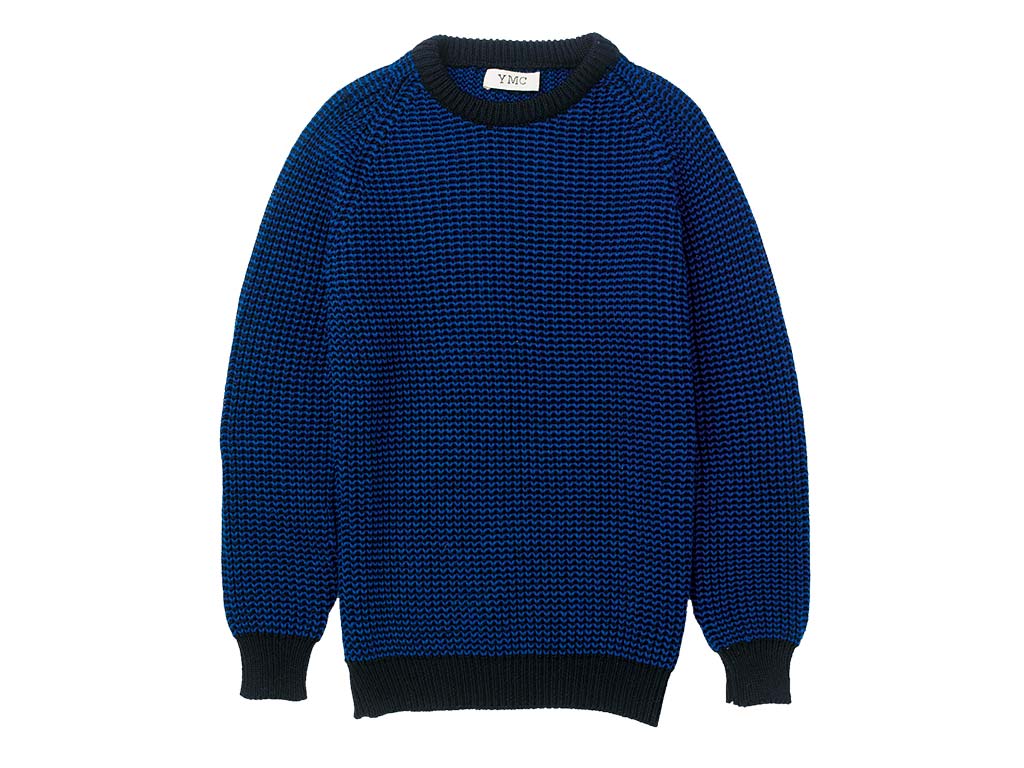
Knitted crewneck sweater, YMC, £235

The quest to produce the collections locally and fairly is another common denominator uniting this set of names. About 80 percent of Oliver Spencer’s line is made in Britain, and the rest is manufactured within the EU to minimise impact on the environment, and avoid the unethical working conditions that garment factory employees further afield are often forced to endure.

Retail personality

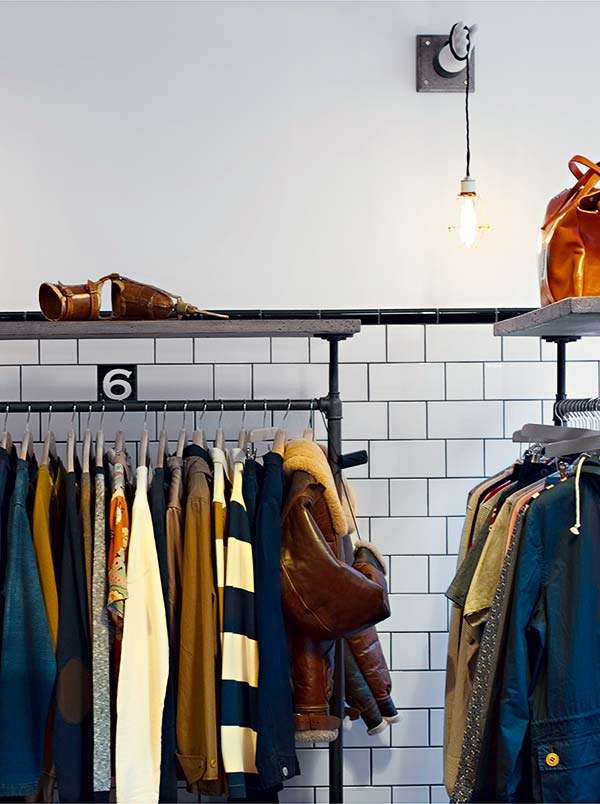
YMC's mortuary-themed store
YMC’s mortuary-themed store

A few years ago, one had to search quite hard to find a new outfit by Folk, YMC and Oliver Spencer. By now, all three have secured an impressive list of wholesale accounts, both internationally and on home turf. Heritage London department store Liberty houses one of the best menswear floors in the world, and these brands feature prominently.

While the retail sector is generally in decline, setting up at least one standalone store is a strategic must for many independent fashion contenders. “It’s very important for us to have a ‘show space’ as it functions as a window to our world,” says YMC’s Fraser Moss. “Since YMC is a small company, it doesn’t have a significant marketing or advertising budget, so we have to rely on the idiosyncratic nature of our two stores to give our customers a feel for what YMC is about.” Folk, Albam and Oliver Spencer also operate standalone stores, most of which are based in the east end or Soho – though Folk has spread its wings by way of opening a shop in Amsterdam, and Oliver Spencer has ventured as far as Toronto. At the moment, Albam trades exclusively via its four London outlets.

Pintsized, cosy and full of character, the retail establishments run by this group have a warm and intimate air far removed from the soulless cookie-cutter concepts that dominate the high street today. As distinctive as the clothes that lay folded on the shelves within, each shop has its own look – even those conceived by the same label. YMC’s original Soho store, which opened in 2009, is inspired by two niche, but trendy, elements of Victorian culture: taxidermy and the occult. The East End flagship shop, meanwhile, draws on the inherent functionality of a morgue, a theme that is not immediately apparent when first setting foot inside, but is charmingly creepy once it reveals its pallid self in details such as a mortuary slab and a sinister-looking plughole. And there it is again – the knack for taking risks and getting it right.

Hyatt Regency Paris Étoile: a corporate stopover

Set in the heart of historic Paris, Hyatt Regency Paris Étoile remains one of the city’s best-loved hotels, and whether you’re staying for business or pleasure it always impresses. Formerly the Concorde La Fayette, Hyatt Regency Paris Étoile affords those staying within its four walls an authentic and impressive Parisian experience that they won’t ever forget.

The hotel’s Director of Sales and Marketing, Jean-Christophe Vittet, believes Hyatt Regency Paris Étoile offers guests an entirely unique experience, and that its reputation as one of the most famous stays in the French capital is well deserved. Aside from being the city’s third-tallest building (standing at 460ft) it is also one of the largest, with as many as 950 rooms and suites across 34 floors – not to mention its four-star reputation.

Corporate clients
The hotel is connected to the Palais de Congrès de Paris, the largest conference venue in Europe. As such, it is particularly well suited to corporate clients, who make up the vast majority of its bookings. Jean-Christophe Vittet recognises the opportunity this presents the hotel. He says: “The fact that we’re actually linked to the congress centre is a huge selling point for us.” The hotel has successfully capitalised on the link since rebranding as Hyatt Regency Paris Étoile earlier this year.

Jean-Christophe Vittet says there is a huge increase in the number of corporate proposals submitted to Hyatt Regency Paris Étoile. “Of course, the rebrand signals a step up in quality for us all round, but also serves to accommodate for a growing opportunity in the corporate client space.”

Overall, Hyatt Regency Paris Étoile boasts 2,500sq m of conference space, as well as 35 modular meeting rooms, each equipped with state-of-the-art facilities and attended to by a highly experienced staff. The hotel proposes a loyalty programme, Gold Passport. As part of Gold Passport Planner Rewards programme, planners enjoy valuable benefits and recognition at Hyatt, such as room upgrades, late check-out, and access to the Regency Club.

Centre of the action
Aside from its draw to corporates, Hyatt Regency Paris Étoile’s principle attraction is its proximity to Paris’ greatest landmarks. The hotel is a short 10-minute journey from the famous Champs-Élysées, with the Arc de Triomphe, the Louvre and the Eiffel Tower within walking distance of, and all viewable from, the hotel.

“It’s important for us to be experts on all things in Paris”

While European tourism may well have undergone major changes of late, the draw of Paris remains, and Hyatt Regency Paris Étoile equips its guests with the knowledge and know-how to discover the delights of the city, no matter their duration of stay or personal tastes. The hotel’s concierge and butler service ensure that guests are never at a loose end. Jean-Christophe says: “It’s important for us to be experts on all things in Paris.”

Jean-Christophe Vittet believes a more personal approach is required nowadays. “From our perspective, the numbers have changed very little. The area that we’ve seen the most change in is group sizes. Where we previously saw large groups coming to stay here, more and more we’re seeing small and mid-size groups staying in their stead.”

Re-imagined to meet the needs of discerning business and leisure travellers, Hyatt Regency Paris Étoile offers exemplary service,comfort and amenities, ensuring that every guest enjoys the very best that Paris has to offer.

The Caribbean’s Statia island offers holiday bliss

Nestled in the northeastern Caribbean, about 150 miles east of Puerto Rico and just 18 miles south of St Maarten, is a tiny island of less than 12 square miles, and fewer than four thousand people, that delivers big thrills.

The Dutch Caribbean island of St Eustatius – from now on let’s call it Statia, because that’s what everyone calls it anyway – is an attractive and unique mix of serenity, immaculate diving, peace, history, culture and pleasurable bliss.

Cultural diversity
This saddle-shaped island, with a 602m-high dormant volcano known as the Quill protruding from its bosom, appeals to holidaymakers in many different ways. The Europeans must have known there was something special about Statia the moment it was sighted by Christopher Columbus in 1493. This special aura resulted in Statia being one of the most highly prized possessions in the Caribbean – the tiny island changing hands among colonial masters a staggering 22 times. This undoubtedly contributed to its rich and diverse culture.

Ships came to ‘The Golden Rock’ to trade in a variety of cargo. During the eighteenth century this island’s strategic location in the Caribbean Sea made it a crucial prize for France, Britain, and The Netherlands, and an especially valuable friend of the thirteen British Colonies of North America, before they even achieved independence. That trading partnership led to the famous ‘first salute’ which established St Eustatius as the first foreign country to formally acknowledge the independence of the US in 1776.

Despite its political history, Statia has a distinctively Dutch flavour, with sleepy villages, and is the epitome of the forgotten Caribbean. Three hundred years ago, every buccaneer, every admiral, every pirate knew of the island. Signs of its exotic past can be seen everywhere, from its architecture, to its streets, to its ruins. And these signs are as appealing on land as they are beneath the waters.

“Signs of its exotic past can be seen everywhere”

Diving and destressing
Its underwater beauty is stunning. You don’t have to venture far from shore to spot reef sharks, eagle rays, hawksbill turtles, green turtles and larger fish varieties such as nurse sharks lazing amid coral and sponge-covered walls. If you choose to dive deeper you can relive history through tangled shipwrecks, such as the Charles Brown, which, at 100m long, is one of the longest wrecks in the Caribbean. And, keeping you company as you explore these wrecks are hundreds of schooling snappers, horse eye jack fish and sharks, with large barracudas guarding the upper waters while spotted morays and southern stingrays patrol below.

Statia is a great holiday destination for many other reasons. Every resident swears on the island’s reputation as a crime-free area; locals even leave their cars unlocked. However, Statia is also a rare pedestrian-friendly island. Travel the cobbled main street of the capital during ‘rush hour’ and you’ll never see a traffic jam, and no car goes faster than 30kmph. They can’t and they don’t have to, because life is so calm, so relaxing. Today’s visitor has a hard time believing that this tiny island once had one of the busiest ports in the Caribbean. This clean, unhurried, unspoiled, pristine, practically crime-free, historically and culturally rich bit of heavenly bliss is indeed special. The warm and friendly people you encounter are the icing on the cake.

Gateway to paradise: the Gran Hotel Atlantis Bahia Real

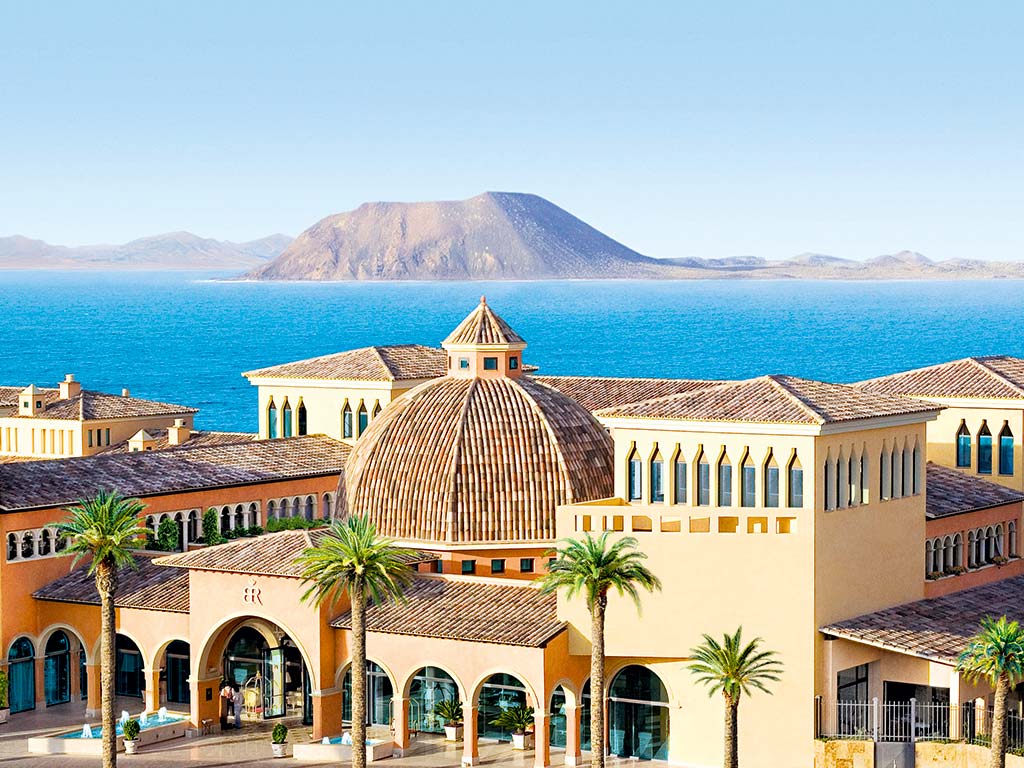
Surrounded by turquoise waters, and bordered by spectacular beaches and the soft white sand dunes of Corralejo Natural Dune Park, is the Canary Island’s best-kept secret – the Gran Hotel Atlantis Bahia Real.

The Gran Hotel Atlantis Bahia Real, located on the island of Fuerteventura, is a hidden treasure where the warm service, attention to detail, indulgent pampering and exceptional cuisine will make your stay unforgettable.

Subtle style
Moorish and colonial influences inspired the styling of the Gran Hotel Atlantis Bahia Real. It’s an oasis of warm tones and lush vegetation, perfectly combining natural beauty with cutting-edge facilities. The hotel presents a perfect harmony of architecture and nature, completely blending in with the majestic landscape of Fuerteventura.

Space, elegance and comfort are common denominators in all 170 rooms and 72 suites. Each one is uniquely styled and offers breathtaking views of the sea or tropical gardens. Imagine a quiet and comfortable haven just a few metres from warm sands. In the morning, cast off the fine cotton sheets, draw back the curtains, and let nature invigorate your senses. Enjoy the classical and contemporary fusion of styling in the rooms and suites: the warm tones, the soft textures, and the small details that make all the difference.

Guests always enjoy a magnificent night of rest at the Gran Hotel Atlantis Bahia Real, where luxurious kingsize beds are complemented by an extensive menu of sheets and pillows, and exceptional room service.

The Gran Hotel Atlantis Bahia Real
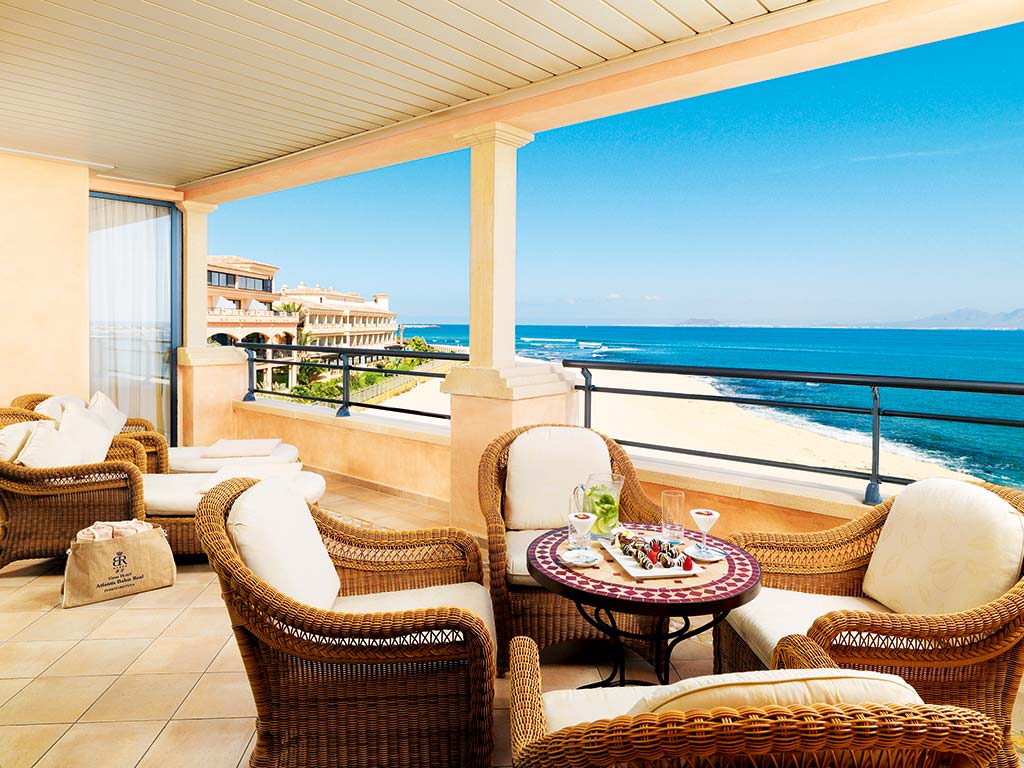
The Gran Hotel Atlantis Bahia has stunning views over the water

Top-class cuisine
The Gran Hotel Atlantis Bahia Real takes great pride in providing a huge variety of cuisine at five distinct restaurants, sure to please even the most discerning palates. All offer gourmet gastronomy and a perfect ambience for any occasion.

Immerse yourself in the refined and elegant surroundings of gourmet restaurant La Cúpula under the guidance of Michelin-starred chef Carles Gaig. His culinary inspirations offer you an exclusive gourmet experience; he combines art and flavour to produce exquisite gastronomic sensations.

Five distinct restaurants offer gourmet gastronomy and a perfect ambience for any occasion

Enjoy the subtleties of exotic Japanese cuisine in the Yamatori restaurant. Visit the varied offerings of sushi bar, or immerse yourself in the sensory kaleidoscope of teppanyaki.

Savour the finest Spanish products in the sophisticated Las Columnas restaurant, featuring a truly impressive wine cellar. It is the perfect way to spend a pleasant evening sampling good food and wine, and offers the highest quality national cuisine featuring innovative tapas and exceptional à la carte dishes.

Amid an oasis of tropical tranquility, overlooking the pool and with panoramic views of the sea, the Beach Club is the place to enjoy traditional Mediterranean cuisine including seafood, fresh fish and an assortment of rice dishes.

Wine and dine against the backdrop of the sparkling sea

Pampering and parties
Treat yourself to a journey of relaxation and wellbeing in the restorative bliss of the Bahia Vital Spa. Take a tour of this spectacular facility featuring more than 3,000sq m dedicated to providing a perfect harmony of body and mind. Experience the latest treatments and technology in the world of health, wellness and beauty.

Improve your energy and fitness levels with cutting-edge facilities and personalised training programmes. The Spa Bahia Vital is a veritable temple of beauty, health and wellbeing where guests are pampered, achieving a perfect balance between body and mind.

The Gran Hotel Atlantis Bahia Real is a sensational venue for hosting a conference, meeting or wedding in a unique environment. Situated next to Corralejo Natural Dune Park and featuring magnificent views of Lobos and Lanzarote islands, there are very few hotels that provide such a perfect setting for
memorable occasions.

With an ideal spring-like climate throughout the year, Fuerteventura is the perfect destination for hosting any event, with an endless array of outdoor activities on offer within the hotel’s tropical gardens or by the water’s edge. The Gran Hotel Atlantis Bahia Real prides itself on having event facilities and amenities that are second-to-none, ensuring the efficient organisation and smooth running of any type of event – from business meetings to weddings and family celebrations.

Since its beginnings, the Gran Hotel Atlantis Bahia Real has received numerous distinctions honouring the quality and professionalism of the hotel. The hotel celebrates a year of prestigious recognition, including being named Business Destinations’ Best Luxury Hotel, Spain, 2013. The excellent facilities coupled with the courteous treatment of its guests have been recognised by prestigious editorials and magazines, social networks, and the most important tour operators. But, most importantly, the hotel’s guests have nothing but positive comments.

Fully serviced: stay at Cheval Residences’ luxury apartments

The rise in demand for serviced apartments is a trend Cheval Residences has keenly embraced. Cheval Residences’ collection of luxury serviced apartments, located in some of London’s most sought-after neighbourhoods, allows guests to define their own living style and purpose. Each residence has a unique style, yet all share the same ethos and levels of service rarely enjoyed outside the world’s finest hotels.

Serviced apartments: Perfect for both business and leisure
Cheval offers a lifestyle choice for those seeking excellence, and is increasingly competitive with luxury hotels in terms of style, comfort and service. This is especially important with the emerging trend of business travellers who combine corporate travel with extended family holidays and leisure stays.

Quality of service and value for money are more important than ever when travelling with families, and Cheval Residences is confident its holistic approach to lifestyle, luxury and leisure will attract ever more people looking for serviced apartments.

This is especially pertinent in London, and in particular north of the river, in Zone One, where there are very few – if any – residential developments for rent that meet the demands of the high-net-worth frequent traveller.

Watch this space: Exciting developments near Tower of London
Following careful consideration, Cheval Residences has undertaken an exciting and innovative new development: Cheval Three Quays. Situated next to the Tower of London, in one of the city’s most historic locations, Cheval Three Quays is a striking residential development due for completion in early 2014.

Conveniently close to the City’s financial district yet within easy reach of the West End, Cheval Three Quays provides unparalleled vibrancy and privacy.

Cheval Three Quays will be one of London’s most sought-after residences

As part of the Cheval Residences philosophy, Cheval Three Quays will be rooted within its neighbourhood values, history and culture. Sympathetic to its surroundings, Cheval Three Quays will include 159 serviced and residential luxury apartments and penthouses – many with unrivalled views across the Thames towards Tower Bridge and City Hall.

Developed and styled by leading architects and interior designers, Cheval Three Quays will be one of London’s most sought-after residences for short and extended stays alike, whether for business or pleasure.

Culture and sights near the new Cheval Three Quays
Imperative to any Cheval development is educating both individuals and families about the benefits of the diverse neighbourhood surrounding the property.

The superb, central location of Cheval Three Quays offers guests a multitude of riverside restaurants and cafés on their doorstep. A wealth of cultural attractions and sights are also within easy reach, encouraging a more engaged and memorable stay in London.

Dean Madge, General Manager of Cheval Three Quays says: “We are delighted to be opening Cheval Three Quays in such an enviable location, but also to be expanding the Cheval Residences brand into an area of London that is so thirsty for an improved serviced apartment offering.

“We hope business and leisure travellers alike will relish the opportunity to stay in the comfort and luxury associated with the Cheval Residences brand in such an exciting and prime London setting.”

Cheval Residences strongly believes that the rise in serviced apartments is in direct correlation with the increased demand from affluent travellers for a comparable yet more personal alternative to the generic five-star hotel offering.

For further information visit: chevalthreequays.com

The pick of winter’s cultural events

Harbin International Ice and Snow Sculpture Festival
January 5 – February 28
Harbin

A teeth-chattering experience, the Harbin International Ice and Snow Sculpture Festival is set in China’s northernmost city and sees four million cubic feet of ice from the Songhua River put to use for artistic and practical purposes. Some buildings are made almost entirely of ice for the duration of the freeze, and the finished works attract some 800,000 visitors each year.

icefestivalharbin.com

East London Design Show
Dec 5-8
London

The annual event celebrates its 20th anniversary this year, a milestone marked by a change of venue and a step up in size. The East London Design Show, now housed in the Old Truman Brewery, is the best place to discover new talent in the capital, with over 100 of the area’s top independent designers selling products – often at massively discounted prices.

eastlondondesignshow.co.uk

Hogmanay Street Party
Dec 31
Edinburgh

The now infamous Hogmanay party sees Edinburgh’s streets lined with 80,000 merrymakers celebrating the New Year. For one night only the historical city is a stage for live music and entertainment, as well as one of the best firework displays you are ever likely to see. The party offers an opportunity to experience the city’s many sites and rambunctious spirit.

edinburghshogmanay.org

Rio Carnival
Feb-Mar 18-4
Rio de Janeiro

One of the best-known celebrations in the world, Rio Carnival is characterised by the warm spirit of Brazilian hospitality that never fades throughout the festivities. Countless street parties see exuberant characters lining the streets, as the entire city seems to stop and dance. To get in on the action it’s suggested that you book tickets early to avoid missing out.

rio-carnival.net

Winter’s business travel highlights

Techfest
January 3-5
Mumbai

Since 1998, Asia’s largest science and technology festival has catered for over 100,000 people a year on IIT Bombay’s campus. The event offers a platform for emerging entrepreneurs to showcase ways they’re attempting to advance technology. Despite being organised by students on a non-profit basis, Techfest has furthered the technology sector and sought to address pressing social and environmental concerns.

techfest.org

Cloud Expo Europe 2014
February 26-27
London

London’s ExCeL Exhibition Centre houses the EMEA’s top trade show for senior IT decision makers in client-side organisations and the cloud industry. With 10 theatres, 250 speakers and 150 suppliers partaking, Cloud Expo has an impressive line-up of guest speakers such as Adrian Cockcroft, CTO of Netflix; Malcolm Simms, CTO of Condé Nast; Daniel Austin, Chief Architect at PayPal, and many more.

cloudexpoeurope.com

The Festival of Media 2014
March 16-18
Singapore

The festival returns to Singapore for a celebration of the greatest innovations seen in media during the past year. The event is one of the most eagerly anticipated in Asia and is a place where industry leaders can exchange ideas and debate media issues. Guest speakers include Steve Blakeman, Asia Pacific CEO of OMD; Alex Cheng, Vice-President of Baidu; and a host of other influential names.

festivalofmedia.com/asia

Independent Games Festival
March 17-21
San Francisco

The Independent Games Festival has stood since 1998 as an exhibition of innovation and creativity in the lower echelons of the gaming industry. The event awards hundreds of thousands of dollars to deserving developers. Attendees enjoy an awards ceremony, a number of lectures discussing game design and guerrilla marketing, and a demo floor showcasing the latest independent gaming offerings.

igf.com

Food and drink events Winter 2014

Taste of Christmas
November 21-24
London

London’s hottest Christmas ticket visits the Tobacco Docks this year, featuring displays and demonstrations by some of the capital’s most critically acclaimed chefs – past guests include Jamie Oliver and Gordon Ramsey. Each offer their own take on Christmas classics, giving you a few recipe ideas for the big day.

Tickets: £12-70
Average dish: £4-5

Winter Fancy Food Show
January 19-21
San Francisco

Entering its 39th year, the West Coast’s largest food and drinks festival comes to San Francisco once again. The trade-only event hosts 1,300 exhibitors from over 35 countries across the globe. The Winter Fancy Food Show offers the most diverse and eclectic mix of flavours worldwide.

Tickets: $60
80,000 specialty items to sample

Gastrofestival
January 24-February 9
Madrid

In its fourth year, Madrid’s Gastrofestival sees the city pay tribute to Spanish gastronomy through the medium of art, film, fashion and – of course – food. The fortnight-long event involves tasting routes, tours of the Royal Palace kitchens and special festival menus at the city’s restaurants.

Tickets: €25 & €40 menus
Over 300 cultural institutions to visit