Why Americans aren’t travelling by train anymore

In May 2015, an Amtrak Northeast Regional passenger train, transporting 238 passengers and five crew members at a speed of 102mph, derailed in Philadelphia, killing eight people and injuring another 200. While many politicians shared their condolences in the wake of the tragedy, US Vice President Joe Biden did so more emphatically than most: “Amtrak is like a second family to me”, he said. “For my entire career, I’ve made the trip from Wilmington to Washington and back. I’ve come to know the conductors, engineers, and other regulars – men and women riding home to kiss their kids goodnight – as we passed the flickering lights of each neighbourhood along the way.”

Biden – sometimes called ‘Amtrak Joe’ due to the regularity with which he praises the state-subsidised train company – went on to say that “the victims could have been any one of our parents, children, or someone from one of our communities”. Without doubting the sincerity of Biden’s words, the reality is that very few Americans are likely to ever be caught up in such a tragedy, as the vast majority of them simply never use train services. For decades now, passenger rail use has been steadily declining in the US, and although the country is criss-crossed with extensive railway tracks, the majority of these are used to carry freight, not passengers.

Although the country is criss-crossed with railway tracks, the majority of these are used to carry freight, not passengers

When measured in passenger-kilometres (the standard measure of passenger use on trains, whereby a single passenger-kilometre represents one passenger travelling one kilometre), American rail use is disproportionally small compared with much of the rest of the developed – and even some of the developing – world. According to The Economist, in 2010 “American railroads accounted for just 17.2 billion passenger-kilometres”, while the EU’s various railway systems were responsible for nearly 400 billion. Likewise, per capita “the Japanese, the Swiss, the French, the Danes, the Russians, the Austrians, the Ukrainians, the Belarussians and the Belgians all accounted for more than 1,000 passenger-kilometres by rail in 2011”. Most surprisingly, while Amtrak, the US’ state-subsidised rail service, carried 31 million passengers a year, Mozambique’s railways carried 108 million passengers in 2011.

Westward-bound
Rail travel has played a decisive role in American history. As one writer for Vice magazine notes, passenger rail travel conjures up the “quaintly nostalgic… image of a Great Depression-era hobo carrying a bindle”. In the late 19th and early 20th centuries, the vast expanse of railways symbolised the open potential and pioneering-frontier ideal of the US.

Passenger rail was also instrumental in shaping the country as we know it now. The US has always had a transient population – as Richard Jensen, Research Professor of History at Montana State University Billings told Business Destinations, compared to Europe’s localism at the time, “the idea of relocating 200 or 400 miles became commonplace in the US after 1850, and if a family had done that once, it was easier do it again. The West Coast was the extreme case: it would take a week of travel to get to Los Angeles from the East Coast or the Midwest, but tens of thousands of families did it starting just as soon as the rail lines opened in the 1870s”. The westward expansion of Americans after the Civil War was reliant upon the use of rail and, as Jensen notes, “the railroads were decisive in shaping the 19th century expansion. Practically everything west of Chicago grew up because of rail connections.”

Driving to the suburbs
Yet railway use by passengers began to decline in the post-World War era. In the early 20th century, American roads had been precarious and underdeveloped, with many made up of little more than compacted dirt. This made travel – long distance or otherwise – by any means other than rail a burdensome task for most Americans. In the 1950s, however, President Eisenhower introduced the Federal-Aid Highway Act, thus creating a national inter-state highway system that totalled 46,000 miles, connecting the US in its entirety and making automobile travel far easier. The post-war era was also an era of growing prosperity, resulting in two related trends: the rise of the mass automobile, and the move to the suburbs – which in turn dealt a further blow to passenger rail use.

Mass-produced automobiles such as Henry Ford’s Model T – alongside growing prosperity and disposable incomes – turned Americans from passengers into drivers. Dr Allan M Zarembski, an expert in railroads at the University of Delaware, noted how the “rise of personal automobile”, facilitated by Federal-Aid Highway Act, made “auto travel fast, convenient and comfortable”. At the same time, automobiles became more suitable to new patterns of living, as more Americans moved to scattered and sprawling suburbs and it became less conducive to travel on foot.

As railway passengers disappeared, so too did the political will to maintain or invest in them. In the 1970s, freight trains were no longer mandated to include passenger cars, eventually resulting in the creation of Amtrak to replace these services for the remaining rail riders. The quasi-state company, however, has suffered from chronic underinvestment, with only delays and running problems to show for it. According to the National Journal, “Amtrak’s most punctual trains arrive on schedule 75 percent of the time” – hardly an appealing time-keeping record for commuters or holidaymakers.

Underfunding, lack of investment and a general lack of concern from US officials has been a persistent problem for American rail in recent years. “Hurricane Katrina washed out the tracks from New Orleans to Florida”, according to the National Journal. “The service was never restored, and the Gulf Coast has been without rail travel for nearly a decade now.”

West, again
Whether or not American rail can go through a revival is yet to be seen. However, it is perhaps fitting that one part of the contiguous US made accessible by rail – and with a history associated with it – could be the site of rail revival: Elon Musk of Tesla has grand plans to build a high-speed railway service from Los Angeles to San Francisco, which would, through the use of pressured tubes, propel passenger cars from one city to the other in around 30 minutes. However, this vision seems many years away. Additionally, California is working on its own, more conventional speed rail line on the LA-SF corridor, which is a more immediate prospect.

According to Zarembski, “the corridor concept is of real potential in the US since it avoids our very large intercity distances associated with coast to coast travel [3,000 miles] and makes travel times more manageable; along the European model”. Jensen, however, sees little prospect of a revival of trains in general, or the high-speed rail project in California. The high-speed train from LA to San Francisco “will go nowhere”, he said. “It is far too expensive, and requires a commute to the station.”

While he sees railways as having played a decisive role in US history, he believes that the future of transport relies on future technologies, not attempts to revive old ones. In Jensen’s view, “once self-driving cars become widely available in a decade or so, much of the tension around high-speed driving on crowded turnpikes will disappear. If the new technology works, the same stretch of turnpike or interstate will service more cars at higher speeds, with less travel time and far fewer accidents”. Just as in the past, Jensen said that “forthcoming technology still favours the automobile” – not its competitors, such as rail, which in the US has reached the end of the line.

Ho Tram Resort Casino Vietnam: a taste of Asian luxury

Having just been named as the Best Luxury Hotel, Vietnam in the Business Destinations Travel Awards 2015, the Ho Tram Resort Casino Vietnam is blazing trails in the fast-growing Southeast Asian nation. Set on 2.2km of beachfront and surrounded by acres of stunning forests, the resort is located only a two-hour drive from the country’s largest metropolis, Ho Chi Minh City.

The magnificent resort is part of a long-term vision; the very first phase of an ambitious development that will ultimately see the construction of a second tower on the site, bringing the total room inventory up to 1,100. An additional integrated resort and three further five-star resorts will be constructed in addition to the Greg Norman-designed championship golf course, The Bluffs, which was completed and opened to the public in 2014.

The magnificent resort is part of a long-term vision that will ultimately see the construction of a second tower on the site

Near and far
The resort currently features 541 elegant rooms, nine bars and restaurants, Vietnam’s first international standard casino, a luxurious spa, and one of the largest meeting and convention spaces in the country. Since Shaun McCamley became president of the integrated resort in October 2014, he has since seen it go from strength to strength. He told Business Destinations: “Business at the Ho Tram continues to be very good – VIP areas in the casino have been performing solidly for some time now. A few months back we turned our attention towards more aggressively marketing the mass gaming areas, and we are seeing results of those efforts coming in now, with growth across all areas of our mass floor.”

The resort guarantees luxury accommodation with stunning views of either The Bluffs golf course or the South China Sea. The amenities that are on offer – including 24-hour room service, free Wi-Fi, beach activities and the exclusive Club 9 nightclub – attract a unique class of business traveller, particularly those that are looking to get a little more from their stay. “We tend to target the Intra-Asia network as our source market”, said McCamley. “We have a huge potential gaming and golfing market all within a few hours from here, and this is where we direct most of our effort and attention. Locally based expats are also important to us, as they are right on our doorstep and have the propensity to play both the course and the tables. Koreans, Japanese and overseas Vietnamese tend to be the most important of these groups.”

Unique circumstances
However, it is not tourists alone that are drawn to the Ho Tram Resort Casino Vietnam. In spite of the fact that gambling is illegal for local residents, McCamley said: “Local Vietnamese have really taken to the product here, loving our landscapes, our culinary scene, and are flocking to the events that we host here. Should the laws change that currently prevent them entering our casino, they would quite rapidly become one of our top priorities.”

Perhaps few other people in the world would have felt qualified to take on the presidency at a casino resort in a location with such restrictive laws: “In many ways, my career path has always been building up to a role like this”, said McCamley. “I started as a croupier in one of London’s exclusive Mayfair clubs, and have spent my entire career working my way up from the floor.

“Ever since my introduction to the industry, I had been looking for an opportunity where I could use my extensive background knowledge and skills towards building and developing an organisation. For me, that’s where both the real challenges and the opportunities lie. So when I was asked to submit my name for consideration to take on the role of president at the Ho Tram Resort Casino Vietnam, and knowing some of the background of the project, for me it was just too good of an opportunity not to go after it.”

Standing out from the crowd
There is an abundance of unique hotels and residences around Vietnam, ranging from beachside traveller hostels to five-star luxury palace resorts. With so many options catering for the entire spectrum of leisure and business travellers, it is crucial for the Ho Tram Resort Casino Vietnam to distinguish itself from the rest of the industry. Being Asia’s only beachfront integrated resort gives it an immediate edge, one that is further reinforced by the immeasurable beauty of the building and its natural surroundings. “No one else has our beach, our climate, our cuisine or a first-rate casino”, said McCamley. “It’s amazing how quickly sceptics become believers when they visit Ho Tram. We have had many industry leaders visit the resort in the last couple of months, and all of them, without exception, have been completely blown away with the quality of product we have at the Ho Tram.”

Arguably the resort’s defining feature – and undoubtedly one of its greatest attractions – is its world-class golf course. The Bluffs satisfies a key gap in the market for the Ho Tram Resort Casino Vietnam by appealing to the 200,000 Koreans currently living in Ho Chi Minh City, along with the growing number of visitors from Japan, China, Taiwan and Southeast Asia. The huge potential for a golf and gaming market is directly on the resort’s doorstep, and McCamley is intent on making the very most of it. “The reviews of our course are astounding”, he said. “We became the first course to ever be nominated in three categories at the Asia Pacific Golf Awards – and that was before we were even formally open! The course is an absolutely crucial piece in our puzzle.”

While McCamley is delighted with the popularity of The Bluffs and the success that the resort is currently seeing across is VIP gaming platforms, there is always room for growth. As such, much of the team’s focus now rests on building up the mass gaming floor and improving the hotel’s range of entertainment facilities. With the construction of a new condominium tower currently underway – with beach houses and golfing villas to be added at a later date – it is an incredibly exciting time to visit the resort.

Czech Republic opens itself to business meetings and conventions

The Czech Republic may be small, but its great wealth of valuable heritage attractions – 12 of which are recognised as UNESCO World Heritage sites – and supply of stunning historical districts make it an unmatchable MICE destination in the very heart of Europe. Sharing its borders with Germany to the west, Austria to the south, Slovakia to the east and Poland to the northeast, the country is a landlocked catalogue of architectural styles and cultural diversity.

Decades of meeting
Prague, the Czech Republic’s stunning capital city, is a popular setting for meetings, events and incentives. Offering a selection of traditional and modern congress centres with a wide variety of unique facilities, the city has proven to be an ideal location for conferences and other key events for many years: the city’s professional event organisers and destination management companies possess a uniquely creative and innovative attitude that has seen them organise one successful event after another over the last two decades.

Prague’s professional event organisers and destination management companies possess a uniquely creative and innovative attitude

Worldwide connectivity
Outstanding road and rail connections to other European cities mean that, no matter where in the Czech Republic you find yourself, you are within easy reach of an endless supply of exciting destinations. Furthermore, Prague International Airport – the second largest airport in Central Europe – is connected to 111 destinations across the globe, meaning that easy access to the country is guaranteed from wherever you are in the world.

The Czech Republic’s superb transportation network has added to its renown as a popular meeting destination: the country has been ranked as the 27th best meeting location in the world by the International Congress and Convention Association (ICCA). This impressive ranking was also influenced by the country’s exceptional range of conference venues, which includes the Prague Congress Centre (PCC), one of the leading convention complexes in Europe. With over 50 halls and meeting rooms, the PCC offers ample space for hosting up to 9,300 participants, with top quality technical equipment and professional support available across its supply of adaptable spaces. The centre is currently undergoing an extensive CZK 700m ($28.5m) modernisation, which will see the exhibition space increased by 5,000sq m and the installation of new technological equipment, including state-of-the-art audio technology.

Conveniently situated between Prague and Bratislava, the Brno Exhibition Centre offers more than 130,000sq m of net exhibition space, thereby making it one of the largest exhibition centres in the world. The centre was originally opened in 1928, commemorating the first decennium of the formation of independent Czechoslovakia in 1918. A number of the centre’s exhibition halls are referred to as true jewels of the functionalist architectural style, the latest of which – the P Hall, which offers over 10,000sq m of space – opened in June 2009.

A glimpse of history
Prague Castle is the most culturally significant of the Czech Republic’s 12 UNESCO World Heritage sites. An ancient symbol of the Czech lands, the castle consists of a large-scale composition of palaces and ecclesiastical buildings of various architectural styles, from Roman-style constructions from the 10th century to Gothic churches from the 14th century. For truly unique events or functions, Prague Castle’s largest hall can accommodate 600 people.

Municipal House, a national heritage building, is one of the most significant Art-Nouveau buildings in Prague. Standing in the very centre of the city, the site was decorated by the leading Czech artists of the age: the magnificent Mayor’s Hall was adorned by Alfons Mucha, while Smetana Hall includes a one-of-a-kind organ from 1912.

The Czech Republic, named the 11th safest country in the world by the Global Peace Index, offers a professional, beautiful and cost-effective location for any event. The country’s unique combination of old and new – from architecture and culture to dining and nightlife – ensures that any visitor will find something to astound them.

Webexpenses enhances the technological ease of business travel

You find yourself visiting a beautiful foreign city for the first time. You are staying in a top quality hotel, and all of your meals and accommodation for the duration of your trip are being paid for. It sounds like a dream holiday – but, of course, it’s not. This is a regular business trip, and despite the stunning surroundings and the promise of adventure, you are there to work.

It’s the strange conflict between the obligation to work and the desire to enjoy oneself that all business travellers must deal with – and it’s a lingering feeling that can turn overseas business travel into one long guilt trip.

On the clock
First, there’s the guilt that comes with undertaking any task or activity that is not ‘strictly business’ – can you justify it to your managers, especially while they’re paying you for it? And second, there’s the more personal regret that comes from being away from your family and loved ones. The responsibility that accompanies business travel can often take the joy out of it entirely.

The responsibility that accompanies business travel can often take the joy out of it

But this guilt trip is something that more companies are beginning to challenge and reject – instead of preventing employees from mixing their business and personal lives, they are actively encouraging it. This is a growing trend that has been partly driven by technology: with cloud technology, smartphones and business apps readily available, business travellers are never truly off the grid, meaning that they can remain in constant contact with senior colleagues wherever they are in the world. Travellers can participate in video conferences, contribute towards online documents, and update their status on web-based project management software. Essentially, they can do almost anything that could be done back in the office.

This rise in technology is enabling a complete shift in company culture when it comes to business travel. It is allowing for a more open and transparent relationship between business travellers and bosses: companies have begun to adopt more flexible travel policies, which are purely geared towards getting the best performance from employees. Generally speaking, travel policies are becoming more aligned with the increasingly mobile way in which we all now live our lives.

Relaxing the rules
More and more companies are now offering employees the option to integrate personal time into their business travel itineraries, coinciding with a growing acknowledgment that relaxed, guilt-free and happy employees are far more likely to deliver on business objectives. One of the most significant changes that is enabling such a culture shift is the way in which business travel costs are being monitored and calculated.

In the past, a constant fear of running up extravagant expenses on lavish meals and hotel high-life only increased feelings of anxiety and guilt for both parties.

The true cost of trips would only be revealed to a finance team days, or even weeks, after the employee had returned and manually processed the bundle of receipts, tickets and bills they had acquired during their travels.

With digital expenses management, such challenges have been resolved. New generation systems, such as webexpenses, provide business travellers with smartphone apps that instantly record and upload their expenses claims from wherever they are in the world. It gives account managers real-time information, allowing them to keep tabs on rising costs and to approve and reject claims as they are made.

By re-establishing trust, changing company culture and removing paperwork altogether, companies now have the confidence to explore innovative new ways of working – and for business travellers, it means that visiting a beautiful, unexplored city no longer has to feel like a guilt trip.

Experience the riches of Athens at the Onassis Cultural Centre

Since its establishment in 2010, the Onassis Cultural Centre (OCC) has grown exponentially. Exclusively funded and overseen by the Onassis Foundation, the OCC was built on a privately owned, 3,000sq m plot of land following an international architecture competition. In the five years since, the centre has become Athens’ foremost cultural space, hosting events and actions from across the spectrum of the arts.

Performances including dance, theatre, music, cinema, the visual arts and the written word have all been displayed at the OCC, with emphases on contemporary cultural expression, supporting Greek artists, cultivating international collaborations and educating people of all ages and abilities through life-long learning workshops. As a result, the centre’s wide range of performances and the support that it provides for the local and global cultural sector has seen it named as the Best Cultural Venue for Corporate Events, Europe in the 2015 Business Destinations Travel Awards.

The centre prides itself on operating on an international basis, and has staged some extremely demanding productions over the years

Taking it outside
The OCC prides itself on operating on an international basis, and – thanks to the extremely high standard of its technical teams – the centre has staged some extremely demanding productions over the years. Christos J. Carras, the Executive Director of the OCC, told Business Destinations: “These international collaborations have played an important role in our efforts to promote younger Greek artists abroad: it takes time to gain the confidence of major institutions in other European countries and beyond, but once you do, they are much more willing to consider featuring our theatrical, dance or music programmes in their venues. This is important for us, [as it helps to encourage] Greek artists who often find it hard to break out of the national market due to the lack of official support.”

Above all, the OCC has focused on developing and sustaining a high level of extroversion. Its education programme, which covers a broad range of activities and courses, is a major driver behind the centre’s conscious outreach to the community in which is operates. “It is vital for us that we should not be seen as an ivory tower, in which the high and the beautiful are preserved and cultivated in some kind of protected environment”, said Carras. “On the contrary: our vocation is to be fully engaged with the issues that are of importance to our society, through our cultural offering.”

The influence of the OCC’s programmes and the scope of the audience with which it engages means that, in many senses, the centre’s agenda has now outgrown its building. Consequently, more and more of the OCC’s classes and performances are now being scheduled off-site. This advance into the rest of Athens not only indicates the full extent to which the centre has grown in popularity and in size, but also allows for the inclusion of a much wider audience as a result: these city centre displays act as a way for contemporary art to be brought directly to the general public, allowing both performers and spectators to engage with some of the most significant and stimulating trends that are emerging in contemporary performance art.

Against all odds
In recent years, Greece has been battling through one of the most devastating economic and social crises that have been faced in living European memory. Funding for theatre, music and dance has virtually dried up, leaving many younger artists and performers without even the most basic support that they would need in order to fully develop their skills and produce pioneering, cutting edge works. “In this context I think that it is fair to say that the OCC has played a really vital role, since – thanks to the support of the Onassis Foundation, of which we are a division – we have been in a position to maintain and intensify our programming”, said Carras.

Despite a crippling recession and a nationwide reduction in arts funding, it is astounding to see just how lively the Greek arts scene is: the way in which young Greek performers have adapted to such adverse conditions is an indication of the vitality of the population as a whole, wherein a considerable amount of energy is being devoted to more collective forms of organisation. The creation of new, collectively run art spaces demonstrates a rise of young artists who are willing to take matters into their own hands.

Visitors at the Onassis Cultural Centre

Reaching out
Athens’ rich history has long made it one of the leading destinations in the world for cultural travel. However, today the city once again finds itself at the very forefront of historical change, with the financial and social difficulties being faced all across the country creating a new environment – one that is both challenging and enormously motivating – in which incredible new artworks are being produced. “The situation that is playing itself out here, and whatever the undisputed local pathologies may be, is one that is relevant to Europe as a whole, since we are witnessing the end of an era and the emergence of new political and cultural ground rules”, according to Carras. “Within this context, the OCC can provide a high level of production facilities, and above all a curatorial team that is ready, willing and able to support the more adventurous voices within our artistic community.”

The OCC is committed to developing a series of innovative programmes that reach out to all kinds of communities across the country. For two years the centre was particularly invested in Unlimited Access, a programme coordinated by the British Council that addressed the needs of disabled dancers. Unlimited Access involved both amateur and professional performers, and worked to integrate disabled dancers with able-bodied troupes. Additionally, the OCC’s workshops for children with autism have proven extremely popular, offering another example of how the centre is working to cater for increasingly specific and varied abilities, interests and circumstances. The OCC also provides exclusive programmes for senior citizens, prisoners and more.

The OCC doesn’t attempt to achieve all of this alone, however: by collaborating with other centres of a like nature and with a similar mission, it has become part of a committed network of arts and culture establishments across the globe. “We work closely with several other institutions on a regular basis”, said Carras. “For example, the French Cultural Institute, the British Council, the Hellenic Film Academy, design institutions and universities. We have hosted events by Google and TEDx, as well as more corporate ones. I think that the cultural profile of the OCC provides a real value added dimension to an event.”

This high international regard, teamed with excellent technical facilities and a staff force that has a strong reputation for friendliness and professionalism, means that, in spite of challenging circumstances wherein culture has been forced to take a backseat, the OCC’s spaces are in greater demand than ever before.

How to stay in touch with friends and family when you live abroad

When living abroad or travelling regularly overseas, you will want to ensure you are connected to your friends, family and key contacts. Thankfully, the world has become a much smaller place over the last few years, with numerous technological advances and communication options now available – meaning that loved ones can now keep in touch at the click of a mouse.

The team at OverseasGuidesCompany.com looks at three top tips to ensure you remain connected:

Make use of online options

Social media

Social networks can be great for regular use – keeping you up to date with the activities of your friends and family, as well as ensuring they stay informed on everything you are up to.

Video calling
Video call programmes can be great for free long distance calls. Skype or FaceTime, for example, can be used when both parties have Wi-Fi and connectivity. What often works well is selecting a regular time when you and whomever you want to contact can spend some time on the phone, seeing each other’s faces as well as hearing each other’s voices.

Blogging
Another way to keep in touch with your old life is by creating a blog. This enables you to update loved ones back home on everything you are doing, and gives a forum for them to share thoughts and communicate back and forth.

Research telephone and broadband deals

If you have elderly relatives who are not online, or you can’t always guarantee a good enough Wi-Fi speed, you may wish to invest in a telephone deal to stay in touch. What’s important here is conducting enough research to ensure you find the right tariff to suit your particular requirements. International phone calls can be expensive, so you don’t want to be paying for something you will not use regularly enough to benefit from (or run up ridiculously high telephone bills).

Make use of online services for post and parcels

Sending international post can be complex and expensive – and will often take longer than you expect. If you want to send presents or other parcels to your friends and family back in the UK, our best recommendation is to make use of online shopping options. Using a UK-based store, such as Marks and Spencer, or even buying through Amazon will ensure you can be more certain about when gifts will arrive and often cheaper. You can even include gift-wrapping, saving time and additional expense.

Sending cards, letters or any other written correspondence can now also be done online quickly and easily – with companies like Moonpig particularly popular for greetings cards, which are posted in the UK to save you time and money.

InterContinental Presidente

The Yucatan Peninsula in the southeast of Mexico has become the country’s primary tourist region, welcoming visitors from across the world to its stunning tropical beaches, scorching hot weather and breathtaking archaeological monuments. However, while the region has plenty to offer holidaymakers, it can sometimes get overcrowded with visitors – not least the hordes of young Americans celebrating their spring break in increasingly decadent ways.

Whereas Cancun and nearby Playa del Carmen are brimming with luxury resorts, internationally recognised chain shops and beaches packed with tourists, they have in some ways lost parts of their traditional Mexican cultures. Indeed, it could be said that there is little to distinguish them from many other parts of the Caribbean.

Known for its diving, snorkelling and small beach resorts, Cozumel’s economy is largely dependent
on tourism

A corner of paradise
By contrast, however, the island of Cozumel offers luxurious, high-end accommodation within a local, authentic Mexican community. Just a short ferry ride from Playa del Carmen, Cozumel has everything a visitor could wish for from a trip to the Yucatan, but without the huge numbers of other tourists in the better-known spots.

Particularly known for its diving, snorkelling and small beach resorts, Cozumel’s economy is largely dependent on tourism. The stunning coral reefs surrounding the island make it a popular destination for tourists looking for more than just sunbathing, while inland there are a number of Mayan ruins for visitors to explore. For places to stay on Cozumel, the most luxurious option is the InterContinental Presidente Cozumel Resort and Spa: the secluded hotel could not be in a more ideal location, found just outside the main town and harbour of San Miguel de Cozumel. Tucked away on its own private white sand beach, the InterContinental Presidente offers immediate access to snorkelling and scuba-diving spots on the island’s beautiful coral reefs.

With over 220 guest rooms and 37 luxury suites, the hotel can cater for many people while offering either ocean or pool views from all of its rooms. It is an idyllic place for visitors to enjoy the natural delights of the tropical landscape, with easy access to the rest of the island. It also has two pools and three private beaches for guests to enjoy, as well as two bars.

InterContinental-Presidente-2

Catering for everyone
Aside from the beach, the hotel has plenty of other activities to sample. Its own extensive spa has a full menu of relaxation services, while more active types can play tennis on the two illuminated courts next door. There are also four restaurants that offer a wide range of foods: El Caribeño is situated on the oceanfront, offering spectacular views and serving both regional Mexican and international cuisine. During the day there is the Bar & Grill Caña Brava, which is another more casual beachside restaurant that serves Mexican snacks and light lunches.

The Napa Grill Steak & Seafood restaurant provides stunning views of the bay, while – for high-end dining – the Alfredo di Roma offers some of the best food on the island. A gourmet restaurant that combines northern Italian cuisine with the fresh seafood of the region, the restaurant also has the largest wine cellar in Cozumel.

However, it is not just holidaymakers that the InterContinental Presidente caters for: the hotel accommodates groups and those on work retreats, with companies frequently taking their employees for gatherings. There are also industry conferences hosted there. With the Yucatan Peninsula growing year by year as a hotbed of tourism, the InterContinental Presidente Cozumel is an ideal destination for visitors wishing to sample everything the region has to offer from within a secluded, relaxed and calm environment.

O On Kloof

With sublime views of the Atlantic and the surrounding mountains, the O on Kloof Boutique Hotel offers guests an extraordinary stay in the gorgeous city of Cape Town. Comfort and hospitality are key features of this small, family-run hotel, where greeting guests with champagne upon arrival is indicative of the level of attentiveness offered by friendly staff.

O on Kloof’s contemporary décor, decadent furnishings and spacious rooms are luxurious, yet still maintain the hotel’s unique character, while water features and sumptuous lounges provide an oasis of calm that is ideal for recuperating after a day of sightseeing. A heated indoor swimming pool and a fully equipped gym are available for guest use only, while – for those who prefer to unwind by a romantic fire – there is also an extensive library of books, DVDs and CDs to be enjoyed. In order to tempt guests into a further state of bliss, the hotel has an array of indulgent spa treatments available.

With just eight rooms, the hotel provides a quiet space for guests

A stunning retreat
With just eight rooms, the hotel provides a quiet space for guests, along with incredible service that caters to their every need. The rooms themselves have a range of amenities to make the stay as comfortable as possible, including cotton bath robes, a fully-stocked mini bar, satellite television and a same-day laundry service. While staying at O on Kloof, guests are recommended to take advantage of the outdoor dining space and indulge in the first-rate cuisine available, which includes a delectable variety of local produce that is cooked by highly trained chefs.

When drinking cocktails or sampling South African wines on the deck with a magnificent view of Lion’s Head Mountain, some guests may find it difficult to leave the hotel – but, after starting the day perfectly with a delicious breakfast that is cooked to order, guests can rest assured that there is plenty to enjoy in Cape Town. The hotel’s team are always on hand to offer advice and recommend customised day tours, enabling guests to make the most out of their trip.

O-on-Kloof

Natural splendours
Named as the number one destination to visit by The New York Times last year, Cape Town has a supply of unique offering for travellers. Being a vibrant city with incredible surroundings means that there really is something for everyone. Exploring the city is a must, especially given that Cape Town is in a process of reinventing itself as a cultural tourism destination – and when taking in the incredible architecture and numerous galleries throughout the city, it is easy to see why this is the case. With a focus on celebrating the arts, there is a regular offering of fashion shows, open art studios and live performances for both residents and tourists to revel in.

Visiting South Africa’s natural sites is an opportunity not to be missed: the stunning Camps Bay features a boardwalk of trendy restaurants along a turquoise blue coastline, while Bantry Bay, a unique geological site that was once visited by Charles Darwin, is also a short car journey away from the hotel. Guests can take an excursion to Constantia Valley, Southern Africa’s oldest wine-growing area, or visit a nearby breeding colony of endangered African penguins at Boulders Beach.

Cape Town is a creative and exciting destination that also provides inspiring views, natural wonders and exotic wildlife – a rare combination of offerings for any cosmopolitan city. O on Kloof is the ideal location to take in everything that this incredible place has to offer – that is, if guests can be tempted enough to leave the tranquillity and luxury of the hotel.

African Regent Hotel

Nestled in Accra’s prestigious and most exclusive neighbourhood, Airport West, the African Regent Hotel is famed for establishing itself as the Ghanaian capital’s first luxury African and cosmopolitan boutique hotel. The preferred destination of savvy locals and sophisticated travellers alike, the hotel is a desirable location for business, entertainment, socialising and relaxation.

This hospitality icon was set up eight years ago, creating a brand that highlights the very finest elements of African culture and draws particular attention to the most stylish features that can be found in Ghana and beyond. This attention to unique details is echoed in the African Regent Hotel’s tagline: ‘simply afropolitan’.

Ghana on the map
The hotel exterior is purposefully unadorned, offering a stunning contrast against an interior that delicately incorporates elements of the design trends and styles that are visible across Africa today. Guests can feel the strong but sublime African influence in the art, gastronomy and mixture of vibrant colours and subtle earth tones that are laced through the hotel.

Ghana is a vibrant country, bustling with an exciting culture and a rich
historical background

Ghana is a vibrant country, bustling with an exciting culture and a rich historical background. Its history dates back to the medieval days of slave trade, when the country was known as the Gold Coast to the various traders who made Africa their destination for a series of commodities, including gold, ivory, spices and manpower. In recent times, this trend has seen a turnaround following the discovery of oil reserves in the area, with manpower now mostly being imported into this specialised sector. Multinational companies such as Tullow, Eni, Chase Petroleum and Kosmos Energy are now operating exclusively from Ghana, with offices in both of the country’s harbour cities, Accra and Takoradi.

The rapidly expanding economy and a burgeoning middle class have contributed to a booming economy, resulting in a significant tourism boost and the subsequent introduction of several key international hotel chains and brands. Accra’s population of almost four million people, who are known worldwide for their warmth and hospitality, has helped to accommodate this increase in international presence.

International renown
The African Regent Hotel boasts 109 modern and elegantly decorated rooms and suites, with a series of state-of-the-art business and leisure facilities designed to accommodate any kind of traveller. Many of the rooms offer spectacular views, including those of the neighbouring Villagio Vista luxury properties, which have been designed to resemble an intricately woven ‘kente’ (the rich traditional cloth of Ghana). Inside the hotel itself, guests can enjoy a variety of continental and eclectic cuisines from across the globe at the world-class Mukyia restaurant. This eatery serves delicious themed buffets for breakfast, lunch and dinner every day of the week.

The stunning hotel is located only a five-minute drive from Kotoka International Airport and a five-minute walk from Ghana’s first and leading shopping mall, Accra Mall. For sports enthusiasts, the African Regent Hotel is also situated only a few minutes away from the Polo Grounds, and is a 10-minute drive to the Achimota golf course. For visiting artists and art collectors, the hotel itself offers a spectacular art exhibition that showcases the works of local painters, while a stroll through the nearby Tetteh Quarshie interchange will lead visitors to the local flea market, which comes alive every day with new artworks and the bustle of Ghanaian locals.

The hotel’s unfailing ability to balance service with style has been the key to its success, resulting in it continuously setting the highest standard among hotels of its kind and thus being the recipient of a number of accolades, both nationally and internationally: these awards include the CIMG Hospitality Facility of the Year award in both 2009 and 2013; the International Diamond Prize for Excellence in Quality, 2012; and the Business Initiative Directions’ International Quality Crown award. It is also the only CNN Partner Hotel in Ghana, and additionally has been voted one of the top 20 hotels in West Africa by Africa Travel Quarterly.

Mediterranean Conference Centre

Located on the scenic eastern coast of the island of Malta, the Mediterranean Conference Centre has firmly established itself as one of the most impressive conference venues on the European continent. The centre’s unique history and imposing architecture have undeniably played a key role in it securing such a position, with a past and charm that set it apart from other, less personable destinations.

Ease of meeting
The historic building that now houses the Mediterranean Conference Centre was, for more than two centuries, known as the Sacra Infermeria, or the Holy Infirmary of the Order of St John. Constructed in the latter half of the 16th century, this architectural landmark boasts a fascinating history that includes a series of functional transformations, all designed to help the centre to accommodate the changing needs of the surrounding area. In 1979, the Sacra Infermeria underwent a full restoration and was subsequently converted into a modern conference centre; a transformation that saw the building being awarded the coveted Europa Nostra award for superb restoration and its tasteful amalgamation of old and new.

The centre’s past and charm set it apart from other, less personable destinations

A variety of special features make the Mediterranean Conference Centre truly unique: situated far away from the cluttered atmosphere of high-rise meeting destinations and the din of city centre traffic jams, the conference centre has all the technical benefits of an ultra-modern venue while situated in an oasis of historical tranquillity. Each meeting hall is equipped with its own independent sound, lighting and climate control systems, with conference facilities including simultaneous language interpretation systems, ADSL, Wi-Fi and a range of high specification audio-visual equipment. Across its range of venues, the centre can seat more than 2,300 delegates at any one time.

Spread over an area of 7,000sq m, the conference centre boasts a total of eight conference halls and four syndicate rooms: the largest and most impressive auditorium, Republic Hall, can seat up to 1,400 guests in theatre style. During the building’s restoration, this impressive and imposing venue was built in place of the original Sacra Infermeria’s main courtyard. The expansive 728sq m area was tastefully roofed over, thus creating the largest auditorium space in Malta, where old masonry and modern technology are blended seamlessly together. The hall is perfectly complemented by deep red theatre curtains, comfortable seating and yellowed old stone arches. Moreover, the centre’s smallest conference hall, La Cassiere, can accommodate up to 60 guests and offers an intimate space for exclusive catered events and small-scale seminars.

Mediterranean-Conference-Centre-2

Ancient reminders
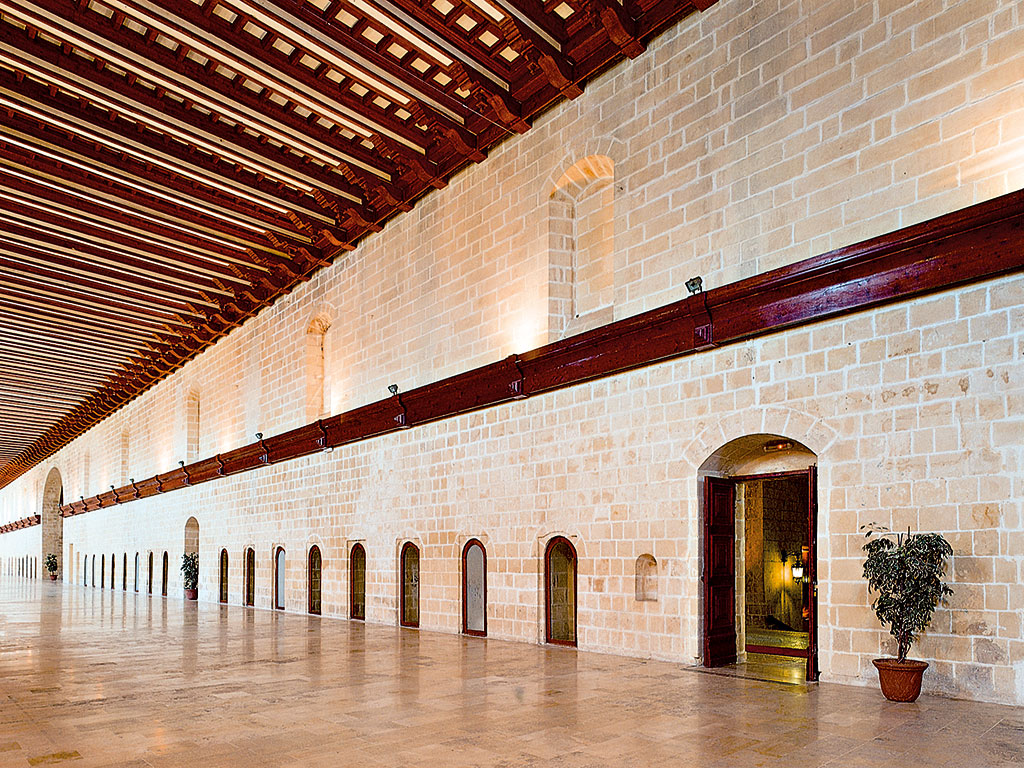
At 155m in length and 1,700sq m in total area, the Sacra Infermeria Hall is the main exhibition hall in the centre. Known as the Long Ward in the original infirmary, the hall is one of the longest such spaces in Europe and was deemed an impressive architectural feat when it was originally constructed in the 16th century. This magnificent setting is regularly used for catering functions: the Sacra Infermeria Hall is capable of accommodating up to 1,500 people comfortably seated, or over 2,500 for standing cocktail receptions.

The La Valette banqueting hall is unique to the island in many respects: with a seating capacity of about 900 persons, it is the largest dedicated space in Malta, covering an area of 1,500sq m. Its vast yet graceful vaulted ceiling is one of its most awe-inspiring features, where stunning 400-year-old frescos have been carefully restored. Candle torches and coats of arms of the knights of Malta set an elegant, historical scene for formal dinners and banquets.

Elite Hotels of Sweden

Founded in 1980 by internationally renowned businessman Bicky Chakraborty, Elite Hotels of Sweden is a first-rate hotel group and the country’s largest privately owned hotel chain. Today consisting of 27 high-quality four- and five-star hotels, Elite Hotels’ portfolio promises excellent accommodation in carefully restored buildings that stay true to their unique roots and history. With an ambition to unite classical style with modern trends, Elite Hotels offers an experience that goes above and beyond what even the most discerning business travellers have come to expect.

Elite Hotel Marina Tower is located on Stockholm’s stunning waterfront just a few minutes away from the city centre. Offering fantastic views of the city along with endless possibilities for meetings and events, the hotel provides the perfect setting for any traveller, whether they are visiting Sweden on business or for leisure.

The exclusive opportunity to charter the hotel’s private boat grants guests access to Sweden’s magnificent archipelago

Embracing history
Dating back to 1890, the building in which Elite Hotel Marina Tower is situated was originally the largest steam-driven mill in Scandinavia. In 2007, the careful restoration of the building saw the original exterior being vigilantly preserved, while the former mill’s interior was given an impressive new look. Elite Hotel Marina Tower was inaugurated in 2010, and quickly became the new flagship hotel of the Elite Hotels of Sweden group. Offering 186 tastefully decorated rooms and suites, many of them with stunning sea views, the hotel provides spacious, charming and warmly decorated accommodation, with carefully selected materials and colours used throughout in order to guarantee the perfect location for work and rest alike.

The possibilities for meetings and events at Elite Hotel Marina Tower are endless. The hotel offers 13 meeting rooms – the largest of which can host up to 400 guests – which are collectively able to accommodate events ranging from board meetings to grand gala dinners. Furthermore, at the top of the hotel’s distinctive tower building is its exclusive Tower Suite; a perfect setting for smaller events and special occasions. From the suite’s private roof terrace guests can enjoy spectacular views of the city and the boats serenely passing by on the adjacent waters.

Uniquely, the hotel also allows smaller groups to charter its own private boat, the Marina Tower II. This exclusive opportunity grants guests access to Sweden’s magnificent archipelago; a collection of more than 30,000 islands, some of which are situated within mere minutes of the hotel. Day trips on the Marina Tower II can encompass a variety of adrenaline-fuelled teambuilding activities, including speedboating, regattas and spectacular seal safaris. However, for those with limited time in the city, pre-dinner drinks at Stockholm’s famous Abba museum followed by a meal in the shadow of a 17th-century warship at the Vasa Museum are also on offer.

Elite-Hotels-of-Sweden-2

Year-round quality
The hotel’s own restaurant, Marina Tower, offers a sublime gastronomic experience with influences drawn from France and Italy. Many people gather in the restaurant at the weekends, when there are a selection of fantastic menus on offer, and during the winter when a traditional Swedish Christmas buffet is open. Every morning a generous complimentary buffet is served to hotel guests, which can be enjoyed on the beautiful outdoor terrace during the summer months.

Visitors to the hotel will also have access to Sturebadet Marina Tower, Sweden’s most exclusive spa and health club. The centre’s philosophy is based on offering guests renewed vitality through exercise, spa treatments and nutritional counselling. Sturebadet offers a relaxing atmosphere, complete with a gym, pool, Jacuzzi, sauna and Turkish Hamam. Whether guests are seeking a relaxing weekend, a memorable family holiday or a sophisticated environment in which to conduct a business meeting, they will find each and every need met at Elite Hotel Marina Tower.

Shangri-La The Marina, Cairns

The height of Shangri-La’s luxury offerings is nowhere better seen than in the Australian city of Cairns, where outstanding service and quality meet natural magnificence on the cusp of the Great Barrier Reef. There are few better places to absorb Australia’s wonderful natural beauties in the comfort of top class accommodation, outstanding service and a deluge of quality food and drink.

The Shangri-La The Marina, Cairns resort comes complete with an extensive list of facilities, making it the ideal location for corporate functions and events. With its own business centre and conference facilities, the resort has had the pleasure of exhibiting a series of high profile meetings and symposiums. With a plethora of boardrooms and meeting centres, the hotel also offers intimate locations for more private discussions.

The hotel’s position as the gateway to the Great Barrier Reef makes it an outstanding launch pad for water sports

Prime position
The Marina also provides a number of health and leisure facilities that offer great respite from the daily grind of any business traveller’s schedule. With stunning indoor and outdoor pools and a gymnasium and fitness centre with state-of-the-art equipment, the hotel allows for many healthy and productive activities in a professional and contemporary setting.

For those looking for a bit more in terms of excitement, however, the hotel’s position as the gateway to the Great Barrier Reef makes it an outstanding launch pad for some of the most stunning locations for water sports and activities in the region. With such varied and exquisite options on offer, guests are rarely left with little to do as days are filled with great activities on one of the most beautiful vistas in the world: from boating and yachting to diving and snorkelling, the opportunities are impressive.

The hotel also provides lovebirds with wedding facilities that are sure to impress even the most discerning bridal party. With as many as 16 different rooms with a variety of views and extras, few have been left disappointed with the quality and standard of service that the resort has to offer for the special day.

Shangri-La-The-Marina-2

A room with a view
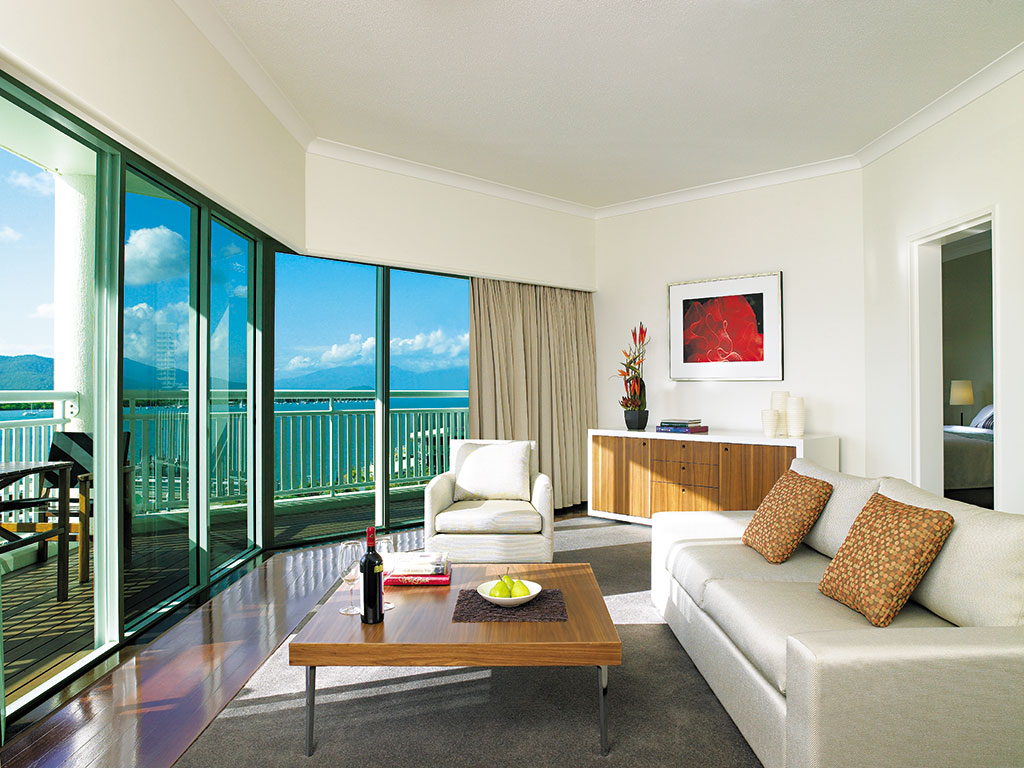
The hotel’s rooms and suites have all been designed to enthral in order to guarantee that guests’ visits will be as memorable as possible. The truly impressive thing about the hotel is the range of options that it provides across a spectrum of costs and personal preferences: even the most basic rooms have been designed and furnished to an extremely high standard, allowing guests on a low budget to enjoy the hotel itself. At the other end of the scale are the luxury suites, which offer exceptional views overlooking the marina, modern facilities and expansive amenities within decedent surroundings. The suites are hailed not just in the hotel itself, but also right across the market as the standard to which other hotels and resorts should aim for. Such acclaim is easily felt throughout the hotel’s outstanding environs.

As with most quality hotels, Shangri-La The Marina has its own private club – however, as is the case across many areas of this fantastic resort, the hotelier has redefined the standard for luxury hospitality. With personalised service and exquisite delicacies on offer, the Horizon Club is a plush, decadent homage to luxury – and with a dedicated concierge, guests are rarely left wanting.

The Shangri-La Hotel The Marina has become almost as much a symbol of Australian magnificence as the reef that it overlooks. Offering a home away from home as much as a retreat into luxury, the resort provides everything that guests could expect – and more.