Autumnal food and drink

Morton Pumpkin Festival
September 11-14

USA

Gnarled orange gourds spring to mind at the mention of Halloween or Thanksgiving. Sporting flickering grimaces or mushed into a pie, pumpkins are the ultimate autumn food. Explore the many faces of pumpkin in Morton, USA which produces 80 percent of the world’s canned pumpkin. With the release of orange balloons, the festival begins. There’s a carnival, pageant and parades, but food is the main attraction. Try grilled pumpkin, pumpkin ice cream, pumpkin pancakes, donuts, cookies, sundaes, pies… there’s even a pumpkin drive-thru!

mortonpumpkinfestival.org

Speyside Whisky Festival
September 26-30

Scotland

Nights are drawing in, once-turgid leaves are decaying underfoot, and that breeze is a little nippy. Whisky won’t solve any of these problems, but a glass of fine malt may temporarily lift your, erm, spirits. For the best dramful head north to Scotland for the Speyside Whisky Festival. The event is held in Dufftown, which makes more malt than any other Scottish town. Its repertoire includes the famous Glenfiddich. Try the ‘Seven stills tour’ – a trip to every distillery in town, with a dram at each. There are also local pipe bands, dancing and crafts.

whisky.dufftown.co.uk

Fudge Kitchen fudge making
Any time!

UK

Sugary snacks are excused – even advised – as the weather gets colder, and few types of confectionery are as delicious and indulgent as fudge. Add a new facet to your love for the sweet with one of Fudge Kitchen’s fudge-making experiences. You’ll get to lend a hand in the whole process, sampling flavours as you go. At the end, take home a box of fudge, including a sample of your own product, and a fudge-making certificate. Fudge Kitchen offers corporate group sessions, so colleagues can bond over slabs of the buttery treat.

fudgekitchen.co.uk

Berlin

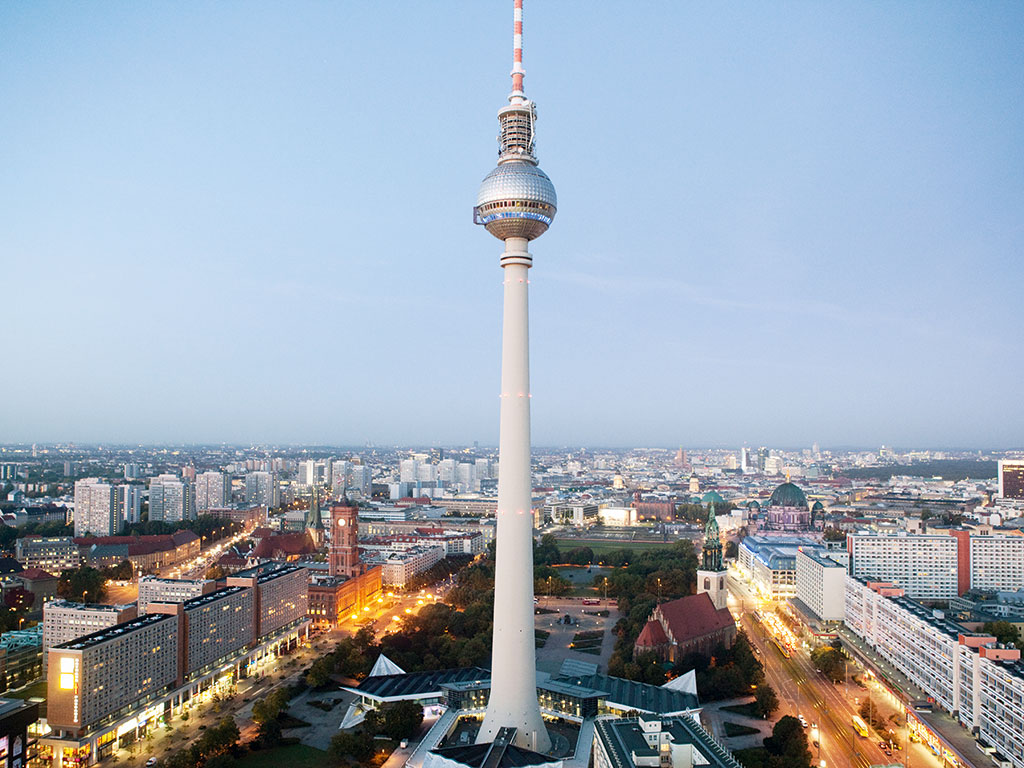
The TV tower in Alexanderplatz

Stay
North of Alexanderplatz, Soho House Berlin’s location at 1 Torstrasse is the perfect place from which to explore Mitte and Prenzlauerberg. It has easy access to transport; accommodation provided by 85 well-appointed rooms, with luxuriantly high ceilings and your own vintage record player; a cinema; and a rooftop bar that boasts fantastic views of the TV tower and city beyond. For those on a budget, Berlin Style Apartments offer a range of tastefully decorated flats in the city’s trendier neighbourhoods.

Falafel sandwich
Falafel sandwich

Eat
Those with a company Amex and a forgiving friend in expenses should head to Fischers Fritz, the city’s only restaurant with two Michelin stars. Inside the five-star Regent Hotel on Charlottenstrasse, it offers contemporary German cuisine. But Berlin is also home to many cheap and delicious options. Business Destinations’ favourite is Sudanese restaurant Sahara. The only seats are outside, but its falafel sandwich with peanut sauce might just be the best tasting meal in the city.

A bar by the Spree
A bar by the Spree

Drink
Good bars are to Berlin what sand is to the beach. They make up the fabric of the city and on a sunny afternoon it can seem like everyone is drinking at a leisurely pace. For great cocktails try Becketts Kopf in Prenzlauerberg. If you’re feeling adventurous, take a stroll along Weserstrasse in the artistic neighbourhood of Neukölln for a range of great drinking options. Berliners take their nightlife seriously at the weekends – be prepared to go out late on Friday and stay out until Sunday morning.

Part of the Soviet Memorial in Treptower Park

See
Berlin’s post-war story has led to a big nostalgia industry. For those with a passion for history, the East Side Gallery, Stasi museum and DDR museum piece together the tale of a divided Germany. The Soviet Memorial in Treptower Park, a monument to the soldiers who died taking Berlin, is as impressive as it is moving. In West Berlin, the Helmut Newton Museum has rotating exhibitions and a permanent collection of the photographer’s provocative work. For shopping, Mitte has the best boutiques.

Risky business

When disaster strikes in the office, it’s essential that boardrooms remain calm, cool and collected. Colleagues must work as a team to overcome obstacles. Yet it’s tricky to work together effectively when employees don’t feel like they’re part of that team. Water cooler chat and after-work drinks are all well and good, but without shared experiences, cohesion in the office may be lacking. When CEOs realised this, the corporate retreat was born. In the eyes of millions of staff members across the globe, it was the birth of a monster.

Team building outside the office may be a great way to craft a forward-thinking workplace, but the conventional corporate retreat can be an agonisingly dull affair. Executives will often leave it until the last minute and book everyone into a standard hotel with a conference room. An unknown (and typically uninspiring) inspirational speaker inevitably joins the fray before encouraging the group to build a bridge out of matchsticks. By no means should that be considered an adequate bonding experience.

However, some CEOs are upping their game. In the last few years, extreme takes on the standard corporate retreat have risen from the ashes of team building nightmares to provide companies with opportunities to grow team spirit in invigorating scenarios. By tossing everyone into adverse (and sometimes, titillatingly dangerous) adventures, colleagues become closer, offices unite and businesses grow. No matchsticks required.

You’re in the army now
Like barbecues, ten-gallon hats, and country music, dull corporate retreats are a national institution in America. Yet companies like Air Combat USA have made it their mission to put an end to the torture of half-hearted icebreakers. Dubbed the ‘original’ civilian dog fighting school, Air Combat USA allows grown-ups to live out childhood dreams of piloting an actual fighter jet. Air Combat USA will operate corporate events for anywhere between 10-36 participants, and are happy to meet companies in just about any American city with an airport.

In the course of a day, the company’s US Navy veterans teach rookies how to operate one of the school’s Marchetti fighter planes – which are structurally similar to the dreaded F-16. By lunchtime, the team’s licensed pilots will have Top Gun wannabes briefed and ready to fly. Once in the air, rookies are allowed to perform aerial feats such as multiple loops and diving turns. Afterwards, planes are pitted against one another in a mock dogfight. Inevitably, friendly competition ensues.

“I’ve never experienced anything like my combat session. The pilot of the other Marchetti wasn’t an auto parts guy from New Jersey, he was the enemy,” says Eric Fischer, of New York. “It’s amazing to me how quickly a marketing consultant can change into an aggressor – one of the best days of my life.”

Across the pond, boardroom buddies can partake in a decidedly different military experience. Based in Nottinghamshire, Special Forces Corporate Team Building Events allows UK companies to live life on patrol as an SAS squadron. Over the course of a weekend, you are given a crash course in military training, before being tossed into the desolate wilderness. Armed with special forces issue carbine rifles and standard military rations, squads must evade capture and perform intense search and destroy missions. Troops also learn how to plot ambushes and draw upon essential survival skills for days on end.

Additional activities are also available for larger corporate events, from a sniper school to learning essential methods of entry. The weekend is corporate team building at its best – forcing participants to think laterally, make decisions while under pressure and identify common goals.

Stuff of legend
Some corporate retreats are more creative than others. In the US, a firm called Be Legendary tosses groups into extreme scenarios in which colleagues are given no choice but to work together. The psychologically taxing ‘Cabin Fever’ retreat sees a board trapped together in a single, cramped log cabin for an entire weekend. Tensions in the small, isolated cottage inevitably run high, setting the stage for conflict-resolution training and tight-knit bonding.

Weary hikers are told by their guide that a looming avalanche means the group will be forced to stay in the wilderness overnight

More active challenges include the company’s ‘Deep Snow Survival’, which forces participants to work together to survive imminent natural disasters. After a gruelling trek into the alpine snowdrifts of the San Juan Mountains, weary hikers are told by their guide that a looming avalanche means the group will be forced to stay in the wilderness overnight. The team must then scramble together to build snow caves and find food.

“Roles disappear. Being the CEO or VP of whatever no longer matters,” says James Carter, founder of Be Legendary. “The memo I wrote last week that pissed everyone off no longer matters. All that matters is that we have to come together to survive. After a group has come together, faced a life-or-death scenario and survived, we have them at a very emotionally raw point and can build them up.
“The beauty of the avalanche scenario is that people rarely question nature. Mother Nature makes a great adversary to bring everyone together because people spend less time pointing the finger and being angry.”

A couple hours after the team has built their shelters, a snowcat arrives to take them to a cosy lodge instead. Yet the relief of a warm shelter by no means marginalises the power of this unique bonding experience.

“Our extreme retreats are a very careful balance of hope and fear,” Carter says. “Fear is used to bring everyone together to overcome an impossible challenge with life-or-death consequences.” But it’s not all despair, as “hope is then used to get them to speak about what they can accomplish when they come together – almost anything!”

Peaks of success
More drastic situations call for more drastic measures. In some offices, an absence of cohesion stops companies climbing the metaphorical mountain to success. If this is the case, a trek up an actual mountain might be the answer. In recent years, Mount Kilimanjaro in Tanzania has become one of the most popular mountain treks in the world. That’s because it’s a severe physical and mental challenge, yet hikers don’t need to be experienced climbers or boast the abs of an Olympic athlete to reach the summit of the highest peak in Africa.

Many adventure outfitters now offer corporate trips to the top of the world’s largest freestanding mountain. By far the most experienced is the Extreme Summit team. Based in Serbia, the company operates meticulously planned treks all across in the globe. Almost every member of the team has scaled Mount Everest at least once and experienced local guides are always brought on board too.

In Tanzania, Kilimanjaro is revered as the ‘Mountain of Greatness’. It’s not hard to see why. The mountain controls the skyline of the country’s vast savannah, and from a distance looks more like the creation of a surrealist painter. Yet the daunting peak is described by most as ‘walkable’ – in fact, the climb itself only takes six days. The starkly contrasting ecosystems will definitely test the limits of every team member, but co-workers will gain real experience working together to overcome seemingly impossible obstacles.

“Climbing a mountain as an exercise provides a powerful metaphor for ‘journey’, for conquering fears and meeting challenges, for being resilient and dogged,” said IBI CEO Lindsey Roberts, before members of her company’s board completed the trek. “These are qualities we all need in spades. We intend to use this rather extreme physical challenge to develop and build our team of directors. It will provide valuable learning for their roles.”

For those who consider the ‘approachable’ trek along Kilimanjaro too simple, the Extreme Summit Team also offers the most difficult mountaineering test on earth: Everest. On the rocky border between Nepal and Tibet, the menacing Mount Everest towers into the shadowy heavens. This expedition lasts 62 days and will push the most experienced climber to breaking point; Everest is not for everyone. Unlike Kilimanjaro, the Extreme Summit Team insists that all team members have previously climbed a summit of 6,000-8,000m. Yet the company is happy to work with firms to accommodate every team member possible. With a personal Sherpa in tow, this arduous journey teaches climbers more about themselves than they imagined.

“Everyone has their own Everest,” the journey’s organisers say. “Only when people reach the top, they realise that the summit itself is not important, and that it is the climb to the top that has completely changed them, and that this journey is actually priceless.”

Dare to be different
An onerous mountain trek isn’t for the faint of heart – nor is flying in a fighter jet or being trapped in a cabin with co-workers. Yet this may be what it takes to get a board of directors to view each other as a tight-knit family rather than casual acquaintances. After all, it’s vital that colleagues can overcome challenges as a team – and overcoming extreme challenges has a habit of instilling this sense of kinship. Tiffs over parking spots just don’t seem to matter as much after colleagues have been stranded together in a desolate mountain range, or teamed up to shoot down enemies in a fighter jet.

Extreme corporate retreats have proven highly effective for some of the world’s most successful companies; however, CEOs shouldn’t fret if they haven’t got the funds to fly their entire boardroom to Africa. With a little creativity, companies can provide employees with exercises that will not be easily forgotten. As in business, dare to be different in planning corporate retreats. Employees will be astounded by the positive transformation in rapport once they’ve returned to their desks.

Ianthe print silk neckerchief

Renewed interest in The Great Gatsby has ushered in a period of vogue for all things 1920s. If it invokes jazz, flappers, speakeasies or anything art nouveau or deco, it’s cool right now. This Liberty London scarf is a subtle way to embrace the trend. Are you a man? Create a neat pocket square for smart-casual dinners. An eccentric man? This is the perfect cravat. For women, wear as intended, as a neckerchief, or as a luxurious headscarf. The Ianthe pattern was first printed by Liberty in 1967, but originated as an early twentieth century art nouveau wallpaper design.
www.liberty.co.uk | £95

Munch’s Oslo

There are very few artworks as famous as The Scream. Edvard Munch’s image of a tortured soul in the midst of a hellish swirling landscape long ago crossed the line from painting to pop cultural icon. This process has divorced it from its art historical context to the degree that it now exists independently of its time, place and even its creator. While The Scream has been reproduced on everything from mouse mats to shower curtains, parodied in a thousand artworks and appeared on countless bedroom walls, its creator has remained an obscure figure, at least outside his native Norway.

This is beginning to change. In 2011 and 2012 Edvard Munch: The Modern Eye, a dazzling exhibition that recast the painter as a modern master, and included his films and photography, went on show at the Pompidou Centre in Paris and Tate Modern in London. This year even more people will be made aware of Munch’s work as exhibitions and events take place in cities across Europe in celebration of the 150th anniversary of his birth.

Anniversary events
Oslo, the city where Munch lived for the greater part of his life, is home to most of the events, including Munch 150, the largest retrospective of the artist’s work to take place anywhere in the world. The retrospective includes around 270 works, and takes place across two major venues: the Munch Museum and the National Gallery.

The show includes the artist’s most famous works –  i among them, of course – but it also seeks to transmit the breadth of his enormous output. It’s about “destroying the myth of this artist who did this very dramatic, melancholic work,” says the project co-ordinator Rikke Lundgreen, “showing that he did a lot more”.

The Munch Museum holds nearly 28,000 works by the artist, including paintings, prints, drawings and sculpture, as well as a significant proportion of his personal effects, tools and books. Choosing between them, as well as selecting from the works held by the National Gallery and other public institutions and private collectors in Norway and around the world cannot have been an easy task.

At the heart of the show is a reconstruction of The Frieze of Life, an installation created by Munch at a 1902 exhibition of his work in Berlin. A number of his most important paintings from the 1890s exploring themes including life, death, anxiety and jealousy are presented together against a simple white background, their ornate frames nowhere to be seen.

As well as The Scream, there’s the sexually charged Madonna (1894-5); The Dance of Life (1899), with its depictions of youth, passion and old age; and Death in the Sickroom (1893), Munch’s treatment of the death of his sister in childhood many years previously.

These and the other paintings in The Frieze of Life are masterpieces in their own right – presented together in this way they give a very clear sense of the concerns driving Munch’s artistic practice. Importantly, says Lundgreen, this format also forces viewers to consider the artist’s best-known work as “just another painting in Munch’s production. It makes you look at the painting, not just look at The Scream”.

Hidden works
Visitors to Oslo can engage with the artist beyond the walls of the National Gallery and Munch Museum too: the anniversary year offers treats not usually accessible to the public. The most spectacular of these is Munch’s decorations of the ceremonial hall at the University of Oslo, 11 paintings including the three monumental works The Sun, History and Alma Mater that represent different aspects of learning and knowledge. Munch delivered his proposal for the University Aula in 1909 but didn’t complete the commission until 1916 because of controversy surrounding the experimental, expressionistic nature of the works.

More decorative paintings can be found at the Freia Chocolate Factory, the owner of which commissioned Munch to produce works for the building’s new cafeterias in 1919. The oil paintings, which were inspired by the landscape around the painter’s house at Åsgårdstrand, were completed in 1923.

Those interested in the man behind the work can explore the studio at Ekely, the estate on the outskirts of Oslo where Munch lived and worked from 1916 until his death at the age of 80 in 1944. Only the winter studio remains of the buildings inhabited by the artist, but the first house he bought, in Åsgårdstrand on the west coast of the Oslo Fjord, has been preserved as it was during his lifetime. It operates as a museum today.

Lundgreen describes Åsgårdstrand as “a real eye-opener” not just because we can see how Munch lived, but also because it allows visitors to see many of the real life scenes that ended up in his paintings. His bright but brooding 1901 work, The Girls on the Bridge, whose motif was later reproduced by Munch in many different versions in various media, was painted in the coastal town, as was The Dance of Life.

It’s important, says Lundgreen, not to tie Munch’s biography too tightly to his work. It may be tempting to treat an artist’s creations as windows onto his or her subconscious, but this is ultimately reductive: the works, not the personality behind them, should remain the primary focus.

Painting Oslo
That’s not to say, however, that biographical research is not valuable. Or that, for Munch aficionados, learning about the artist and visiting the places that were important to him doesn’t offer an enriching art historical experience.

When it comes to the Norwegian capital, there’s much to be gained from making Munch the focus of one’s explorations. From Oslo’s elegant main boulevard, Karl Johan Strasse, which appears in the anxiety-filled Evening on Karl Johan Strasse (1892), to now-trendy Grünerløkka, the area where the artist grew up, to Ekeberg Hill, the view from which is immortalised in The Scream, Oslo is dotted with places significant in Munch’s life and work. They also happen to be charming locations in their own right, essential stops on any visit to this buzzing city.

On a late summer’s day on Ekeberg Hill, with the waters of the Oslo Fjord shimmering in the sunshine and the city laid out beneath you, it’s hard to get into the mindset that inspired the artist to paint that desperate vision. But perhaps that’s for the best: because though Munch’s most famous work is a masterful portrayal of existential angst, in the painter’s oeuvre as a whole there is light as well as dark, love as well as heartbreak, life as well as death. To fully appreciate his genius, it’s important to pay heed to them all.

The Munch 150 anniversary exhibition runs until October 13. Munch’s studio at Ekely, the University Aula and the Freia cafeteria are open on selected dates until October 13. The artist’s house at Åsgårdstrand is open from May 1 to August 31 each year. Further events related to the Munch 150 celebrations will be taking place for the rest of the year – visit munch150.no

Chengdu city diary

Chengdu Motor Show
NICEC

Until September 8

West China’s foremost exhibition for the automotive industry, the Chengdu Motor Show guarantees flash cars, revving motorcycles and a slightly old-fashioned draping of barely dressed women. It is popular with punters and industry experts alike and delivers inside tips on motor trends.

Hacken Lee in concert
Sichuan Gymnasium

September 8

Hong Kong’s Hacken Lee is a true all-rounder – Cantopop singer, actor, TV presenter, sportscaster and songwriter. His illustrious career includes sitcom Teenage No More and album Red Sun – the concert promoting it sold out within two days. Better get tickets while you still can.

China Food Expo
NICEC

September 15-18

The ninth edition of the food exposition will bring together nearly 200,000 visitors, including 32,000 industry professionals. All of China’s most intriguing foods, teas, liquors, condiments and confectioneries will be represented. There will be talks on the exciting modernisations within the industry.

Snooker Championship
Sichuan Tennis Centre

Oct 27 – Nov 3

This will only be the second year of the world ranking snooker event, but with an impressive prize fund of £600,000, it promises to be a hard-fought contest. Described by English snooker star Shaun Murphy as “the fourth major”, expect to see all of the sport’s big names in attendance.

Teddy Bear Museum
Jinma Lake, Wenjiang

until December 31

A recent addition to Chengdu’s cultural scene, the world’s largest teddy bear museum uses over 1,000 stuffed animals to recreate historical moments and works of art. Highlights include the Russian Revolution, featuring teddy bear Lenin, and Michaelangelo’s Creation of Adam.

Chengdu

On the cusp of China’s fertile Red Basin rests the sprawling metropolis of Chengdu. For over 2,300 years Chengdu has been a centre of intrigue, lying at the heart of feudal China’s oldest and bloodiest conflicts. The Sichuan capital has seen the rise and fall of a dozen dynasties, and is the only city in China not to have moved or changed its name for two millennia. It should be no surprise then that Chengdu is now home to 14 million people. Yet, the city is barely known outside of China.

That’s starting to change. Over the last few years, Chengdu has launched a major campaign to help it emerge from the shadows of Beijing and Shanghai. Where once only a handful of locals understood English, the city now boasts an entire Western district. Stylish skyscrapers have stolen the horizon, and Chengdu is beginning to reclaim its status as a centre for international business.

Chengdu timeline

1200BC

Where Chengdu now stands, a settlement is established as the capital of Shu

311BC

The land is annexed by the neighbouring state of Qin

316BC

Chengdu city is established by Qin general Zhang Yi

256BC

Dujiangyan Irrigation System is built – it still functions today

1279

The Mongols sack Chengdu and kill over one million people

1644

Rebel leader Zhang Xionzhong takes Sichuan in a bloody coup

1718

Shaocheng, a ‘city within a city’, is built for Manchu soldiers and their families

1944

US Bomber Command launch an operation to base B-29 Superfortresses in Chengdu

1949

President Chiang Ching-kuo has to flee Chengdu during the Chinese Civil War

2008

A magnitude 8.0 earthquake strikes, killing 800,000 people

2013

The world’s largest building, the New Century Global Centre, opens to the public

Elsewhere, Michelin-starred chefs are flocking to the Sichuan capital, attracted by recent commendations of its historical gastronomy. Ancient Buddhist temples and reflective terraced pools allow for periods of secluded meditation just off the city’s busiest thoroughfares, and the sprawling markets are a comprehensive education in Sichuan cuisine. This is Chengdu, a city of plenty – and its journey to splendour has been long and arduous.

Distinguished history
Chengdu rose to prominence early in the fourth century BC, when one of the first ancient kings of Shu decided the city would make a formidable capital. Its geographical command over the Funan River and the plentiful Red Basin allowed the Shu Kingdom to flourish. Protective walls were constructed around the city, while innovations in irrigation boosted agriculture and trade. Hibiscuses covered Chengdu’s city walls, and it garnered a reputation as a civilised jewel in the chaotic wilderness of China’s feudal Five Kingdoms.

The city was conquered and rebuilt numerous times, serving as a capital for empires ruled by Han and Yuan kings alike. Ancient Chengdu’s wealth was unrivalled. It is the site of the first known paper currency exchange, and it eventually became the southern gateway to the revered Silk Road trading route. Its unique embroidery, silk, lacquer and jewellery were (and still are) widely coveted. Many also credit Chengdu with launching China’s goliath tea trade. Today, the city boasts more teahouses than anywhere else in China, and is the heart and soul of the country’s tea production.

Sugar and spice
The city’s cultural distinctions coolly surpass those of its powerful trade industry. Residents of Chengdu are stereotypically laid-back and the city is celebrated as a place of openness and liberal ideals. Over the centuries, any and every culture passing through the ancient city’s gates has been readily assimilated. From Ming emperors and Italian traders to Mongolian and Japanese invaders, Chengdu culture incorporated influences from across the globe and emerged with something unique.

The city has an inimitable brand of opera and distinctive styles of painting and poetry. Better still is its cuisine. Today, Sichuan restaurants can be found in all of the world’s great metropolises. Yet the region’s signature dishes are at their best when prepared the right way: in a quaint Sichuan kitchen. In Chengdu, chefs combine the purple Sichuan peppercorn with a signature blanket of chilli flakes; the cuisine is bold. The same can be said of Chengdu’s people.

Chengdu was the birthplace of nearly every peasant revolt in ancient China. Later, it was the site of the kingdom’s heroic last stand after Mongolian raiders had swept across China, leaving the country in smouldering ruin. More recently, Chengdu was the main source of insurgence against the Japanese in World War II, and was the final city on the Chinese mainland to stubbornly fall into communist hands – prompting Chiang Kai-Shek’s famed flight to Taiwan in 1949. Yet by no means was the feisty spirit sewed into Chengdu’s regional culture stamped out by the rise of Mao Zedong’s solemn brand of communism. It continues to show constantly in the city’s arts and its increasingly bold business community.

Big business
Over the last decade, young people have flocked to Chengdu en masse. In comparison to most Asian cities, it costs little for entrepreneurs to start a new venture. Better yet, its large graduate population provides a desirable and intelligent work force. Chengdu’s municipal government has also been successful in attracting foreign investment. Last year Chengdu was the number-one investment location in inland China, and over 200 of the world’s Fortune 500 companies now maintain a strong presence
in the city.

This has spurred competition within its nine counties; the world’s top architects have found themselves in heavy demand across the city. With the help of Tishman Speyer and Singapore’s CapitaLand, previously unused lots are becoming ambitious architectural works. Hong Kong nightlife magnate Allan Zeman was even recently tasked with breathing new life into Chengdu’s booming nightlife district by way of a 1.2bn yuan development project. Inner Chengdu is now littered with skyscraper projects, while public green space is being expanded. Yet facades of Qing-era homes are still visible in the city landscapes that trace the ring roads dissecting the city. Chengdu has evolved into a cutting-edge metropolis but areas of the city maintain the rustic charm visitors expect from China’s oldest cities.

Throughout the city’s history, Chengdu’s leaders have caused upheaval by tearing down ancient sites in favour of flashy modern projects. Mao Zedong dismissed the city’s 2,000 year-old fortress wall as an “ugly inconvenience to traffic”. The ancient wall was immediately torn down, and today only a few scattered piles of rock indicate where it once stood. From the 1950s onward, this practice continued – particularly in the 1990s, when foreign companies began to take an interest in Chengdu and its 200 million-strong consumer reach. Today, only a small proportion of inner Chengdu’s buildings have any historical significance. The city’s thorough (and often controversial) modernisation has chased quite a few locals into the surrounding hills, and some older residents love nothing more than to reminisce about the days before steel beasts governed Chengdu’s skyline. Yet their grumblings haven’t gone unnoticed.

Bodies such as UNESCO have started to take interest in local conservation efforts – especially concerning Chengdu’s Buddhist temples. Ever since the arrival of Emperor Xuanzong in 712 AD, the city has had a reputation as a centre for Buddhist education and worship. Its temples provide residents with much-needed respite from the hustle and bustle of city life – Wenshu Temple is particularly stunning. Lesser temples are still sprinkled in between Chengdu’s impressive high rises, and serve as after-work centres of reflection for overburdened locals.

Just across Tianfu Square, outdoor teahouses surround a towering statue of Chairman Mao. Here, concerts are regularly staged on hot summer nights. Westerners can stroll up Kuanzhaixiangzi and discover local treasures in its tiny shops, or enjoy the comforts of home in mega-malls stocked with multinational retailers. Just north of the lauded Sichuan Opera House, animal enthusiasts will find the globe’s leading centre in panda research. The Chengdu Research Base of Giant Panda Breeding is home to 50 pandas and is the primary source of studies into the mating habits of the famously bashful bears. For a quieter cultural experience, plenty of westerners find solace sipping on Sichuan tea in a secluded park, while trying their hand at weiqi – a simple and wildly popular strategy game.

Endless potential
Last year, getting around in the city finally became simple with the completion of a major subway expansion. Like any great metropolis, Chengdu is cultivating its own subterranean city, digging deeper into the earth as its buildings climb higher. Consequently, European and American travel providers are finally starting to realise the city’s potential. In 2010, American Airlines began operating their first nonstop flights to Chengdu, while British Airways have scheduled their first flights to Chengdu from September 2013.

As the city continues to expand, there’s no better time to explore. Chengdu sits at a precipice. The city is evolving quicker than ever and as it starts to open more doors to the west, its distinctive culture will inevitably follow historical precedent and absorb some of the traditions of its new visitors.

By no means is Chengdu a quintessentially Chinese city. Like its distinctive, blazing spices, the people of this city epitomise adaptability and entrepreneurship. Chengdu’s history is intriguing and its progressive spirit knows no bounds. There’s nowhere in China quite like Chengdu.

shangri-la

Where to stay: Shangri-La Hotel

The short drive from Shuangliu International Airport to the Shangri-La – by rivers, lantern-lit bridges and tall trees – is the perfect introduction to Chengdu. Guests are greeted by an opulent lobby and taken to rooms that offer sweeping views of the river from luxurious and spacious interiors. Take a walk along the river in the morning and witness the city coming alive, or relax back at the hotel with restorative treatments at the CHI Spa.The hotel has been showcasing the rich artistic culture of Chengdu since it opened in 2007. It boasts a gallery featuring the work of contemporary artists from the Sichuan province. Be sure to speak with the concierge, who will be more than happy to arrange a visit to the artists’ studios. The hotel has a selection of tempting restaurants and bars on site. Shang Palace gives guests the chance to sample local foods, with a menu of Sichuanese and Cantonese dishes. For a more casual dinner, Mooney’s offers western food, beer and whiskies, accompanied by a live band. After dinner, Lobby Lounge serves cocktails in a sophisticated setting with live entertainment The hotel also has a large gym, lap pool and even a small wading pool. Staff are always on hand to divulge knowledge of less familiar tourist sites, ensuring every guest has a unique experience in the city.

new-century-global-centre

Where to shop: New Century Global Centre

Pictures don’t seem to do it justice, but the New Century Global Centre is, China claims, the largest building in the world. Standing 100m tall, 500m long and 400m wide, the structure could hold four Vatican cities within its 420 acres.Designed by celebrated British-Iraqi architect Zaha Hadid, whose recent projects include the 2012 Olympic Aquatics Centre, the building took three years to complete and has a futuristic ocean theme. An artifical sun will shine at all hours, maintaining a steady temperature and there is 400m of simulated coastline. Huge waves roll onto the fake shore, while the world’s largest LED screen displays visuals of watery horizons. Elsewhere a replica Mediterranean village basks in the fake sun.The building, which opened earlier this year, is already filling its 18 storeys. So far the structure is home to offices, an immense shopping centre, a water park, an ice-skating rink and two five-star hotels. A host of restaurants overlook stages, from which nightly music spectaculars entertain guests. Diners are even treated to an artificial sea breeze.

Where to eat

food-1

Yu’s Family Kitchen

This exciting restaurant is located in the Kuanzhai Alley district, where the rich and powerful families of ancient China lived. The spacious dining room is decorated with classic Chinese furniture and water ink paintings line the walls, giving it a homely feel. Chef Yu Bo’s food is carefully sourced and the preparation, presentation and variety of flavour may astound even the most accomplished gourmand. Sample his work thoroughly by ordering the 18-dish tasting menu. The culinary journey begins with shark-fin soup and abalone, and ends with alligator and pan-fried egg with black truffle and gold foil.

43 Tongren lu Zhai Xiangzi

food-2

Shizilou Hot Pot Restaurant

No traveller should leave Chengdu without eating hot pot. Arguably the best-tasting food the city has to offer, and by far the spiciest, hot pot is believed to have originated in Mongolia and spread to southern China during the Tang Dynasty. Shizilou is one of the largest hot pot restaurants and has received numerous national awards. Try their unique Yuanyang hot pot, a variation on an old-fashioned dish. The pot in which it is served is divided into two parts by a copper slice in the middle. Chillies are the most important ingredient, but the other elements are chosen by the customer.

2 Wannianchang Road
Chenghua District

food-3

Zhanglaoerliangfen

Hand-pulled noodles are a staple of Sichuan cuisine, but require extraordinary skill to create. The city is home to hundreds of cangyingguan, or ‘fly restaurants’ – a reference to the buzzing atmosphere and high turnover of customers. Many small street carts and hole-in-the-wall cafés serve up superior noodles in a thick, spicy broth with fresh pak choi, but if you’d rather visit a slightly larger restaurant, Zhanglaoerliangfen is hard to beat. This small, decades-old establishment offers thick, fresh noodles covered in a sauce of chilli oil, Sichuan peppercorns, sugar and sesame seeds. Simple, but delicious.

Wensuyuan Street
Chengdu City
River beds

In the age of steam travel, tunnelling through peaks and descending into valleys by rail became the most sumptuous way to trek across Europe. From the plush dining car of the Orient Express, travellers viewed the majesty of Europe’s countryside, satisfied in the knowledge that they alone had access to the continent’s cultural capitals. But things are changing.

Over the last five years, Europe’s meandering waterways have evolved into luxury routes. While cruising along the mighty Danube or the majestic Seine, travellers in superior vessels are given the unique opportunity to revel in the fresh air of remote valleys – only moments later ducking under the mighty bridges of Paris or Prague. Visitors who opt to float along the Rhine can ramble into quaint medieval towns – long forgotten and unreachable by rail or air. River cruises are the new way to explore Europe’s hidden gems. The splashes of exuberant opulence visitors find aboard each ship are merely an added bonus.

Avoid the circus
A lot of globetrotters are decidedly wary of the term ‘cruise ship’, and they have every right to be. The conventional ocean liner has gained a reputation as a bothersome, floating zoo, which fails to provide cultural encounters and instead distracts tourists with subpar Broadway review shows and dimly lit casinos.

Ships tie up along the chic sidewalk cafés of Paris and Budapest, maximising sightseeing potential

Yet this does not mean the industry as a whole has nothing to offer. A cruise ship doesn’t have to be 20 times larger than Vatican City or include a minimum of eight Olympic-sized swimming pools to provide a stimulating and enjoyable holiday. In fact, intimate boutique cruise ships are slowly making a comeback, providing culturally starved travellers with the most amorous European adventures.

“If you want Vegas on the high seas, or a ramped-up romp with non-stop entertainment, a river cruise is most likely not going to be your cup of tea,” says Cruise Critic contributor John Deiner. “But if you want a relaxing holiday that lets you take in a number of destinations with a minimum of effort, you really can’t beat it.”

Since 2008, the river cruise industry has grown by 10 percent each year. According to a study by the Travel Leaders Group, European river cruises in particular have surged in popularity – and thus far are 2013’s most-booked luxury holiday.

It’s not hard to see why. Whereas the average number of passengers on a goliath North American cruise liner is 2,300, most of the ships that travel Europe’s waterways can accommodate no more than 150 guests, and often fewer. In part, this cap stems from practicality; several sections of the continent’s great rivers are treacherously narrow, so light and slender ships are required to navigate otherwise desolate waters. Yet keeping the trips relatively small also enhances the deliberately intimate nature of river cruising. On a ship of 79, travellers can get to know one another and even make new friends, if they so choose. They don’t need a GPS locater to find the dining room or reception, and a typical staff ratio of 3:1 ensures a personal relationship with the vessel’s crew.

Your floating hotel
Because the crew on river boats have fewer passengers to care for, total comfort for every guest becomes the priority. Boutique operators such as UniWorld lavish their staterooms with marble bathrooms and private French balconies. The sumptuousness of each ship’s decor is evocative of the golden age of sea travel that accompanied the Titanic to its watery grave. Original works of art hang in each room and suites are packed with products handcrafted in Provence.

Onboard chefs tailor the experience with dishes based on the vessel’s location

At APT, Concerto Class ships provide passengers with twin balconies for a private view of the passing scenery. If any guest happens to grow weary of the architecture and ancient ruins on shore, rooms come equipped with satellite television and there are several lounges and libraries. Exercise facilities and whirlpools are common on most vessels, while discreet staff offer a plethora of dining options.

Whereas chefs aboard Caribbean mega liners are known to dish out assembly-line menus for the ship’s 12 restaurants, the dining experience on board Europe’s river boats is decidedly more exclusive. A certified global master chef heads the kitchen on each UniWorld excursion, accompanied by a wine programme developed by the sommelier of the Relais and Chateaux hotel. The wines provided by operators are improved only by the fact that – unlike on most ocean liners – the all-inclusive rates on river voyages tend to include alcohol.

Onboard chefs tailor the experience with dishes based on the vessel’s location. Bratwurst and craft ales are never in short supply along the Rhine, while French classics, such as buttered escargots, are plentiful along the Seine. There is also often a chance to accompany the head chef to local produce markets. Where possible, ingredients are sourced from local growers. Passengers could hardly ask for a higher standard of European cuisine. That said, guests are by no means encouraged to stay on the ship.

Get out and explore
“I like to say ocean cruising is a drinking man’s cruise. River cruising is a thinking man’s cruise,” says Torstein Hagen, the founder and chairman of Viking River Cruises. “With river cruises, a destination is the destination.”

Many cruise operators in Europe share Hagen’s conviction and it has driven providers to dish up culturally exquisite itineraries. Most ships will dock in the centre of a towering European capital or a picture-perfect medieval village at least once every day. As with food and drink, the all-inclusive deal usually includes a tour of each destination. In Italy, for example, guests can spend an entire day in Bologna learning how to make fresh pasta in a quaint Italian kitchen. In Hungary, passengers step back in time as they’re wowed by the renowned skill of rural csikos (the country’s answer to American cowboys). With Avalon or AmaWaterways, guests are taken to one of Vienna’s revered concert halls for a night of candlelit waltzing to the timeless masterpieces of Mozart.

Even the shortest adventure will expose guests to a diverse array of alien European customs and luxuries. Those who wish to explore at their own pace will be equally engaged by the castles and amphitheatres that scatter each city. Unlike ocean liners, these vessels dock in the heart of their destination. Ships tie up along the chic sidewalk cafés of Paris and Budapest, maximising sightseeing potential. What’s more, guests aren’t stifled by the restrictive schedules ocean liners tend to impose upon their passengers. Larger destinations often merit multiple days at port, and voyagers can explore at their leisure.

For those who believe they’ve ‘been there, done that’, themed cruises make niche interests accessible. Noble Catalonia, for example, sponsors several journeys that are musically inspired. On voyages such as the ‘Magic of Mozart’, guests are taken to idyllic locations where they enjoy private chamber concertos. Avalon offers trips down the Seine based upon notable impressionist paintings, giving guests the chance to be part of the backdrops that inspired Monet. Tours informed by Europe’s longstanding horticultural specialties are also a popular choice.

For history fans, Saga organises tours focusing on the Rhine’s medieval heritage, while Avalon escorts guests around some of World War II’s most hard-fought areas of Normandy. AmaWaterways sponsors several ‘Jewish heritage’ tours down the Danube, allowing travellers to reconnect with their rich European ancestry. If you’re passionate about Europe’s gastric traditions, several operators provide river tours stopping at wineries or chocolatiers. In Portugal, guests can even live like royalty as they float along the Douro in the same prolific barge that hosted the Queen during her diamond jubilee flotilla in London.

The particulars
Because there’s such a wide array of destinations and itineraries, there isn’t a right or wrong time to take a cruise through Europe. Most lines operate their standard voyages from March to November. However, the possibilities don’t end with winter’s first snow. Providers like Noble Caledonia offer tours of Europe’s renowned Christmas fairs – sprawling German markets filled with unique holiday crafts – and ships whisk guests from fair to fair, mulled wine in hand. New Year’s cruises are also gaining popularity, allowing visitors to take in the architectural majesty of Prague and Venice during the quietest parts of the year. All-inclusive cruises tend to cost between £1,500 and £5000 per person, depending upon the depth of the itinerary and the level of luxury guests seek. This price is in the same region and often less than that of an ocean cruise, but without the thick crowds and hollow pageantry. As their popularity continues to grow, it’s worth booking well in advance to secure preferred dates or to bag a journey with your favoured theme.

Exploring Europe by river isn’t for everyone; many ships aren’t fully handicapped-accessible, and even the most exciting itinerary still means sticking to a schedule. Yet for many, river cruises are emerging as the best way to take on diverse slices of Europe, in bite-sized chunks. They provide the freedom of fresh air and exploration that a nostalgic rail journey could never match. The masterful boutique ships that float up and down the Seine and the Douro epitomise decadence, privacy and comfort. There’s no better way to explore the European countryside – and with popularity surging, there’s no better time to book.

Top tips to prepare for your river cruise


Get fit before you go. If you want to explore each port in full, expect to do quite a bit of walking.

If it’s within your budget, try to book a stateroom with a balcony. It’s worth the extra cost to be able to enjoy the tranquil scenery in private.

If time allows, book a few extra nights separately in your starting or final destination to make the most of your trip.

Budget a minimum of €50/day in spending money. You won’t spend much (if any) money onboard, but a lot of ports mean a lot of shopping opportunities.

Book now. River cruises are surging in popularity, and some operators are almost full for 2014.

Moving to Cyprus, despite the crisis

Rewind a few months and Cyprus wasn’t the first place someone looking for a stable retirement would have chosen to move to. Its banking sector and government were in crisis, savers were threatened with having to hand over large amounts of cash and there was huge uncertainty about whether the country could remain in the Eurozone.

For many non-Cypriots living there, leaving the island seemed like the best option. But some were not in a position to jump on a plane, or felt confident life as an expat could continue largely unchanged. So meet expats John and Claire Walters. They were waiting to move into their new home in Cyprus when the banking crisis hit in March, and are now happily settled into their bungalow and loving life on Aphrodite’s Isle.

The Walters, from Porthcawl in Wales, arrived in Cyprus at the start of November 2012, when they signed the final contract for their bungalow in Liopetri, a village in the Famagusta district. Their property, which they found after contacting the Overseas Guides Company and local agents during two visits to Cyprus, was due to be completed in three to four months, so in the meantime, their estate agency provided them with free accommodation.

Delays meant completion was pushed back to the end of April, after which the developer, Flourentzos and Andreas Developers, would have been liable to pay a financial penalty. “Then, in the interim, the financial situation in Cyprus hit the headlines, as did a construction workers strike,” said John, a 66-year-old retired business advisor. “The developer used sub contract labour which meant he had limited control on progress. However, building resumed after we chased the builder, and we spent the first night in our completed new home on April 27.”

John and Claire Walters in Cyprus

John and Claire’s bungalow has three bedrooms (two downstairs and the third master bedroom occupying the loft space), three shower rooms, and an open-plan kitchen-diner-lounge. Their outside space is predominantly stamp concrete with a small garden space.

Since moving in, the couple have wasted no time in getting to know the local area and attend Anglican Church of St Patrick on the nearby British Military base of Ayios Nikolaos. John said: “One of our favourite trips is our weekly visit to Famagusta’s farmer’s market on a Thursday. As a lawn green bowler I have joined a short mat bowling club at a local hotel – members can use the hotel facilities free of charge and get reductions on all purchases. So when I’m bowling, Claire relaxes by the pool or on the hotel’s beach.”

Asked if they have been affected by the banking crisis, John commented: “In all honesty, not at all. We had decided before leaving the UK that until we knew how the spring budget might affect us, we would continue to operate our finances through our UK bank and to continue paying UK taxes. So, all our money was safe in the UK.”

John’s top tips:

  • List your preferred requirements – including location and property style.
  • Research all the options on the island.
  • Do not be rushed into signing contracts by an agent or developer.
  • Find out from your new neighbours what needs to be included in the build contract. If it’s not in writing it’s not included.
  • It might be best to purchase the kitchen separately – discuss this with the builder.
  • White goods included by a builder are often of a basic standard, so have them specified in any contract.
  • Get a snagging list agreed and signed by an authorised representative of the builder or construction company.
  • When viewing properties, don’t be afraid to speak to neighbours or get their contact details to speak to them later about the area and property.

Part 1: Setting forth

Though our heroes actually start their journey hauling some cocaine from Mexico to LA, where they proceed to sell it to Phil Spector, this is by no means a commendable way to finance an adventure. So instead modern day riders should start their journey by heading east out of LA towards the desert and the open road. Another good tip at this point is to find a better place to store your cash than a plastic pipe hidden inside the gas take of your Harley Davidson, as it will significantly diminish the mileage you can get and those tanks are small enough.

The real symbolic starting point for Wyatt and Billy is Ballarat, California- a ghost town. It is a very unusual place; the mining town, of which only ruins remain today, lasted less than seventy years before the entire population had either moved on or died. The remaining constructions resemble ancient ruins, or gravestones, lost in the middle of the desert. Seldom Seen Slim, the town’s only ever illustrious resident, passed away in 1967. A desert wanderer whose tombstone is one of the only remnants of the town refused to leave the area, even in old age, because of it’s natural beauty and mystic appeal. “Me lonely? Hell no! I’m half coyote, half a wild burro.”

Temperatures in the old ghost town are extreme, in the summer the mercury can reach the high 40s, and drop to freezing lows in cold winter nights. But the natural beauty of the site makes a stop in Ballarat worthwhile: the purple mountains of Death Valley are just in the skyline, and the biggest sky in California hangs overhead. Today the town only has three residents, Rocky Novak, and his two dogs Potlicker and Brownie, but in the 1960’s Charles Manson and some of his ‘family’ liked to wander into Ballarat. Tex Watson’s truck is still there, or so it goes.

Seldom Seen Slim and Tex Watson
At the edge of town, Seldom Seen Slim had a sign put up; it said “Free Parking” pointing towards the Death Valley. That is the way Wyatt and Billy drive, after throwing their watches away. Anyone following their route should do the same; it’s a prerequisite of embarking on a journey of self-discovery and rebellion.

Billy and Wyatt head out of Ballarat, towards Boron, California, home to Erin Brockovitch a few decades later, then Barstow, after that and right into the Mojave Desert. Amboy, California, home to Roy’s Motel and Café, where they would have gotten gas because there is nowhere after that to fuel up. Roy’s is something of a relic, all 1950’s modernist lines right in the middle of the desert. The joint was recently reopened in 2008 after years of decadence.

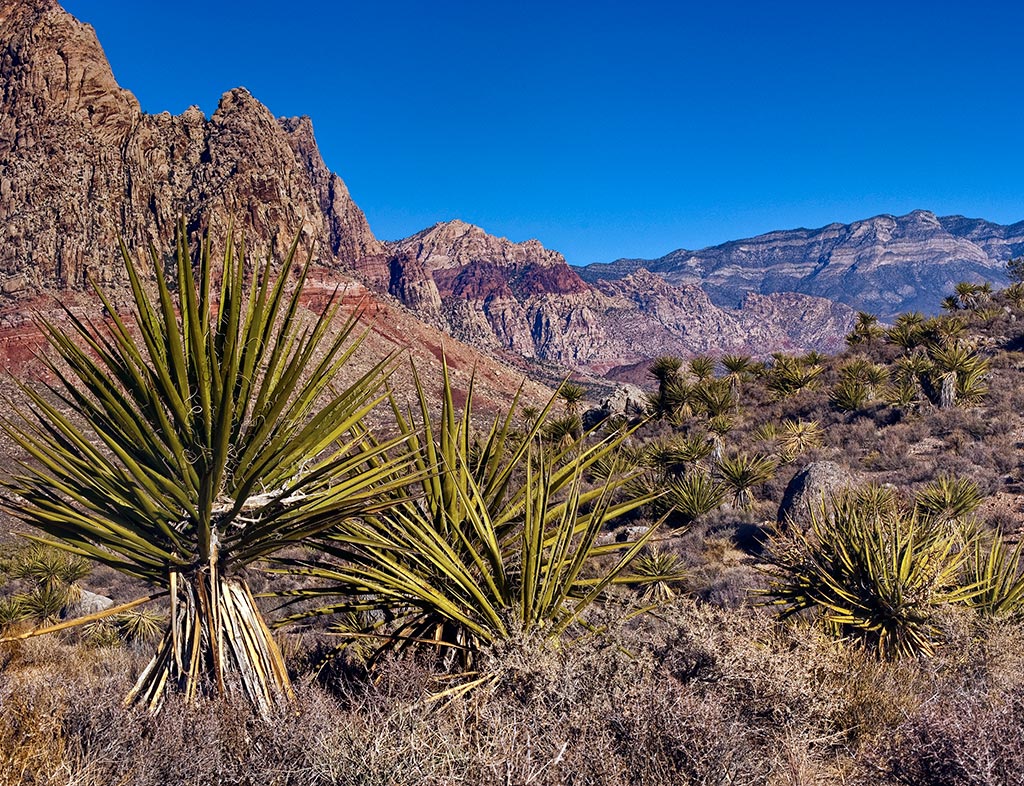
Beyond Amboy, there isn’t much apart from the Mojave Desert. The Interstate 40 (I-40), which follows the old Route 66, would have been the way Billy and Wyatt drove. To the North, the Mojave National Preserve, to the south Joshua Tree National Park.

Yuccas and banana yuccas in the Mojave Desert

Beyond Route 66
The Mojave National Preserve is a diverse national park, and well worth a visit. There are great volcanic formations and valleys like the Hole in the Wall Canyon and the Cima Dome, two of the weirdest geological formations out there. Large swathes of the preserve are covered by Joshua Tree forests, which only grows in this part of the world. Though the Mojave National Preserve is a bit off route, it is a place of spectacular beauty, and almost untouched. It is a desolate and lonely landscape, scorching hot in the summer and freezing cold in the winter, and definitely worth the detour.

The desert scenes riders will encounter along the I-40 are part of our collective imagery, courtesy of Hollywood’s Western affectations in the 1960s. Cactuses, rich brown earth, and blue skies. It is a place for contemplation, and there isn’t much action going on in this part of the world. Geographically it’s no man’s land, lost between California and Arizona, today there are many Indian reservations here, forgotten in the desert.

At Kingman, Arizona, get off the I-40 and follow the dusty trail that is now the legendary Route 66, it’s not on Google Maps, so get a paper one. Here you will find Valentine, not so much a town as six or seven houses built in close proximity to each other. Wyatt and Billy stopped around here to change their tyres and were invited to lunch by a rancher and his ‘Catholic’ wife. In the film it looks like pretty inhospitable terrain, and makes you wonder how that family lives there. That’s what you feel like in real life as well.

Introduction: Looking for America, with Easy Rider

Next: Route 66 in Arizona, Monument Valley and Pine Breeze Motel (or what’s left of it)

Looking for America, with Easy Rider

Easy Rider defined an era. Shot over four and half decades ago, the picture’s powerful imagery still inspires free spirits to follow in the footsteps of the anti-heroes and discover the country

When Easy Rider came out 45 years ago, a whole generation was inspired to grow their hair and dream of freedom on the back of a motorbike. And though not many of us have grown up to ride a Stars and Stripes themed Harley Davidson across the Arizona desert, those images of the open road have been a bit harder to shake.

The film was shot in the spring of 1968, with only a rough plotline, and strict instructions not to shoot in Texas under threat of arrest- it seems Texas was not interested in being a part of the counterculture movement. Dennis Hopper, who plays long-haired Billy, but also wrote and directed the picture, insisted on shooting as much of it as possible outside and using natural lighter. “God is a great gaffer,” he said. The result is an explosion of imagery and beauty on the screen.

Fans of Wyatt and Billy have been attempting to recreate their journey for decades, in order to experience some of the scenery for themselves. Even though the central plot of the film involves Billy and Wyatt trying to make it to New Orleans in time for Mardi Gras, they certainly did not pick the most direct route from LA. But they did pick the most scenic.

In the four and a half decades since filming wrapped, a lot has changed. The Arizona desert and Monument Valley remain untouched, but the motels and cafés the two riders pass along the way (and get turned down from) have mostly closed. The quaint southern towns they stop at have also changed a lot, Morganza, in Louisiana where George spends his last fateful night, has been reduced to a ghost town as locals fled the rural poverty towards bigger cities.

In many ways, following the Easy Rider route from LA to New Orleans is like travelling through a cross section of Modern America; from the liberal western coast to the deep south, through national parks, native American reservations and remnants of rural living. It is still a poignant trip, and one that should not be undertaken recklessly. For any riders out there who want to go look for America, here’s a tip ditch your phone and your watch, get a map, and hit the road. Oh yes, and don’t sell any drugs.

Part 1: Setting forth

Tusting Excursion leather washbag

A wash bag is essential for any traveller with an interest in personal hygiene, so if you’re on the road a lot it makes sense to invest in a quality specimen. This dapper bag from purveyors of luxury leather, Tusting, is compact, attractive and functional. As its name suggests, the Excursion has been designed specifically for people on the road and provides enough space for every indispensable product. The dark tan outer and contrasting cream stitches are deliciously understated and, coming from a company with over 130 years experience working with leather, you can guarantee it’s going to last.
tusting.co.uk, £110